By Staff Reporter
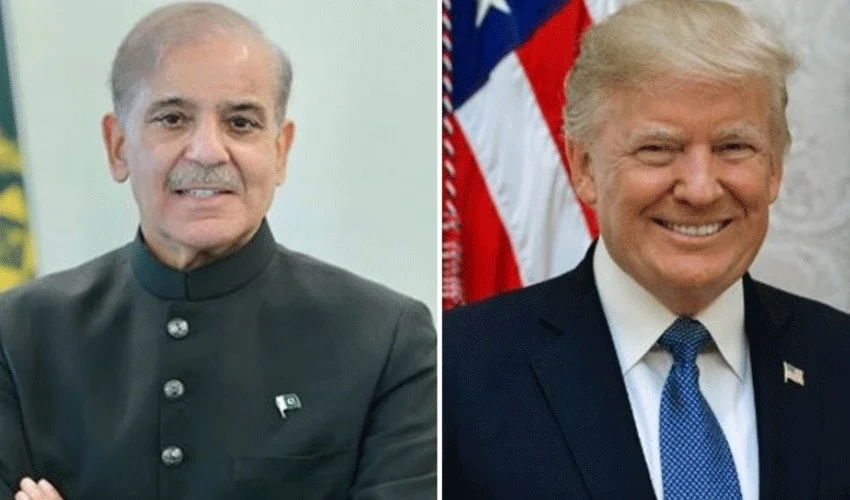
ISLAMABAD: Prime Minister Shehbaz Sharif is set to join a select group of Muslim leaders in a meeting with President Trump next week on the margins of the United Nations General Assembly, in what could be the first direct encounter between the two since Trump returned to the White House in January, Pakistan’s Foreign Office said Sunday.
The session unfolds against a backdrop of mounting tensions in the Middle East, including a recent Israeli strike in Qatar that has rattled US alliances and spurred Arab and Muslim nations to reassess their relations with Israel.
“The prime minister will also participate in a meeting of select Islamic leaders with US President Trump to exchange views on issues pertaining to regional and international peace and security,” the Foreign Office said in a statement.
Sharif will head Pakistan’s delegation to the high-level segment of the 80th UN General Assembly, which begins Sept. 22. He will travel with Foreign Minister Ishaq Dar, other cabinet members and senior officials.
In his address, Sharif “will urge the international community to resolve the situations of prolonged occupation and denial of the right to self-determination,” with specific emphasis on Indian-occupied Kashmir and Palestine, the Foreign Office said. “He will draw attention of the international community towards the grave crisis in Gaza and call for decisive action to end the suffering of the Palestinian people.”
Sharif also intends to outline Pakistan’s stance on regional security, as well as pressing global matters such as climate change, terrorism, Islamophobia and sustainable development.
Beyond the main assembly, Sharif’s itinerary includes key side events: sessions of the UN Security Council, a high-level meeting of the Global Development Initiative and a special gathering on climate action, among others. He is expected to confer with various world leaders and top UN officials on shared concerns. “He will also underline Pakistan’s resolve to work with all UN member states to uphold the UN Charter, prevent conflict, foster peace and promote global prosperity in Pakistan’s current role as a member of the Security Council,” the Foreign Office added.
The Foreign Office framed Sharif’s involvement in “this biggest annual gathering of global leaders” as evidence of Pakistan’s “strong commitment to multilateralism and the United Nations.” It would further affirm “Pakistan’s longstanding contribution towards the shared objectives of peace and development”.
Trump’s engagement with the Muslim leaders, Sharif among them, arrives in the wake of pivotal Middle East developments. Earlier this month, Israel, a close US ally, carried out a strike in Doha, Qatar, that killed five Hamas officials and a Qatari security officer. The operation elicited broad international rebuke, including from US-allied Gulf states, which also maintain strong ties with Qatar.
In its aftermath, Arab and Muslim leaders assembled for an emergency joint meeting of the Arab League and the Organisation of Islamic Cooperation in Doha, with Pakistan as a co-sponsor. Attendees advocated reviewing relations with Israel, and a joint communique pressed “all states to take all possible legal and effective measures to prevent Israel from continuing its actions against the Palestinian people.”
Trump, who dined in New York with Qatari Prime Minister Sheikh Mohammed bin Abdulrahman al-Thani after the strike, issued cautious statements as the divide widened between two of Washington’s principal Middle East partners.
The president first chided Israel, declaring he was “very unhappy” with the attack. But Secretary of State Marco Rubio subsequently affirmed that the US was “not going to change the nature of our relationship with the Israelis.”
Analysts suggest the Israeli move against Qatar has eroded US standing in the region, prompting Arab countries to explore other avenues for safeguarding against Israeli actions.
This week, Sharif and Saudi Crown Prince Mohammed bin Salman inked a “Strategic Mutual Defence Agreement” in Riyadh, committing to view any assault on one as an aggression against both, a sign of deepening bilateral security ties amid regional volatility.
The prospective Sharif-Trump meeting builds on prior U.S.-Pakistan interactions under Trump. In June, the president welcomed Pakistan’s Chief of Army Staff, Field Marshal General Syed Asim Munir, to the White House, the first instance of such a solo visit by the army chief, without senior civilian accompaniment.
Copyright © 2021 Independent Pakistan | All rights reserved