By Staff Reporter
QUETTA: Opposition leaders in the volatile Balochistan province pledged on Monday to escalate protests after police arrested more than 260 people during clashes sparked by a province-wide strike.
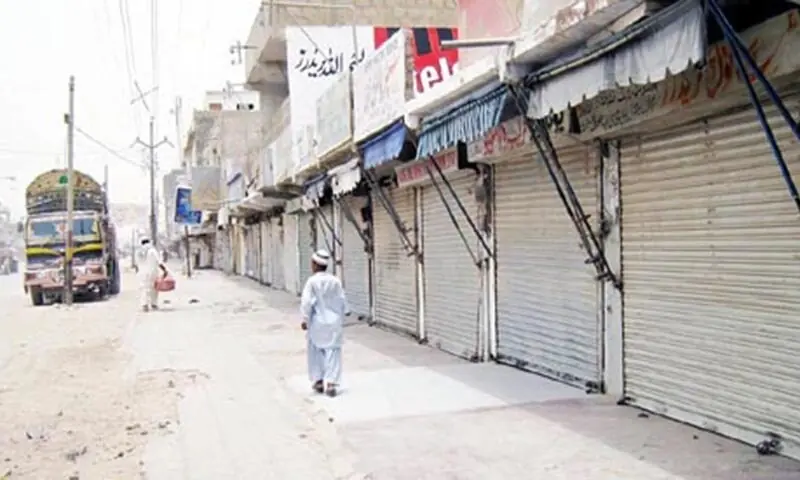
The shutdown, called to protest a suicide bombing last week that killed at least 15 people, paralysed Quetta and other cities, severing road links with the rest of Pakistan and halting trade with Afghanistan and Iran.
The strike, organised by the Tehreek-i-Tahaffuz-i-Ayeen-i-Pakistan alliance — comprising the Pashtunkhwa Milli Awami Party (PkMAP), Balochistan National Party-Mengal (BNP-Mengal), Pakistan Tehreek-e-Insaf (PTI), Awami National Party (ANP), National Party, and Majlis-e-Wahdat-e-Muslimeen — targeted the Sept. 2 attack near a political rally in Quetta.
The Islamic State militant group claimed responsibility for the bombing, which killed over a dozen and wounded dozens more, striking supporters of BNP-Mengal as they left an event marking a nationalist leader’s death anniversary.
By dawn, alliance supporters had blocked major highways into Quetta and other cities, using barricades and boulders to stop traffic. Transporters’ associations backed the action, isolating Balochistan by land. Rail and air routes remained operational under heavy security, but trade with Afghanistan and Iran ground to a halt, with no trucks crossing border towns like Chaman or Taftan.
Businesses shuttered across the province, with opposition supporters patrolling commercial hubs in Quetta to enforce the closure. Private schools and colleges closed, while government offices and institutions stayed open but saw low attendance due to blocked roads.
The shutdown extended to Loralai, Zhob, Sibi, Nasirabad, Khuzdar, Kalat, Harnai, Mastung, Hub, Bela, Kharan, Noshki, Qila Saifullah, Turbat, Panjgur, Gwadar, and Dera Murad Jamali. Clashes erupted in Quetta’s Sariab, Airport Road, Pashtunabad, Nawa Killi, and Jinnah Road neighborhoods as police cleared blockades.
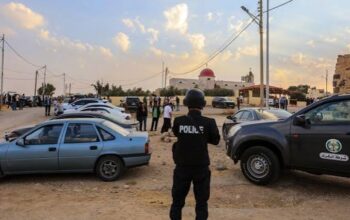
Officers dismantled barriers and prevented protesters from obstructing intra-city roads. Demonstrators briefly sealed the Western and Eastern bypasses, but police dispersed them with tear gas. On Airport Road, police fired warning shots into the air to scatter crowds, while skirmishes flared along Sariab Road. A senior police official was hospitalised with bullet wounds, authorities said, though details were scarce.
Senior Superintendent of Police Mohammad Baloch said the 260 detained in Quetta were sent to the district jail. Among them were PkMAP Secretary General Abdul Rahim Ziaratwal, former lawmaker Abdul Qahar Wadan, and BNP-Mengal leader Mir Naseer Ahmed Shahwani. Across the province, over 60 others were arrested for violating Section 144 — a colonial-era law banning public gatherings — blocking highways, or clashing with security forces.
The strike followed a joint press conference last week by alliance leaders, including Sardar Akhtar Mengal, Mehmood Khan Achakzai, former senator Mir Kabir Muhammad Shahi, and ANP’s Asghar Achakzai, who escaped the Sept. 2 bombing unharmed, having left minutes earlier. The attack deepened grievances in Balochistan, where separatist insurgencies and militant violence have long festered. At a Monday evening news conference at the Quetta Press Club, opposition leaders denounced what they called government efforts to suppress their protest. They condemned baton charges, tear gas, and mass arrests of “peaceful protesters” and outlined plans for further action.
The alliance announced protests on Sept. 11 outside press clubs across Balochistan and a meeting of senior leaders on Sept. 13 to determine next steps. They warned that if detained activists and leaders are not released, “a tougher line of action” would be revealed at the meeting.
Meanwhile, Balochistan Chief Minister Mir Sarfraz Bugti, speaking at a public forum in Dera Bugti’s Bhekar area, emphasized eliminating terrorism and improving governance as top priorities. Addressing a large crowd, including provincial lawmakers, Bugti urged political groups to focus on development over “non-issues.”
He called terrorism a “cancer” afflicting society and praised Dera Bugti residents for their sacrifices in pursuit of peace, stressing that “the integrity of the state must be upheld at all costs.” Bugti rejected narratives linking societal issues to state failures, saying they “undermine national cohesion.”
He affirmed the right to peaceful protest but condemned road blockades, warning that “coercion and violence will not be tolerated.”
Copyright © 2021 Independent Pakistan | All rights reserved