By Staff Reporter
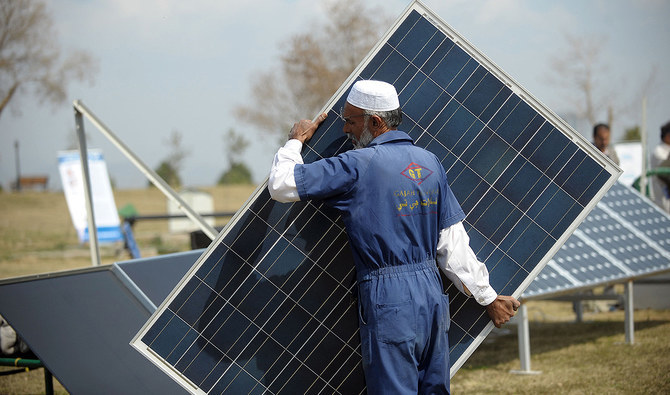
ISLAMABAD: The Power Division has ordered the National Electric Power Regulatory Authority to eliminate licensing requirements and fees for solar installations of 25 kilowatts or less, a swift reversal after weeks of public backlash that accused the government of “taxing sunlight.”
The directive, issued on Sunday — a national holiday — follows formal instructions from Power Minister Sardar Awais Ahmed Khan Leghari. In a statement, the ministry said it has asked Nepra to review the recently introduced Prosumer Regulations 2026 and restore the pre-2015 framework for small-scale systems, which exempted them from any Nepra license or application fee. Applications were previously handled directly by the country’s power distribution companies, or Discos, without cost.
Leghari, announcing the move on X, framed it as a consumer-friendly step aligned with the government’s clean-energy agenda. “Our government is pro-solar, pro-consumer, and committed to clean energy,” he wrote. “We want to remove unnecessary barriers, reduce costs and provide as much relief as possible to the people of Pakistan.”
The Power Division echoed the language in its own statement, noting that it had earlier warned Nepra of the “adverse effects” of centralizing approvals and imposing fees, and had urged the regulator to align the new rules with the old regime. A formal memorandum shared on social media argued that the 2015 model delivered a “significant fiscal incentive” for residential and small commercial users. Centralizing even minor installations at Nepra risked “procedural bottlenecks and financial deterrents,” it said, potentially leading to “administrative saturation” while undermining the ease of doing business.
The about-face comes after months of regulatory turbulence. The government initially sought to replace net-metering with net-billing — a change that would have sharply curtailed financial returns for prosumers — but retreated amid criticism. Responsibility was then shifted to Nepra. In November 2025 the regulator reduced benefits for new and some existing users. By February 2026 it had restored net-metering for legacy installations while introducing net-billing for new applicants and requiring a one-time Nepra license at Rs1,000 per kilowatt.
The fee, even for systems well below 25 kilowatts, triggered a social-media storm. Critics accused the authorities of fleecing households for a “god-given” resource at a time when sky-high grid tariffs and chronic power outages were driving record solar adoption. The Power Division had initially distanced itself, insisting the fee was Nepra’s domain. As pressure mounted, Leghari directed an end to the charge and a return of licensing authority to the Discos.
Industry groups had flagged the problems early. During public hearings on the 2026 regulations, the Pakistan Solar Association, Primage (Pvt) Ltd, the Pakistan Alternative Energy Association and Siddiq Renewable Energy (Pvt) Ltd all objected, arguing that stripping Discos of approval power would create needless bureaucracy. The Private Power and Infrastructure Board raised similar concerns with Nepra.
Pakistan’s rooftop solar surge has been one of the fastest in the developing world. Solar’s share of the energy mix rose from about 4 percent in 2021 to between 14 percent and 25 percent in 2024-25, according to official figures. The country imported roughly 22 gigawatts of solar panels in 2024 alone, helping add tens of thousands of new connections annually and cutting daytime demand on the national grid.
The Power Division’s latest intervention underscores how sensitive the issue has become. Nepra, once seen as operationally independent, has increasingly functioned as a rubber stamp for government priorities in the power sector. By moving to reinstate the decentralized model for the smallest systems, officials hope to prevent any slowdown in what has become a rare bright spot in Pakistan’s energy transition — one driven largely by households and small businesses rather than large utility-scale projects.
The regulator has yet to respond formally to the Power Division’s request. If approved, the change would remove the last remaining cost barrier for the vast majority of residential solar buyers, potentially accelerating installations further even as the broader shift from net-metering to net-billing remains in place for larger systems.
Copyright © 2021 Independent Pakistan | All rights reserved