By Staff Reporter
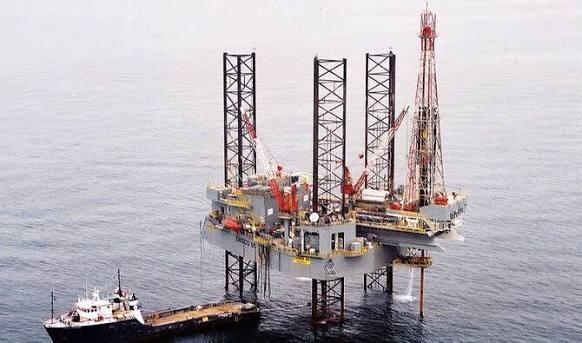
KARACHI: Pakistan Petroleum Ltd. said it discovered natural gas and condensate at an exploratory well in southern Sindh province, a find the state-controlled producer described as the first from a Jurassic-era rock formation in the country’s Lower Indus Basin and a potential gateway to reserves beneath its shallow coastal waters.
The discovery well, called Dolphin X-1, sits in the Sirani license area in Sujawal district, a stretch of marshland near where the Indus River delta meets the Arabian Sea. Karachi-based PPL, which holds a 75% operating stake in the block alongside state-owned Government Holdings Pvt., said in a stock exchange filing Monday that the well tapped the Chiltan Formation — a limestone reservoir that had never before yielded hydrocarbons in the basin.
Pakistan has relied increasingly on imported liquefied natural gas as output from aging domestic fields such as Sui has declined, straining a balance of payments already under pressure from the country’s dollar reserves. Any addition to local supply, even at modest volumes, helps blunt that import bill and is being closely watched by an energy ministry pushing to revive exploration in areas long bypassed by drillers.
The well was spudded April 17 and drilled to a measured depth of 3,850 meters, PPL said. Engineers identified gas-bearing zones from drilling data and wireline logs before testing the Chiltan interval directly. In post-acid testing, the formation flowed gas at a rate of 0.942 million standard cubic feet a day, with a heating value of roughly 1,000 British thermal units per standard cubic foot, at a wellhead pressure of 211 pounds per square inch through a 32/64-inch choke. Earlier, pre-acid testing produced condensate at an initial rate of 94 barrels a day, a figure that eased to 46 barrels within 24 hours.
PPL called the reservoir “tight” based on preliminary geological and engineering data, meaning the rock’s low permeability could limit how easily gas moves to the wellbore — a characteristic the company said needs further evaluation before it can size the discovery’s commercial potential.
The bigger significance, in PPL’s telling, is geographic rather than volumetric. The Sirani area’s marshy terrain had kept it off explorers’ maps for decades, too waterlogged for conventional seismic crews and rigs to operate efficiently. PPL said it became the first exploration and production company to work around that obstacle, deploying specialized transition equipment to gather two- and three-dimensional seismic data across the wetlands, with logistical support from the Pakistan Navy. That effort, the company said, turned an untested frontier into a proven petroleum system with possible extensions into shallow water offshore — a zone Pakistan has explored only sparingly despite decades of onshore production nearby.
Karachi-based brokerage Arif Habib Ltd. estimated the discovery could add about 0.09 rupees a share annually to PPL’s earnings, a modest contribution that underscores the find’s early-stage nature relative to its strategic value in opening new acreage.
PPL credited Prime Minister Shehbaz Sharif’s policy direction and Petroleum Minister Ali Pervaiz Malik’s oversight for enabling exploration in the challenging terrain, and separately thanked the Navy for its support throughout the project.
Copyright © 2021 Independent Pakistan | All rights reserved