By Staff Reporter
PESHAWAR: The Khyber Pakhtunkhwa Assembly was set to elect a new chief minister on Monday amid a deepening legal and political dispute over the resignation of the outgoing leader, Ali Amin Gandapur, after the provincial governor rejected his submission, citing inconsistencies in the signatures and returned the documents for clarification.
Governor Faisal Karim Kundi raised objections to the two resignation letters he received from Gandapur, a firebrand leader of the Pakistan Tehreek-e-Insaf party, noting that the signatures on both were inconsistent. “After due consideration, Chief Minister Khyber Pakhtunkhwa’s resignation has been returned with observation,” Kundi posted on X. In a letter, Kundi asked Gandapur to visit the Governor House on October 15 at 3:00 pm to verify his resignation.
Gandapur, in a late-night statement, insisted that his resignation, dated October 8, had now been accepted after an earlier rejection, and that both letters bore his verified signatures. The controversy has not deterred the assembly from proceeding with the election, where four candidates have had their nomination papers approved: the PTI’s Sohail Afridi, Jamiat Ulema-e-Islam-Fazl’s Maulana Lutfur Rehman, Pakistan Muslim League-Nawaz’s Sardar Shah Jahan Yousaf, and Pakistan Peoples Party’s Arbab Zarak Khan.
The PTI, which holds 93 seats in the 145-member assembly, maintains a clear majority, with 73 votes required to secure the post. Opposition parties, with 52 seats, are holding consultations to field a consensus candidate. The opposition leader, Dr. Ibadullah, said the opposition would present a joint nominee for the election.
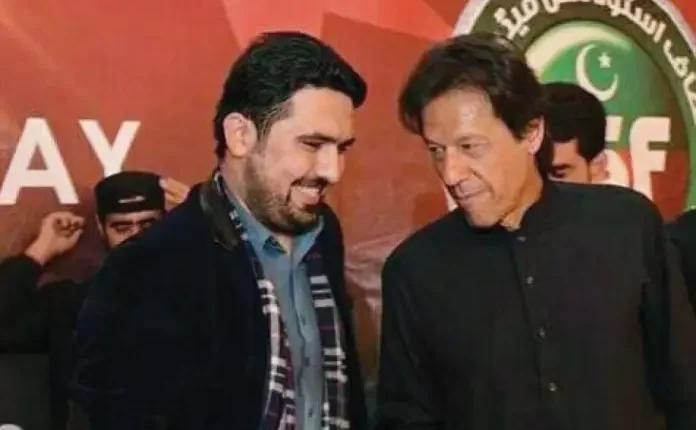
Gandapur stepped down from the post on October 8, hours after party leaders announced Afridi’s nomination, in what he described as compliance with directives from the PTI’s imprisoned founder, Imran Khan. “In respectful compliance with the orders of my leader, and founding PTI chairman, Imran Khan, it is my honour to tender my resignation from the Office of the Chief Minister, Khyber Pakhtunkhwa,” he wrote in a post on X at the time.
The PTI is pushing to elect a new chief minister without waiting for formal acceptance and notification of Gandapur’s resignation, a move that analysts fear could trigger a constitutional crisis and potentially invalidate the process. Legal experts argue that the office becomes vacant only upon the governor’s acceptance, and without an official notification, the post cannot be declared open for election. “The cabinet stands dissolved only after the chief minister’s resignation is accepted. Until then, Gandapur remains the constitutional holder of the office,” a senior legal expert said.
Within the PTI, some leaders have discussed past instances where resignations of party parliamentarians were not readily accepted, forcing judicial intervention. They warned that ignoring procedural formalities could invite legal challenges and delay or block Afridi’s election. “It seems someone within the PTI is playing a game to block the election of the new chief minister,” remarked a senior PTI leader, hinting at possible internal manoeuvring. The party, however, said it intends to hold the election “as soon as possible,” even though the Governor’s House has not yet accepted Gandapur’s resignation. “Any election held in such circumstances will be invalid in the eyes of the law,” it is even apprehended within the party.
Naeem Haider Panjutha, a member of the PTI’s legal team, slammed Kundi’s objection as an “unlawful overreach,” which the party categorically rejects. “The governor did not cite any constitutional provision to justify his action,” Panjutha said in a statement. “The constitution does not give the governor any power to raise an objection to or reject a resignation.”
He noted that Gandapur had submitted a written resignation and issued a video statement. “Signatures are only checked to confirm a person’s consent, and objections usually arise when someone is absent,” Panjutha added. He expressed confidence that the election would proceed as scheduled and that Afridi would be elected.
Afridi, a provincial assembly member from Bara in the tribal areas, was chosen by Khan. The PTI shared a video on X showing Afridi signing documents, with a caption stating that he had submitted his papers to contest the chief minister election. When questioned by reporters about allegations from federal ministers that he had contact with proscribed organisations, Afridi responded sharply. The federal government has “declared we are all banned groups, we are all terrorists, and they have filed all of the FIRs against us,” he said.
Syed Muhammad Mahir, the secretary of the Khyber Pakhtunkhwa Assembly, told reporters on Sunday that the nominations had been received and approved. Ahead of the vote, the PTI held a consultative session in the chambers of the provincial assembly’s speaker on Sunday, according to Junaid Akbar, the party’s provincial president and a member of the national assembly. Afridi attended the meeting, where discussions focused on the electoral process, preparations for the session and outreach to other assembly members, Akbar said in a post on X. In another post, he noted that nine PTI-supporting provincial lawmakers who had been abroad had returned to Pakistan. “All of our 92 MPAs are in Pakistan and in contact with us,” he said, predicting that Afridi would win with a two-thirds majority.
A PTI delegation led by Akbar met with Governor Kundi at his residence in Islamabad. “We told him that we hoped he would not become a part of any unconstitutional, undemocratic and illegal process,” Akbar posted on X, adding that the delegation had warned that any such process would be “very dangerous” for the province, peace and democracy.
Copyright © 2021 Independent Pakistan | All rights reserved