By Staff Reporter
ISLAMABAD: A human rights lawyer has lodged a formal complaint with the country’s top judicial oversight body accusing a high court judge of misusing his office to secure the release of his son after a fatal hit-and-run accident that killed two young women, according to documents reviewed by a local newspaper.
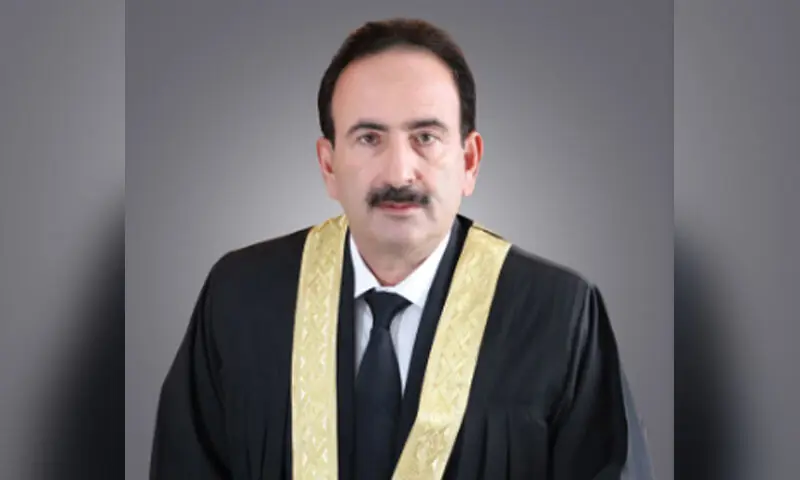
The complaint, filed on Dec. 25 with the Supreme Judicial Council, alleges that Justice Muhammad Asif of the Islamabad High Court arrived at the crash scene on Dec. 2 but focused on protecting his son and friends rather than aiding the victims, one of whom might have survived with prompt help. It claims he deployed state resources to pressure the bereaved families into a hasty pardon, leading to the son’s release four days later in secretive court proceedings.
The episode has spotlighted concerns over judicial accountability in Pakistan, where the council — comprising the chief justice of the Supreme Court, two senior Supreme Court judges and two chief justices from high courts — serves as the primary mechanism for investigating misconduct under Article 209 of the Constitution.
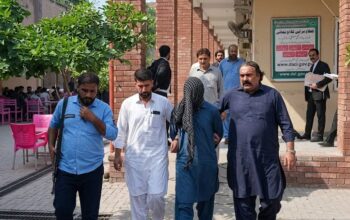
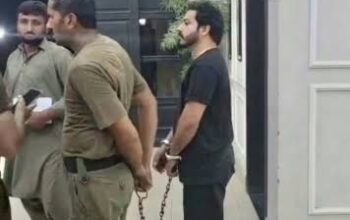
Advocate Inamul Rahim, the complainant, detailed in his submission that the accident unfolded near the Pakistan National Council of Arts when a black sports utility vehicle, speeding and allegedly driven by Justice Asif’s son, collided with a scooter carrying the two girls, who died at the scene. A judicial magistrate freed the son on Dec. 6 after recording statements of compromise from some family members.
But Rahim contended that the process was deeply flawed. “The respondent, by abusing the influence of his office, allegedly employed state machinery to exert pressure upon the legal heirs of the victims for his personal advantage,” the complaint states. It describes the bail as granted “in a secretive manner,” with in-camera proceedings after court hours to frame the case as compoundable. Not all heirs appeared in court, the filing notes; the brothers and sister of one victim were absent, and the mother’s statement was never taken.
Under Section 322 of the Pakistan Penal Code, which covers manslaughter, such offenses can be settled only through payment of diyat, or blood money, in line with legal and Sharia principles. Instead, Rahim alleged, “an underhand arrangement was pursued through coercive tactics, which is conduct unbecoming of a person holding public office.” This, he argued, breaches Article II of the judicial Code of Conduct, which demands that judges be “God-fearing and law-abiding.”
The complaint emphasises that judges must embody “sound character and humanity,” with legal knowledge secondary. “Instead of offering solace or acting with empathy, he allegedly relied upon the presence and support of state officials to exert pressure upon the bereaved families,” it reads.
Rahim accused Justice Asif of misconduct under Article 8 of the Constitution, including obtaining “personal advantage by entering into a secretive arrangement under the influence of his official position” to evade proper diyat payment and secure his son’s release. He also faulted the judge for failing to uphold Article 6 of the code, which requires that justice “is not only done but is also manifestly and undoubtedly seen to be done.” By exploiting an “unlawful compromise,” the complaint asserts, Justice Asif “compromised his judicial independence.”
The allegations of office misuse have gained widespread attention, constituting “evidence unique in its own nature,” Rahim wrote. Under Article 2, judges must remain “blameless,” but Justice Asif has “failed to meet this standard” and “lost the requisite qualification for confirmation,” yet has not resigned. At the time, Justice Asif was on judicial duty and obligated to preserve his court’s dignity, the complaint adds. It was “incumbent upon him” not to allow his son — who lacked a valid driving license — to take vehicles out late at night, nor to extend “illegal protection” with a “partisan spirit.” Rahim urged the council to investigate and forward a report to President Asif Ali Zardari.
Copyright © 2021 Independent Pakistan | All rights reserved