By Staff Reporter
ISLAMABAD: The provincial Sindh government and judiciary moved swiftly on Tuesday to slash fuel consumption and government spending, closing schools for spring break, ordering four-day workweeks and cutting official perks as the country braces for disruptions from the widening Middle East conflict.
The measures, announced a day after Prime Minister Shehbaz Sharif outlined federal austerity steps, reflect a coordinated national effort to conserve petroleum amid fears of supply shortages following US-Israeli strikes on Iran and Tehran’s retaliatory closure of the Strait of Hormuz. Officials have insisted the country holds “comfortable levels” of fuel stocks, with three oil shipments expected this week, but the government is nonetheless moving aggressively to limit demand.
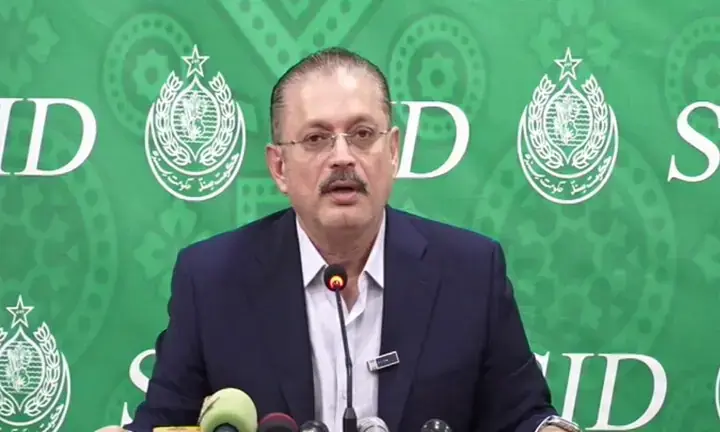
In Sindh, the country’s second most populous province, Senior Minister Sharjeel Inam Memon laid out the new restrictions at a news conference in Karachi. Schools across the province will observe spring vacation from March 16 to 31, while colleges and universities will shift to online classes. Ongoing examinations will proceed on schedule. Government offices will not close on Fridays but will instead operate on a work-from-home basis. “Monday, Tuesday, Wednesday, Thursday — you have to work,” Memon said. “On Friday, you have to work from home.”
The province endorsed all federal decisions announced by Sharif on Monday and launched what Memon called its own “austerity campaign.” Official vehicle fuel allowances will be cut by half, a step expected to save 960 million rupees. Provincial ministers will forgo their salaries and allowances for three months, from April through June. Memon said the cabinet would send a reference to the Sindh Assembly speaker asking lawmakers to consider similar steps for members of the provincial assembly, though the final decision rests with the speaker and legislators.
Unnecessary spending on furniture, stationery and other items will be reduced by 20 percent, projected to save 12 billion rupees. A complete ban will be placed on purchasing new vehicles or equipment except for essential needs such as ambulances and law-and-order vehicles. Unnecessary foreign trips are prohibited; any required travel must be in economy class. Several ministers, including Chief Minister Murad Ali Shah, volunteered to curtail their personal security details so that police vehicles and personnel could be redeployed for public duty.
The cabinet directed the law minister to immediately withdraw security protocols from former caretaker ministers and committee members who, Memon said, had “unfortunately made it a status symbol.” Security will remain in place for those with genuine threats. “The cabinet has taken strict action,” Memon said, “ordering that all kinds of unnecessary expenditures be halted immediately.” No government-funded Iftar parties will be held during Ramadan, and no official events will be organized at five-star hotels. “Chief minister sahib and we have decided together that from now on, no minister will attend any Iftari,” Memon said. “Charity begins from home.” Refreshments at government expense will be banned in all offices for two months after Ramadan ends.
Memon also announced that the chief minister’s official plane will remain grounded during the austerity period. All savings, he said, would be directed toward public welfare to shield ordinary citizens from the “aftereffects” of rising fuel prices. The Sindh steps mirror federal actions that include a 50 percent cut in fuel allowances for official vehicles — with exemptions only for ambulances and public buses — and a decision by federal cabinet members to forgo salaries and allowances for two months.
Other provinces followed suit. Khyber Pakhtunkhwa ordered all public and private universities, degree-awarding institutions and colleges to close on Fridays and Saturdays for the next two months, urging hybrid or online instruction on remaining days. Punjab and Balochistan announced parallel measures, including college closures and work-from-home requirements for government offices.
The judiciary, meanwhile, signaled it would also lead by example. After a virtual meeting of the National Judicial Policy Making Committee chaired by Chief Justice Yahya Afridi, the Supreme Court issued a notification imposing four-day workweeks — Monday through Thursday — with holidays from Friday to Sunday. The monthly petroleum, oil and lubricants ceiling for judges and entitled officers will be halved. Litigants and lawyers will be encouraged to appear via video link “where feasible,” and staff will work on a rotational basis to reduce commuting.
Similar four-day schedules will apply to the Federal Shariat Court, high courts and district courts, though urgent matters may be handled on Fridays and Saturdays with minimal staffing. Fuel allocations for the Federal Shariat Court and high courts will be cut by 50 percent, and for judicial officers by 25 percent. No additional security or protocol vehicles will be used within high-security zones, though route security will be maintained.
The newly established Federal Constitutional Court adopted parallel restrictions, including a “maximum reduction” in fuel for official vehicles and the same four-day workweek. The judicial strategy, the committee said, aims to reduce fuel consumption and operational costs “without compromising the delivery of justice.”
Pakistani authorities have emphasized that supply chains remain intact despite the turmoil in the Strait of Hormuz, which handles nearly a quarter of global oil trade.
Copyright © 2021 Independent Pakistan | All rights reserved