By Staff Reporter
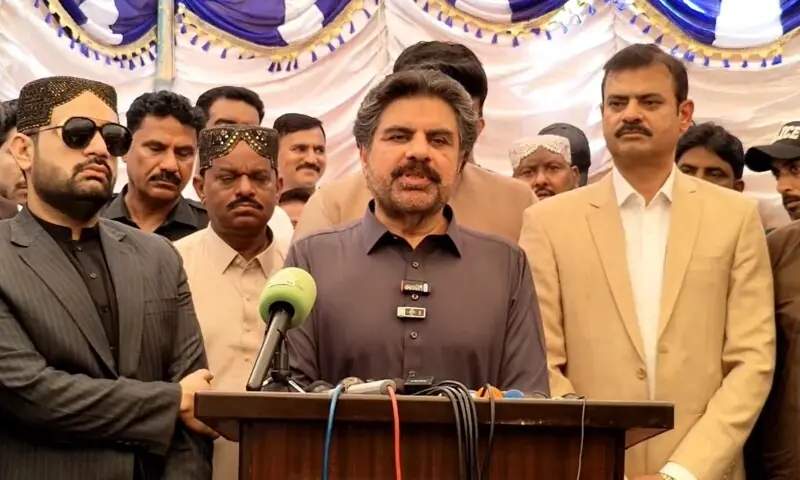
ROHRI: The provincial Sindh government is contemplating a ‘smart lockdown’ as one possible fuel-conservation measure in response to the global oil crisis set off by the US-Israel war on Iran, a provincial minister said Tuesday.
Local government minister Nasir Hussain Shah described the idea as part of a series of “unusual steps” the province is weighing to reduce consumption and shield residents from the fallout of sharply higher oil prices. He said the chief minister, who heads the provincial committee on austerity measures, has been holding multiple in-person and online meetings on a daily basis to assess the situation. The provincial government has already reduced the fuel consumption allowance for official vehicles by 60 percent.
“If the war on Iran continued for a prolonged period, it would have terrifying effects on everyone, including Pakistan,” Shah said. The energy sector would be the first to be hit, he added, noting that the prices of commodities are directly linked to fuel prices.
Shah urged citizens to limit their movement and reduce unnecessary use of petrol, oil and gas, saying it would be better for the long run if people conserved these resources now. “The present circumstances are not normal,” he said. “If the war drags on, everyone will face difficulties.”
Smart lockdowns, first used across Pakistan during the coronavirus pandemic, are targeted restrictions that allow authorities to impose controls on individual neighborhoods, streets or communities rather than enforcing a full citywide shutdown. In areas under such restrictions, no more than four people would be allowed to gather at a time, and only one person per household could leave home after explaining the reason to law enforcement officials. Public events, social gatherings and celebrations would be prohibited, and affected zones could be physically sealed off.
The minister’s remarks came amid a wider provincial and federal austerity drive launched in response to the Middle East conflict. Earlier this month the Sindh government announced a broad package of measures aimed at reducing fuel consumption and curbing government expenditure as oil prices climbed. Schools across the province were ordered to go on spring vacation from March 16 to March 31, with examinations continuing on schedule, while colleges and universities shifted to online classes. Government offices were directed to observe work-from-home arrangements on Fridays without declaring the days official holidays.
The province imposed a 50 percent cut in fuel consumption for government vehicles for the next two months and ordered 60 percent of official vehicles to remain grounded across all provincial departments during the same period. Provincial ministers agreed to forgo their salaries and allowances for April, May and June. All official travel by government officials must now be undertaken in economy class. The government banned the purchase of new vehicles and furniture by any department, grounded the chief minister’s official aircraft for the duration of the austerity period, prohibited government ceremonies from being held in hotels and restricted such events to official buildings only, and banned official iftar dinners and all other government-hosted gatherings.
As part of the same drive, the Sindh government also limited the number of guests at wedding ceremonies or any other parties to 200, with only one dish permitted to be served. Last week, ahead of the Eidul Fitr holidays, authorities had already urged the public to adopt fuel-conservation measures on their own to help reduce overall consumption. Shah framed the steps as a proactive effort to ease pressure on resources and prepare for what could be a sustained period of high global oil prices.
Copyright © 2021 Independent Pakistan | All rights reserved