By Staff Reporter
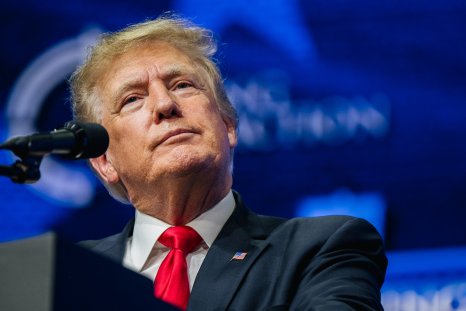
When President Trump took to Truth Social on Monday morning and announced that he was extending his 48-hour ultimatum to Iran by five full days, citing “very good and productive conversations” with Tehran, the global financial markets did exactly what they have learned to do under his leadership: they rallied.
North Sea Brent crude plunged more than 14 percent, West Texas Intermediate fell nearly 10 percent, and the Dow Jones Industrial Average jumped 700 points. It was the sort of swing that has become routine in the Trump era — dramatic, instantaneous and suspiciously convenient. Just 48 hours earlier, on Saturday evening, the president had drawn a bright red line. Iran had two days, he said, to reopen the Strait of Hormuz — the narrow chokepoint through which one-fifth of the world’s oil flows — or he would order strikes on the country’s largest power plant. No mention of talks. No hint of negotiation.
By Monday, with the markets poised for what was certain to be another punishing day, the red line had become a yellow light. Iran, Trump insisted, was now engaged in serious discussions that could produce “a complete and total resolution.” Tehran’s response was swift and categorical. “There is no negotiation whatsoever between Tehran and Washington,” the Foreign Ministry declared.
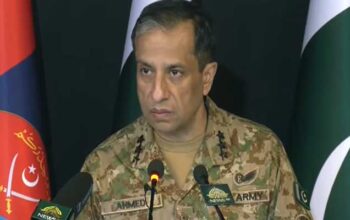
Yet even as Iranian officials denied direct contact, the record tells a more layered story. Back-channel messages had been flowing for days through a half-dozen intermediaries — Pakistan, Turkey, Egypt, Oman and Qatar chief among them. Egyptian Foreign Minister Badr Abdelatty had publicly confirmed on Sunday that conversations involving the foreign ministries of those nations and Trump’s special envoy, Steve Witkoff, were underway. Pakistan’s army chief, Gen. Asim Munir, had spoken with Trump; its prime minister, Shehbaz Sharif, with Iranian President Masoud Pezeshkian. Turkish Foreign Minister Hakan Fidan had been on the phone with his Iranian counterpart, Abbas Araghchi, and with Witkoff. Oman’s foreign minister, Badr Albusaidi, had been shuttling proposals about reopening the strait.
This was not the clean, bilateral breakthrough Trump described. It was classic multilateral diplomacy conducted in the shadows while the president claimed credit for “highly respected” and “very solid” Iranian officials whose names he would not reveal. The talks, such as they were, centered on a 15-point American proposal that followed demands floated in earlier rounds: no nuclear weapons, no enrichment “not even close,” surrender of Iran’s stockpile of highly enriched uranium (“the nuclear dust”), curbs on missiles, an end to support for proxies and an acknowledgment of Israel’s right to exist. Most of these elements had been discussed in Geneva and Oman before the shooting started. The real novelty was not the substance but the timing. The timing, of course, is everything with this president.
Trump has never hidden his belief that markets are a scorecard for his performance. His announcements routinely arrive minutes before the opening bell or just after the closing one. The April 2 “Liberation Day” tariffs were unveiled after markets closed. The 90-day tariff pause that rescued stocks from their worst week in years came the day after they hit bottom. The announcement that he would not seize Greenland by force landed 20 minutes before trading began on a day the Dow had suffered its worst decline since October. Even the initial strikes on Iran were confirmed in a video posted at 2:30 a.m. on a Saturday — after markets had shut for the weekend.
The pattern has earned its own nickname in financial circles: TACO, for “Trump Always Chickens Out,” coined last year by Financial Times columnist Robert Armstrong after a series of tariff threats that evaporated once the pain registered on Wall Street. Critics inside and outside the administration now apply the label freely to the Iran episode. It is an uncharitable acronym, but it captures a deeper truth. Trump’s foreign policy appears increasingly tethered to the same instincts that once guided his real-estate deals: maximise leverage, threaten maximum damage, then declare victory and move on before the consequences fully materialise.
In the case of Iran, the economic stakes were impossible to ignore. The closure of the Strait of Hormuz had already sent oil prices soaring. A strike on power plants that supply electricity to 90 million people risked plunging Iran into darkness, halting water pumps, freezing food supplies and triggering a humanitarian catastrophe that would have ricocheted across global energy markets. Iranian commentators described the threat in apocalyptic terms. The reformist writer Ahmad Zeidabadi compared it to the novel “Blindness,” warning that extended blackouts would leave the elderly trapped in high-rises and the nation without food, fuel or sanitation. Energy experts noted that while Iran’s grid is dispersed and resilient, the psychological and economic shock would have been immense.
Gulf allies had warned the administration privately that attacking civilian infrastructure would cross a dangerous threshold. They feared Iranian retaliation against their own energy facilities and desalination plants, which supply nearly all fresh water to several states. Vice President JD Vance, long a scepticof deeper entanglement, was reportedly unenthusiastic. And within Trump’s own ranks, the war had exposed fissures in the Make America Great Again movement. The president who once boasted he would end the conflict when he “felt it in his bones” now found himself confronting the limits of instinctual governance.
Iran’s internal disarray only complicated the picture. The assassination campaign by Israel had decapitated much of the revolutionary leadership. The new supreme leader, Mojtaba Khamenei, was said by some to be incapacitated. President Pezeshkian, a unifying figure but no nuclear negotiator, was outranked on military matters. Parliament Speaker Mohammad Bagher Ghalibaf issued a partial denial of talks while leaving room for indirect contacts. Foreign Minister Araghchi appeared engaged with the Omanis but sidelined in other channels. The Iranian responses were carefully calibrated: first, outright rejection, then acknowledgement that “messages arrived through some friendly countries” and were answered, “in accordance with the country’s principled positions.” In other words, talks were happening — just not on the terms or at the level Trump portrayed.
None of this is to suggest the mediation efforts were illusory. Pakistan, with its long border and heavy dependence on Hormuz oil, has emerged as a plausible venue for future meetings that could include Vance. Turkey and Egypt have lent their good offices with credibility in both capitals. Oman has quietly kept channels open for years. Even Britain’s Keir Starmer confirmed he was aware of the conversations. These third-party efforts reflect a reality Trump has been reluctant to admit: unilateral American threats have limits when the adversary’s leadership is fragmented, and its survival is at stake. Yet the president’s own rhetoric continues to oscillate between bombast and bromides. On Friday, he was “obliterating the other side” and uninterested in cease-fires. By Monday, he was touting “major points of agreement” and reminding audiences that “my whole life has been a negotiation.” The shift came, conveniently, just hours before markets opened and just days after he had warned that Iran “can’t be trusted.” The Iranian Foreign Ministry was not wrong to accuse him of trying to “lower energy prices and buy time.” The markets certainly interpreted the pivot that way.
This is not how great-power diplomacy is supposed to work. Threats that double as market-moving events erode credibility. Ultimatums issued on Saturday and walked back on Monday suggest improvisation rather than strategy. And a president who treats the Strait of Hormuz and the price of Brent crude as interchangeable levers risks turning a regional war into a global economic hostage situation.
To be sure, any pause that prevents strikes on civilian power plants and keeps the strait from becoming a permanent graveyard of tankers is welcome. The 15-point framework, if it can be refined through genuine mediation, contains elements — denuclearisation, limits on missiles, regional de-escalation — that could stabilise the Gulf. But the path forward remains perilous. Iran’s defence council has warned that any American attempt to seize islands in the strait would trigger widespread mining, effectively closing the entire Persian Gulf. Israeli objectives still diverge from Washington’s. And Iran’s remaining missile launchers, though depleted, retain the capacity to strike regional targets.
Trump likes to say he alone can solve problems that eluded his predecessors. In this case, the problem he helped escalate now requires the very multilateral diplomacy he once scorned. The real test will come not in the next five days but in whether the talks produce more than another market bounce. If they do, history may credit the back-channel work of Egypt, Pakistan, Turkey and Oman more than the president’s instinct. If they do not, the world will once again be reminded that governing by TACO may deliver short-term relief but leaves long-term stability on far shakier ground.
Copyright © 2021 Independent Pakistan | All rights reserved