By Staff Reporter
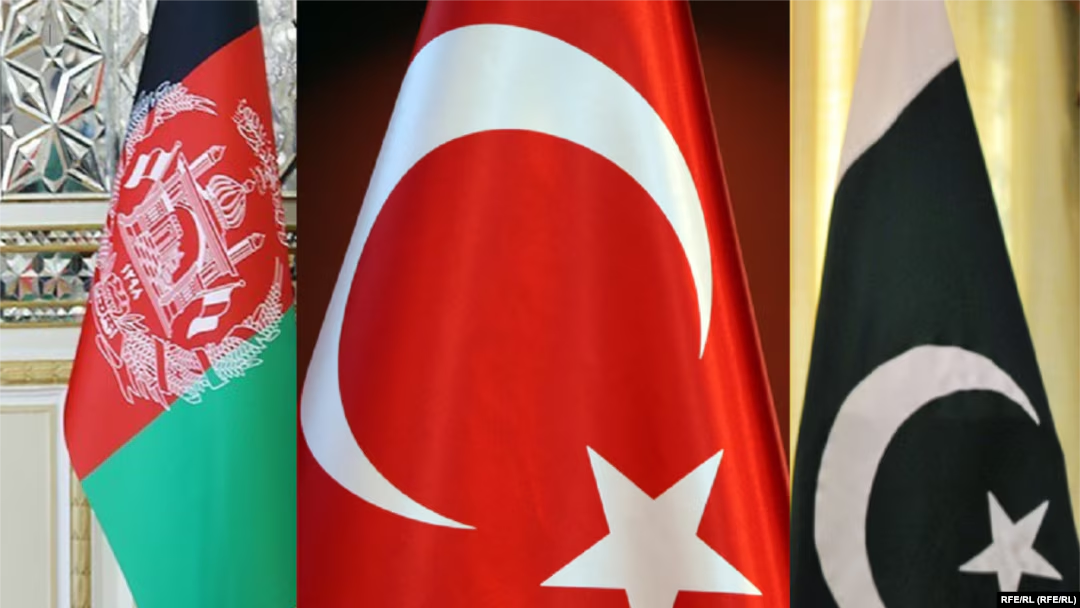
ISLAMABAD: Negotiations between Pakistan and Afghanistan remained deadlocked on Sunday, with Afghan Taliban officials showing little willingness to commit to dismantling terrorist sanctuaries on their soil, Pakistani security officials involved in the talks said.
The discussions, hosted by Turkey and stretching over two days, failed to produce any breakthroughs on the central issue of cross-border terrorism, particularly the operations of the Tehreek-i-Taliban Pakistan, and other militant groups based in Afghanistan. After nearly nine hours of intense deliberations that extended late into the night, Pakistani delegates presented what they described as their “final position,” demanding that the Taliban regime take “concrete and verifiable steps to eliminate cross-border terrorism from and inside Afghanistan.”
“Pakistan has made it clear that the ongoing patronage of terrorists by the Afghan Taliban is unacceptable,” a senior security official said. The Taliban’s responses to Pakistan’s assertions about terrorism originating from Afghan territory were dismissed by Pakistani officials as “illogical and opposite to ground realities.”
In a pointed remark, the official suggested that the Afghan delegation “appeared to be following someone else’s agenda,” an apparent reference to India, which has recently strengthened its ties with Kabul.
The Pakistani official warned that the Taliban’s stance “was not in the interest of Afghanistan, Pakistan, or the region,” adding that any further progress would depend on the “positive attitude of the Afghan Taliban.”
The talks began with a glimmer of hope earlier in the day when the Afghan delegation presented a written response to Pakistan’s demands from the previous session. Pakistan then submitted its counter-response, leading to a second round of discussions that started after midday, with senior Turkish and Qatari mediators in attendance.
But optimism quickly evaporated as the Afghan representatives refused to offer any written assurances. Pakistani officials said the Taliban team, which was receiving instructions from Kabul and Kandahar, seemed to lack the authority to make binding decisions. This reluctance was seen as evidence of an unwillingness to act against the TTP and other groups with hideouts in Afghanistan.
Over the course of the two days, Pakistan shared photographic and documentary evidence detailing the activities of the TTP, the Balochistan Liberation Army and other terrorist organisations operating from Afghan soil, including information on their leadership and movements. The delegation also presented photographs and Afghan identity documents of infiltrators captured in recent border incidents.
At one point, the Afghan Taliban proposed bringing the TTP to the negotiating table for direct talks with Pakistani authorities. Islamabad rejected the idea outright, insisting that it would not negotiate with a terrorist group and that it was the Taliban’s duty to end their support for the TTP.
Echoing comments made earlier by Pakistan’s defence minister, Khawaja Asif, the negotiators conveyed that Islamabad was prepared to pay any price to neutralise threats from Afghan territory for the safety of its citizens. They added that the Afghan people would bear the consequences of the Taliban regime’s continued intransigence.
Pakistan’s primary demand remained firm: decisive action against terrorist proxies based in Afghanistan. Even as the dialogue unfolded in Istanbul, Pakistan’s military reported significant infiltration attempts along the Pak-Afghan border in the Kurram and North Waziristan regions. The army’s public relations wing, the Inter-Services Public Relations, noted that these incidents occurred “while delegations of Pakistan and Afghanistan are engaged in talks in Türkiye.” “This casts doubts on the intentions of the Interim Afghan government regarding its commitment to addressing terrorism emanating from its soil,” the military statement said.
The Istanbul negotiations represent the second phase of talks that began on Oct. 19 in Doha, Qatar, where the two sides agreed to a ceasefire mediated by Qatar after a week of deadly border clashes. Turkey has taken on an expanded role in hosting this round, with Qatar serving as guarantor of the truce and facilitator.
Diplomatic sources said mediators were working to maintain engagement between the parties to avert a total collapse in communication. They described the Afghan Taliban as inflexible in their refusal to cooperate or acknowledge the facts on the ground, a position that has become evident to the mediating parties as well.
Turkey, through its intelligence chief, Ibrahim Kalin, who oversaw the resumption of talks, is attempting to help the Taliban delegation understand the evidence and the seriousness of Pakistan’s concerns. But officials emphasised that advancement would require the Taliban to demonstrate seriousness and move beyond their current intransigence.
In the initial phase of the Istanbul talks, Pakistan submitted a counterterrorism plan to the Afghan Taliban aimed at curbing cross-border attacks from Afghan soil. Kabul provided its response around 2 am on Sunday.
The talks followed intense border skirmishes initiated by the Taliban regime, according to Pakistani accounts. Pakistan responded with a retaliatory campaign after unprovoked firing along the border by Taliban forces and affiliated militants. The armed forces repelled multiple attacks on border posts, killing over 200 Taliban and affiliated militants, though 23 soldiers were killed in the clashes. Pakistan also carried out “precision strikes” in Afghanistan’s Kandahar Province and Kabul, destroying several terrorist strongholds. Later, Pakistan closed its border crossings with Afghanistan
Speaking to reporters in Sialkot on Saturday, Asif accused India of waging a proxy war through the Afghan Taliban and warned of an “all-out war” with the regime if the talks failed. Still, Asif, who led the Pakistani delegation in Doha, said he sensed an urge for peace during those earlier negotiations.
Copyright © 2021 Independent Pakistan | All rights reserved