By Staff Reporter
PESHAWAR: Tribal jirgas in Pakistan’s Khyber Pakhtunkhwa province have called for talks with banned outfits and the Afghan interim government to secure peace in the region, stressing that military offensives have failed to resolve the ongoing conflict, local media reported.
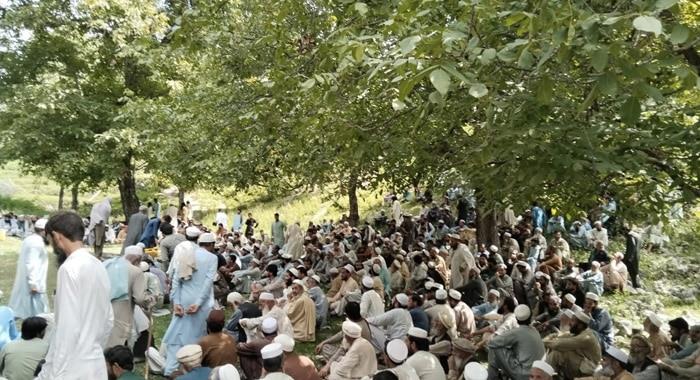
The third in a series of jirgas since August 2 was held on Wednesday, bringing together representatives from North Waziristan, Upper and Lower South Waziristan, and tribal subdivisions including Wazir, Bettani, Darazinda, and Jandola.
The gatherings follow a multiparty conference on July 24 that recommended convening these meetings to devise a peace strategy. The first jirga, held with elders, religious scholars, and representatives from Peshawar, Orakzai, Darra Adam Khel, and Hassan Khel, urged the federal government to form a delegation of provincial officials and tribal leaders to engage in dialogue with Afghanistan.
The second, on August 4, included delegates from Bajaur and Mohmand tribal districts and rejected military operations or forced displacement, advocating instead for a broad-based jirga to hold meaningful talks with the Afghan people and government.
Wednesday’s jirga echoed these sentiments, emphasising negotiations over force. “Negotiations are the only way out and this is evident from the recent past when Americans and their allies, after fighting against Afghan Taliban for over 20 years, held talks,” sources privy to the meeting told Dawn newspaper.
Participants highlighted the futility of prolonged military efforts. “The state has been at war against militants for almost 22 years, with several military operations already carried out against militants, but the situation has yet to improve,” the sources quoted them as saying.
The jirga expressed frustration with the provincial government’s approach, noting the absence of a security briefing during the session. Some attendees also rejected the concept of distinguishing between “Good and Bad Taliban.” “We do not accept this policy. We do not want any of them and the state has to chain the Good Taliban,” participants were quoted as saying by Dawn newspaper. A participant cited the Khyber Pakhtunkhwa chief minister as saying the provincial government seeks public backing to press the issue with the “power-that-be,” describing the people as his strength.
Barrister Muhammad Ali Saif, spokesperson for the Khyber Pakhtunkhwa government, affirmed the province’s position. “This [engaging Afghan interim government for peace in the region] was the provincial government’s stance and then people of the province, too, demanded engagement with the interim Afghan government,” he told Dawn.
Saif criticised the federal government’s inaction. “The federal government is not serious in peace in this region which is why it has yet to reply to the TORs prepared by the provincial government in February, for negotiations with the interim Afghan government,” he said. “The process of negotiations with Afghanistan’s interim government would have begun earlier, had this [militancy] been happening anywhere else in the country.”
The jirgas are part of a broader effort to address militancy and instability in the region, with participants demanding talks not only with the Afghan interim government but also with banned outfits operating in Pakistan. The multiparty conference in July envisioned a grand jirga, to be nominated by the first regional meeting, to finalise and implement decisions within 15 days. The repeated calls for dialogue reflect growing discontent with military solutions and a push for a negotiated settlement to restore stability in Khyber Pakhtunkhwa.
Copyright © 2021 Independent Pakistan | All rights reserved