
By Staff Reporter
ISLAMABAD: President Donald Trump on Friday rejected Iran’s newest proposal for ending the US-Israeli war with Tehran, telling reporters he was “not satisfied” with the offer even as he formally notified Congress that hostilities had “terminated” and the 60-day clock under the War Powers Resolution had run out.
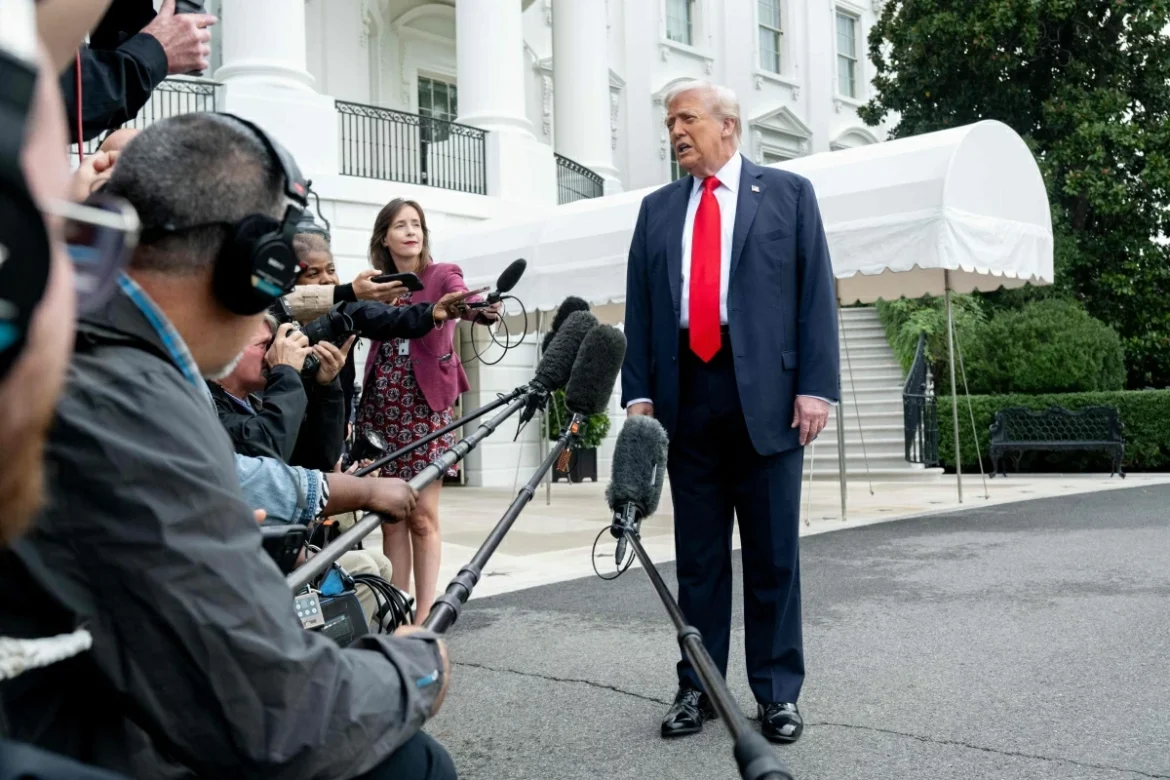
“They want to make a deal, but I’m not satisfied with it,” Trump said at the White House. “We have just had a conversation with Iran. Let’s see what happens, but I would say that I am not happy. They’ve made strides, but I’m not sure if they ever get there.”
Trump described “tremendous discord” within Iran’s leadership in the aftermath of the Feb. 28 US and Israeli airstrikes that killed Supreme Leader Ali Khamenei and dozens of top military and intelligence officials. “The leadership is very disjointed,” Trump said. “It’s got two to three groups, maybe four, and it’s a very disjointed leadership. And with that being said, they all want to make a deal, but they’re all messed up.”
Iran delivered the proposal to Pakistani mediators late on Thursday, according to Iranian state media and Pakistani officials, who forwarded it to Washington. Neither side disclosed its contents. Diplomatic sources familiar with the document said it prioritized an immediate halt to hostilities and steps to restore maritime security in the Strait of Hormuz, including the resumption of commercial shipping, before addressing more contentious issues such as Iran’s nuclear program. The proposal included limited interim assurances on the nuclear file but fell short of the comprehensive, verifiable constraints the United States has demanded.
The sequencing dispute remains the central obstacle. Iran has insisted on relief from military pressure and economic sanctions before engaging deeply on uranium enrichment or the transfer of enriched material. The Trump administration has maintained that the naval blockade of Iranian ports will remain in place until Tehran offers substantive movement on the nuclear front.
Trump told reporters he had given Iran what he called “a final proposal” and received an updated briefing on military options from US Central Command the day before. He framed the choice starkly: “Do we want to go and just blast the hell out of them and finish them forever? Or do we want to try and make a deal. That’s the options.” He added that he would “prefer not” to launch a major new offensive.
In a letter to congressional leaders, Trump said, “there has been no exchange of fire between the United States and Iran since April 7, 2026. The hostilities that began on February 28, 2026, have terminated.” The missive was an explicit effort to sidestep the requirements of the 1973 War Powers Resolution, which mandates that presidents either end unauthorized military operations after 60 days or obtain congressional approval. Defense Secretary Pete Hegseth had previewed the administration’s legal reasoning earlier in the week, telling senators that the ceasefire “pauses” or “stops” the 60-day clock.
The fragile ceasefire, brokered in early April through Pakistani mediation, has largely held, though both sides have traded accusations of violations. Large-scale fighting inside Iran has subsided, but the U.S. Navy’s blockade of Iranian oil exports continues, and Iran maintains its threat to commercial vessels transiting the Strait of Hormuz. Shipping traffic through the vital chokepoint has plummeted by 90 percent, according to the British navy, choking off roughly one-fifth of global oil and gas supplies and driving oil prices above $100 a barrel.
On Friday, the Treasury Department reiterated its warning that any payment — in cash, cryptocurrency or in-kind contributions — to secure safe passage through the strait would violate U.S. sanctions. The United Nations Refugee Agency warned separately that the disruption has caused “major disruptions to global humanitarian supply chains,” with delivery costs for some aid shipments more than doubling.
Iranian Foreign Minister Abbas Araghchi spent much of Friday on the telephone with counterparts across the region, including in Turkey, Egypt, Qatar, Saudi Arabia, Iraq and Azerbaijan, briefing them on Tehran’s position. The European Union’s top diplomat, Kaja Kallas, held her own call with Araghchi to discuss reopening the strait and longer-term security arrangements.
Pakistani officials, who have described their role as strictly facilitative, remained tight-lipped about the proposal’s substance. Foreign Office spokesman Tahir Andrabi expressed cautious optimism that dialogue could still yield an agreement. trump told reporters he had “great respect” for Pakistani Prime Minister Shehbaz Sharif and Chief of Defense Forces Field Marshal Asim Munir, whose government has continued to facilitate the indirect talks.
At least 3,375 people have died in Iran and more than 2,600 in Lebanon, where fighting between Israel and the Iran-backed Hezbollah group reignited shortly after the initial strikes. Another 24 people have been killed in Israel and more than 20 in Gulf Arab states. Seventeen Israeli soldiers and 13 U.S. service members have also died.
Pentagon officials said U.S. forces remain on standby to resume strikes if negotiations collapse. Trump, however, told reporters he hoped a deal could still be reached. “We’re going to get this thing done properly,” he said. “We’re not going to leave early and then have the problem arise in three more years.”
Global markets remained on edge. Oil prices eased modestly after news of the Iranian proposal but stayed elevated, and concerns about a prolonged closure of the Strait of Hormuz continued to weigh on energy and shipping costs worldwide.
Suggested headlines:• Trump dismisses Iran’s latest proposal, tells Congress war has ‘terminated’ as Hormuz crisis deepens• ‘Not satisfied’: Trump rejects new Iranian offer and declares hostilities over, testing War Powers limits• As deadline expires, Trump notifies Congress Iran conflict is ended — while keeping blockade and military options in place
Copyright © 2021 Independent Pakistan | All rights reserved