By Staff Reporter
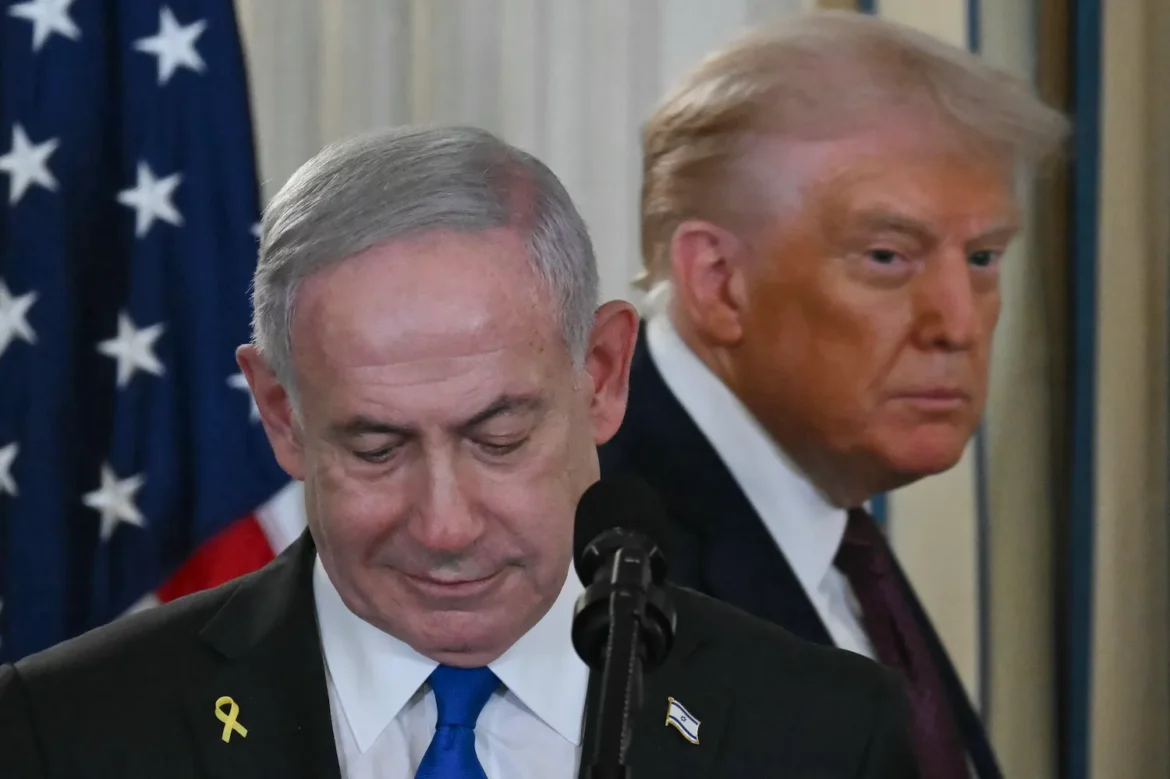
ISLAMABAD: US President Trump called Israeli Prime Minister Benjamin Netanyahu “crazy,” told him he would be in jail without his protection, and shouted profanities at him during a phone call on Monday, media outlet Axios and others reported, quoting two US officials and a third source briefed on the conversation — a searing confrontation that halted a planned Israeli military assault on Beirut and exposed deepening fractures between two leaders who have long presented their alliance as unshakable.
The call, described by one U.S. official as among the most acrimonious Trump has had with Netanyahu since returning to office, came as Iran threatened to walk away from indirect nuclear negotiations with Washington, citing Israel’s expanding military campaign in Lebanon as a violation of the ceasefire framework. Hours before Trump picked up the phone, Israel’s military had issued Arabic-language evacuation orders to residents of Dahiyeh, the dense southern suburb of Beirut where Hezbollah maintains much of its command infrastructure, and Israeli warplanes appeared poised to strike.
They never did.
Summarising Trump’s remarks, one US official told Axios: “You’re fucking crazy. You’d be in prison if it weren’t for me. I’m saving your ass. Everybody hates you now. Everybody hates Israel because of this.” A second source said Trump was furious throughout the call, at one point yelling, “What the fuck are you doing?”
Trump’s invocation of Netanyahu’s legal jeopardy — an apparent reference to his sustained political backing of the Israeli leader through a protracted corruption trial — underscored the degree of personal grievance animating the president’s anger. Trump, in the sources’ telling, felt that he had spent political capital protecting Netanyahu, only to watch him drag the United States toward a regional conflagration at the precise moment Washington was trying to lock down a diplomatic agreement with Tehran.
Analysts said Iran’s last threat is what truly rattled the White House. The nuclear talks — weeks of indirect back-channel negotiations mediated by Pakistan and Qatar, described afterward by Trump as moving at “a rapid pace” — were suddenly at risk of collapsing before they had produced anything
The official said Trump understood that Hezbollah had been attacking Israel and that Israel had a right to defend itself. But he believed Netanyahu, in recent days, had been escalating in ways that were disproportionate to the threat — and that were threatening to collapse one of his administration’s most ambitious foreign-policy gambits. A second U.S. official said Trump had been disturbed by the civilian death toll in Lebanon and specifically objected to Israeli strikes that levelled entire buildings to eliminate a single Hezbollah commander.
The call unfolded against a backdrop of cascading crises. Earlier Monday, Israeli Prime Minister Netanyahu and Defence Minister Israel Katz issued a joint statement threatening airstrikes on Hezbollah targets in Dahiyeh, citing what they described as “repeated violations of the ceasefire.” Iran’s Foreign Minister Abbas Araghchi responded swiftly on X, warning that Israel’s actions constituted a breach of the broader US-Iran ceasefire and that Washington and Jerusalem would bear “the consequences of any violation.” Iran’s semi-official Tasnim News Agency reported that Tehran had suspended its exchange of messages with American mediators and threatened to close the Strait of Hormuz entirely and “activate other fronts.”
The memorandum the US and Iran are negotiating, sources told Axios, explicitly calls for an end to the fighting in Lebanon. That was the source of a previous tense call between the two leaders. It is also, apparently, still the source of this one.
The threat to Hormuz is not abstract. The strait has been largely closed since Iran shut it following US and Israeli strikes in late February, depriving global markets of roughly 20 percent of their normal oil and gas supplies. The economic pressure has reverberated across the Gulf and beyond, and a further escalation — particularly involving the Bab el-Mandab strait, through which Saudi Arabia routes much of its Red Sea oil exports — could deepen what analysts already describe as severe structural damage to the Gulf’s long-cultivated image as a hub of global commerce.
That is the bind in which Trump now finds himself. He went to war with Iran expecting a swift, decisive outcome, and the outcome has been neither. The regime survived. Its military, though battered, remains functional. Its nuclear program remains unresolved. And Washington is still at the table, negotiating — which means Iran still has leverage.
Trump pressed Netanyahu during the call to stand down, and by most accounts, the Israeli prime minister yielded, at least in part. “Bibi said, ‘OK, OK, just make sure everything is taken care of,'” according to the second US official, who said Trump had effectively steamrolled him. An Israeli official subsequently confirmed to Axios that the planned Beirut strikes would not proceed.
Netanyahu’s own post-call statement told a somewhat different story. He said he had informed Trump that Israel would strike Hezbollah targets in Beirut if the group did not cease its attacks, and that operations in southern Lebanon would continue regardless. “Our position remains the same,” he wrote.
Trump, for his part, projected confidence and something approaching resolution. He posted on Truth Social that he had held “a very productive call” with Netanyahu and that there would be “no Troops going to Beirut.” (Israel had not, in fact, planned to send troops to Beirut — it had planned massive airstrikes — a distinction Trump’s post elided.) He added that he had spoken with “highly placed Representatives” of Hezbollah, who he said had agreed that “all shooting will stop.” It was not clear who those representatives were.
Later Monday, the Lebanese Embassy in Washington said Hezbollah had accepted a US proposal for a “mutual cessation of attacks” and that Trump had secured Netanyahu’s agreement to the arrangement. The deal, put forward by Secretary of State Marco Rubio, would have Israel suspend its planned Beirut strikes in exchange for Hezbollah halting its attacks on Israeli territory. Neither Israel nor Hezbollah confirmed acceptance of the agreement. Previous Trump administration ceasefire announcements in Lebanon have had a troubled history of existing principally on paper.
Talks between Israeli and Lebanese diplomats scheduled for Tuesday in Washington were expected to proceed as planned, a US official said.
Copyright © 2021 Independent Pakistan | All rights reserved