By Staff Reporter
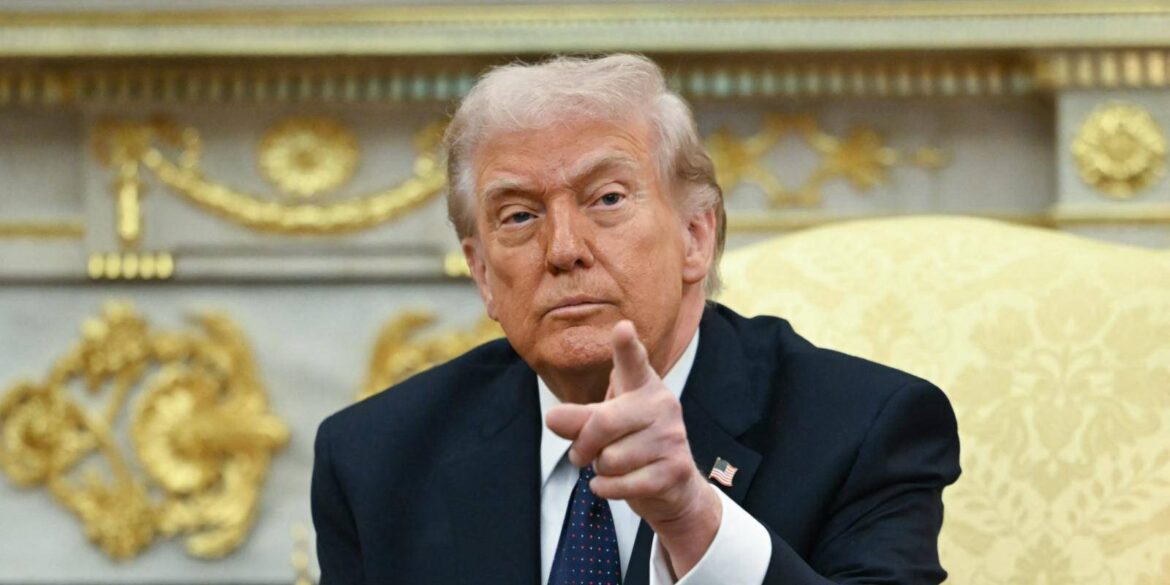
ISLAMABAD: President Donald Trump abruptly halted a US military operation to escort commercial vessels through the Strait of Hormuz after Saudi Arabia blocked American aircraft from using its territory and airspace, two US officials said, forcing the White House to suspend the mission barely 36 hours after it began.
The reversal came after Trump surprised Gulf allies by announcing the initiative, dubbed “Project Freedom,” on social media Sunday afternoon. The operation was intended to break Iran’s effective blockade of the narrow waterway, through which much of the world’s oil and other critical commodities flow. Saudi leaders, angered by the lack of prior coordination, immediately informed the United States that its military could not fly aircraft from Prince Sultan Air Base southeast of Riyadh or transit Saudi airspace to support the effort, NBC reported.
A telephone call between Trump and Saudi Crown Prince Mohammed bin Salman failed to resolve the impasse, according to the officials, leaving the administration no choice but to pause the operation to preserve essential military access in the region. The episode highlighted the fragile dependencies that underpin US operations in the Persian Gulf. Because of geography, American warplanes, refueling tankers and support aircraft require permission from multiple regional partners for access, basing and overflight — arrangements the Pentagon shorthand as “ABO.” Saudi Arabia is central to that architecture, providing basing for fighter jets and air defenses as well as overflight rights; Jordan offers additional basing, Kuwait critical overflight corridors, and Oman both overflight and naval logistics support.
The US military had already begun positioning additional ships in the Gulf and had escorted two US-flagged vessels through the strait under the new operation when the pause was ordered, a US official said. Central Command had publicly confirmed the initial transits.
In a social media post early on Wednesday, Trump said the suspension is temporary. Project Freedom would be “paused for a short period of time to see whether or not” a broader agreement to end the war “can be finalized and signed,” he wrote.
The operation had been framed by the administration as a humanitarian effort to free dozens of vessels trapped in the Persian Gulf for more than two months, their crews running low on food, water and fuel. Pentagon officials stressed that it was separate from the broader US bombing campaign against Iran, code-named “Epic Fury,” which began Feb. 28. But the mission’s dependence on Gulf partners quickly became its undoing. Other close allies were also caught off guard. Trump did not speak with Qatar’s emir until after the operation was underway, a Qatari official said in a statement. The two leaders discussed the potential ceasefire and “implications for maritime security and global supply chains,” the statement added, with the emir stressing the need for de-escalation.
A senior Middle Eastern diplomat said the United States similarly failed to coordinate with Oman until after Trump’s announcement. “The US made an announcement and then coordinated with us,” the diplomat said, adding that Oman was “not upset or angry.” A Saudi source familiar with the discussions told NBC News that Trump and the crown prince “have been in touch regularly.” Saudi officials have also been in contact with Vice President JD Vance, US Central Command and Secretary of State Marco Rubio, the source said. Asked whether the announcement surprised Riyadh, the source replied: “The problem with that premise is that things are happening quickly in real time.” Saudi Arabia remains “very supportive of the diplomatic efforts” by Pakistan to broker an agreement between Washington and Tehran, the source added.
The White House pushed back on suggestions that allies had been blindsided. “Regional allies were notified in advance,” a White House official said in a statement. The episode unfolded against an intensifying diplomatic push to end the conflict. Iran is reviewing a new US peace proposal and will discuss it with Pakistani mediators, Iranian Foreign Ministry spokesman Esmail Baghaei told the semiofficial ISNA news agency. Axios first reported details of the proposal.
In the Oval Office on Wednesday, Trump said, “They want to make a deal,” citing “very good talks over the last 24 hours.” In a separate interview with PBS, he suggested a deal could be reached before he travels to Beijing next week for a meeting with Chinese President Xi Jinping. “I think it’s got a very good chance of ending,” he said, “and if it doesn’t end, we have to go back to bombing the hell out of them.” Some of Trump’s close confidants have urged him to press ahead militarily, arguing that remaining Iranian conventional forces could be neutralized before the China trip, according to former US officials familiar with the conversations.
China’s foreign minister, Wang Yi, met with Iranian leaders Wednesday and called for an immediate comprehensive ceasefire. “A resumption of hostilities is not acceptable,” Wang said, according to a video of the meeting released to media, “and it is particularly important to remain committed to dialogue and negotiations.”
Iranian officials struck a harder line. A senior parliamentarian, Ebrahim Rezaei, wrote on X that the latest US proposal amounted to a “wish list until it becomes a reality.” “Americans will not obtain through a failed war what they failed to gain in face-to-face negotiations,” Rezaei said. “Iran has its finger on the trigger and is ready.” Yet a Jordanian official told NBC News that Tehran’s position is weakening. “The Iranians don’t have the economic means to keep this going,” the official said. “Their economy is failing, they can’t pay salaries.”
The Strait of Hormuz has been largely closed to commercial traffic since the war erupted Feb. 28, when US and Israeli strikes targeted Iranian military sites. Iranian forces have since attacked ships in the Gulf and struck a port in the United Arab Emirates on Tuesday, further tightening the chokehold on global energy and fertilizer supplies and driving up prices. The US military presence in the region is now larger than it was at the outset of the conflict. Two carrier strike groups remain on station, and the Pentagon has surged additional logistics ships, support aircraft and munitions stockpiles.
Trump’s decision to pause Project Freedom comes as political pressure mounts ahead of the November midterm elections. Republicans are fighting to protect their narrow majority in the House and their control of the Senate. Several close Trump allies have privately encouraged him to “finish the job” in Iran, according to people familiar with the discussions, arguing that a decisive military push could be completed quickly.
Copyright © 2021 Independent Pakistan | All rights reserved