By Staff Reporter
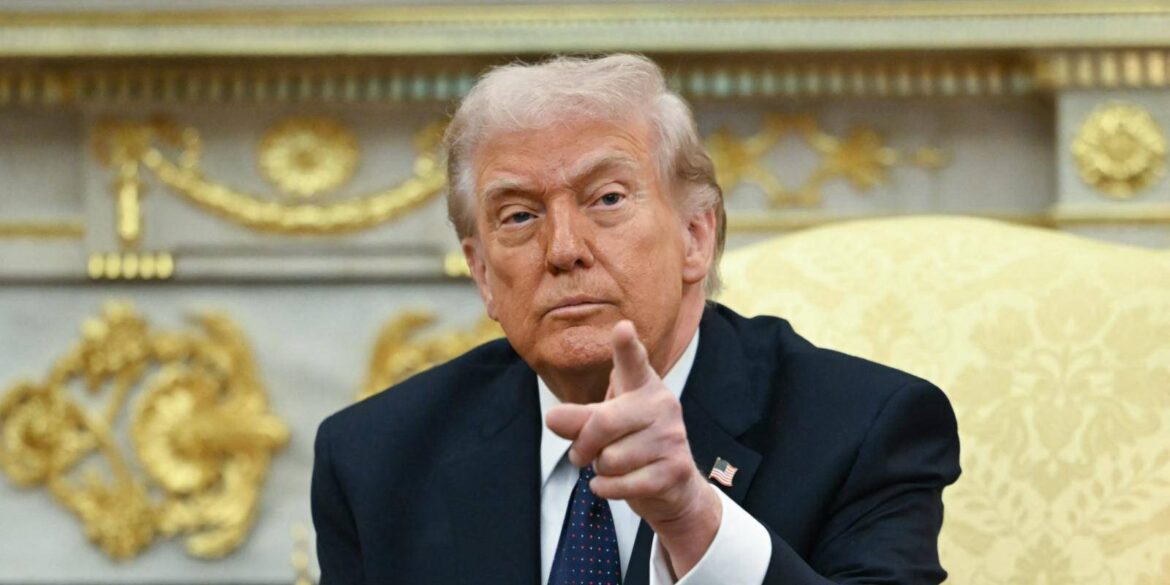
ISLAMABAD: President Donald Trump said on Monday that the tenuous ceasefire with Iran is “on life support” and “unbelievably weak,” a stark assessment delivered as the two sides traded fire over the weekend and Tehran formally rejected a US proposal to end the two-month-old conflict.
Trump, speaking to reporters in the Oval Office, dismissed Iran’s counterproposal — delivered through Pakistani mediators on Sunday — as “garbage.” He told Fox News he was considering reviving a short-lived American plan to escort merchant ships through the Strait of Hormuz, an initiative known as Project Freedom that was abandoned after less than two days last week.
Trump made clear he was not backing down.“We’re going to have a complete victory,” he said. “Iran thinks I’ll get tired of this. I’ll get bored, or I’ll have some pressure. But there’s no pressure.”
The sharp exchange underscored how quickly the temporary truce, intended to reopen the vital oil-shipping chokepoint, has unraveled. More than a month after the initial deal, US Navy destroyers conducted what the Pentagon described as “self-defence strikes” following attacks on American vessels. Trump insisted those clashes did not formally end the ceasefire, even as he described it Monday as “one of the weakest right now” and “on massive life support.”
Global energy markets reacted immediately to the impasse. The international benchmark Brent crude rose sharply, ticking up to $104 a barrel by noon in New York trading. US West Texas Intermediate contracts climbed more than 4 percent to $105.50 a barrel in Asian trading earlier in the day. The price surge provided a tense backdrop for Trump’s scheduled state visit to China this week. Beijing is one of the largest buyers of Gulf oil, and any prolonged disruption through the Strait of Hormuz threatens to ripple through the world economy.
The core disagreement remains Iran’s nuclear program. The United States and Israel have demanded that Tehran surrender its stockpile of highly enriched uranium and ship it out of the country — a step Iranian officials have repeatedly agreed to in principle, only to back away, Trump said. “Two days ago, they said, ‘You’re going to have to take it,’” the president recounted, adding that Iranian officials told him only the United States and China possessed the technical ability to handle the material. “But they changed their mind because they didn’t put it in the paper document.”
Trump rejected criticism that he lacks a coherent strategy. “You know, people say, what’s the plan?” he said. “I have the best plan ever. It’s a very simple plan: Iran cannot have a nuclear weapon, and they won’t have a nuclear weapon.” He added that a diplomatic solution remained “very possible” because, he said, Iranian leaders “change their mind. They’re very dishonorable people.”
On Sunday, Trump had taken to Truth Social to denounce Iran’s response in blunt terms. “I have just read the response from Iran’s so-called ‘Representatives,’” he wrote. “I don’t like it — TOTALLY UNACCEPTABLE!”
Iran fired back Monday at a news conference in Tehran. Foreign Ministry spokesman Esmaeil Baghaei described the US offer as containing “unreasonable” and “excessive demands” and accused Washington of maintaining a “one-sided” view of the negotiations. He insisted Iran’s own proposal was “reasonable and generous not only for Iran’s national interests, but also for the good and well-being of the region and the world.”
Baghaei outlined Tehran’s key demands: an immediate end to the war across the region, including in Lebanon, where Israeli strikes against Hezbollah have continued despite a separate ceasefire; the lifting of the US naval blockade of Iranian ports, which he termed “maritime piracy”; the release of Iranian assets frozen in foreign banks “due to American pressure”; and guaranteed safe passage through the Strait of Hormuz. He described the package as a “legitimate” assertion of Iran’s rights that demanded “no concessions” from the other side. “We did not demand any concessions,” Baghaei said. “Our demand is legitimate: demanding an end to the war, lifting the blockade and piracy, and releasing Iranian assets that have been unjustly frozen for years.”
The spokesman also warned European nations against joining any US-led effort to secure the waterway. France and Britain are leading a coalition of more than 50 countries planning to deploy warships to the Gulf, and the two governments will host a virtual meeting of defense ministers Tuesday to discuss restoring maritime traffic. Baghaei told European capitals not to “succumb to the US and Israeli hubris acts” or risk being drawn into a conflict that he called both unethical and unlawful. “Any intervention in the Strait of Hormuz or the Persian Gulf would bring about further complications,” he said. “They would rather exacerbate the prices. We look forward to the world countries acting responsibly.”
The fighting erupted after Trump’s administration first proposed easing the conflict through conditions aimed primarily at curbing Iran’s nuclear expansion. Iran’s response, according to officials in Tehran, focused on ending hostilities on all fronts — including Lebanon — before addressing sanctions relief or the nuclear file in later stages. One Iranian source described the reply as positive and said the next move now rested with Washington. Tehran has consistently denied seeking a nuclear weapon, though it has accelerated enrichment well beyond civilian requirements since Trump withdrew the United States from the 2015 nuclear accord during his first term.
Analysts described the latest round as a hardening of maximalist positions on both sides. Andrea Dessi of the American University of Rome called the day’s developments “rather negative news” because “both sides continuously stick to rather maximalist positions.” In this impasse, he added, “the real casualty remains the international economy and the populations of the Gulf and the broader Middle East.”
The conflict has already lasted 10 weeks. Energy analysts and Western officials familiar with intelligence assessments have told NBC News that Iran could probably withstand a prolonged naval blockade for months. Israeli Prime Minister Benjamin Netanyahu echoed Trump’s skepticism on Sunday, telling CBS’s “60 Minutes” that the conflict was “not over” and that military options remained open if diplomacy failed to remove nuclear material from Iran.
Trump, in a Friday interview with NBC News, was asked directly whether the conflict with Iran was over. His answer was succinct: “No.” Pakistan remains the official mediator, though Qatar and others have offered informal channels. Baghaei emphasized Monday that regional security should ultimately be guaranteed by the countries of the region themselves, not by foreign forces whose presence, he said, only “exacerbates insecurity.”
As Trump prepares to travel to China, the White House faces mounting domestic pressure over the war’s economic fallout. Oil prices have already contributed to higher gasoline costs at home, and any further escalation threatens broader inflation. Yet the president showed no sign of yielding. He told reporters he sees Iran’s leadership as divided between “moderates” and “lunatics,” adding that if the hardliners prevail, “it’ll be a very quick fight.” For now, the ceasefire clings to life, its survival dependent on whether either side blinks first.
Copyright © 2021 Independent Pakistan | All rights reserved