By Staff Reporter
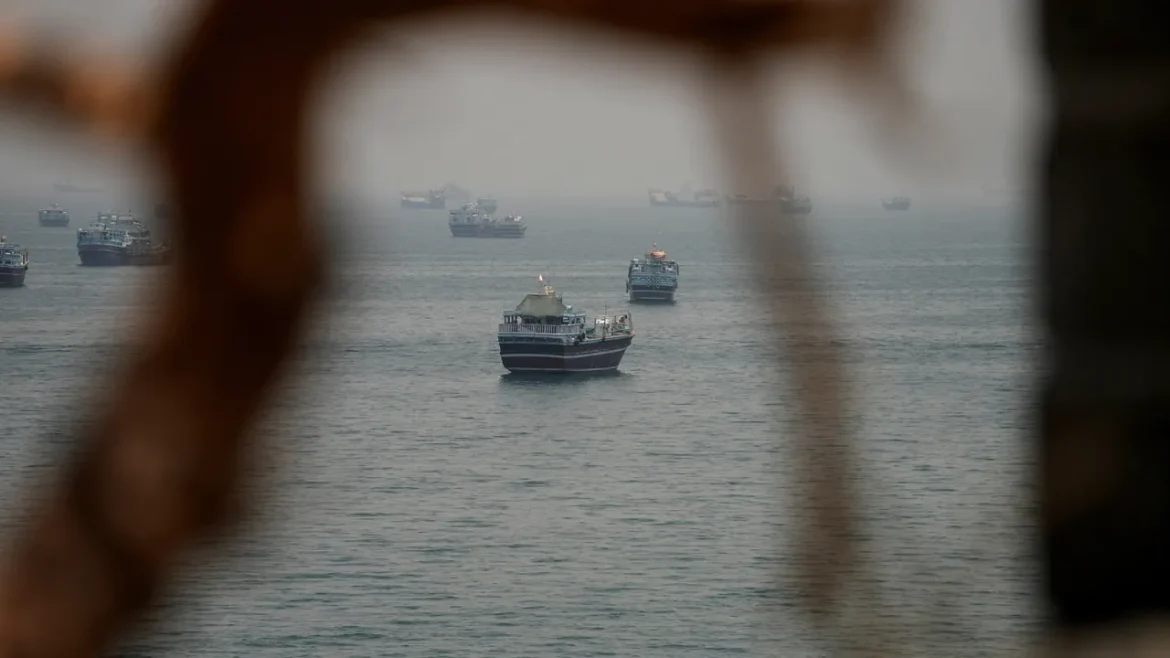
ISLAMABAD: US President Donald Trump has raised the stakes in the war with Iran, threatening to destroy an Iranian bridge or power station in retaliation for any future attack on shipping in the Strait of Hormuz — a warning that extends, he made clear, to targets inside Tehran itself.
The threat, posted to Trump’s Truth Social account on Wednesday, applies whatever weapon Iran uses against a vessel in the strait, whether missile, rocket or drone. It lands at a moment when the war, now well into its fifth month, appears to be hardening rather than easing. Diplomatic channels have gone quiet, fuel prices are climbing into the US midterm season, and both governments have started reaching for each other’s infrastructure as a form of leverage.
Fighting intensifies rather than fades
The US carried out its eleventh straight night of strikes on Iranian territory into Wednesday morning, triggering air defence fire over Tehran and, according to Iranian media, the downing of a drone above the capital. Iran answered with missiles aimed at the Jordanian city of Aqaba, close enough to the Israeli resort of Eilat that residents there filmed smoke rising across the water. Air raid alerts also sounded in Bahrain, and authorities in Saudi Arabia briefly told residents of Dammam to shelter before declaring the threat had passed.
US Defense Secretary Pete Hegseth told a combative Senate hearing this week that the campaign has already cost the US around $37.5 billion. Trump flew to Dover Air Force Base on Wednesday for the return of four more fallen service members, part of a toll he has put at 18 American dead since fighting began in February.
Both sides have increasingly gone after infrastructure rather than purely military targets — a strategy that runs against the grain of international law, which restricts such attacks to sites with a genuine military use. Iran has hit power and desalination plants serving Gulf states dependent on them for drinking water, prompting UN Secretary-General António Guterres to call the practice “unacceptable” earlier in the week.
Iran refuses to back down
Tehran’s response to Trump’s threat was defiance, not retreat. Mohammad Bagher Qalibaf, speaker of Iran’s parliament and a figure in the country’s dealings with Washington, argued that Iranian security mattered more than any American ultimatum, and made clear Iran had no intention of allowing conditions in the strait to return to how they stood before the war.
A more pointed warning came via an Iranian military source speaking to the semi-official Tasnim news agency, who said Tehran was equipped with what he called a “steel determination” to hold onto control of the waterway. Any American strike on Iranian infrastructure, he said, would be met with Iranian strikes on regional infrastructure connected to US interests, energy sites included. He suggested ships could still pass through safely, but only by coordinating with Iran and accepting terms Tehran itself had set.
Casualties mount on both sides
US Central Command said its overnight raids — lasting around 75 minutes — had gone after aircraft hangars and drone storage sites, part of a continuing effort to strip Iran of the means to threaten shipping through the strait. Iran’s health ministry put the toll from the American bombing campaign at 53 dead by Wednesday, among them six women and three children, with nearly 600 wounded. Iran’s Revolutionary Guard signalled its own strikes would go on regardless.
Iran, meanwhile, said its drones had struck US-linked sites in Jordan, Bahrain and Kuwait, hitting storage depots, aircraft maintenance workshops and what it described as troop housing and logistics facilities. Tehran also claimed to have damaged infrastructure belonging to Amazon in Bahrain, where the company runs a regional data centre — a claim Amazon has not addressed.
A fragile, faltering diplomatic track
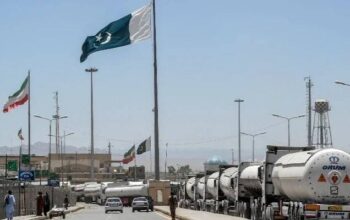
Efforts to talk a way out of the war haven’t entirely collapsed, even if they’ve made little visible headway. Iran’s interior minister, Eskandar Momeni, travelled to Pakistan this week hoping to restart mediation, and a senior Iranian official told Reuters that go-betweens had floated a possible ten-day ceasefire. An Iranian interior ministry spokesman maintained that diplomatic contact continued, saying messages were still being exchanged between the two sides.
Trump gave little indication he shared that appetite for talks. Speaking from the Oval Office on Tuesday, he said the US currently had no interest in meeting Iranian counterparts. Secretary of State Marco Rubio, addressing a gathering of Southeast Asian foreign ministers in Manila, offered a similar assessment — insisting Washington remained willing to negotiate but doubting Tehran’s sincerity.
Rubio also dismissed Iranian claims to any special standing over the strait, disputing the idea that a Pakistan-brokered memorandum of understanding gave Tehran authority to police commercial vessels. Allowing any nation to charge tolls on an international waterway, he argued — and to attack ships that refused — would set a precedent capable of resurfacing elsewhere, a remark clearly aimed at the South China Sea disputes affecting several nations in his audience.
Trump further signalled that Washington’s attention could soon turn to Pickaxe Mountain, an unfinished nuclear facility next to Iran’s Natanz enrichment site, itself struck during last year’s twelve-day war between Israel and Iran. Iran continues to insist its nuclear ambitions are entirely peaceful, despite resuming uranium enrichment to near weapons-grade levels after Trump exited the 2015 nuclear accord during his first term.
Pressure spreads across global shipping lanes
The economic damage has rippled well past the Gulf itself. Brent crude has pushed above $93 a barrel this week, a sharp jump from under $72 earlier in the month, dragging US petrol prices upward with it — a trend unlikely to help Trump politically as the midterms approach. A second front has now opened in the shipping war, after Iran-aligned Houthi rebels in Yemen threatened Saudi vessels in the Red Sea, sending several oil tankers into reverse rather than risk the crossing.
French shipping group CMA CGM said it would introduce an emergency surcharge from August 1, pointing to the sharp rise in fuel costs tied to the renewed fighting around Hormuz.
Copyright © 2021 Independent Pakistan | All rights reserved