By Staff Reporter
ISLAMABAD: Five United Nations human rights experts voiced sharp concern on Wednesday over the recent conviction and imprisonment of two prominent Pakistani lawyers and activists, describing the case as a troubling example of how vague anti-terrorism laws are being wielded to stifle dissent and intimidate defenders of civil liberties.
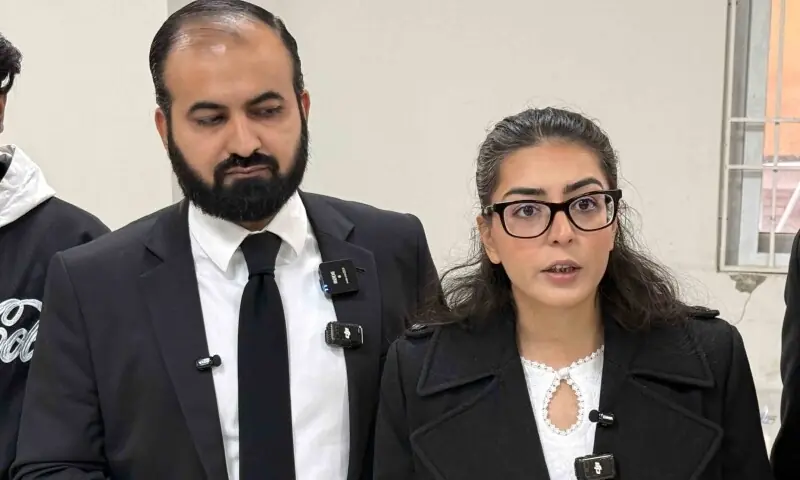
The experts, in a joint statement, said the sentencing of Advocate Imaan Zainab Mazari-Hazir and her husband, Advocate Hadi Ali Chattha, on multiple charges stemming from controversial social media posts violated international standards protecting freedom of expression. The couple was convicted Jan. 24 by an Islamabad sessions court under Pakistan’s Prevention of Electronic Crimes Act (PECA), and handed lengthy prison terms. “Lawyers, like other individuals, are entitled to freedom of expression. The exercise of this right should never be conflated with criminal conduct, especially not terrorism,” the statement said.
The rapporteurs — Margaret Satterthwaite, Ben Saul, Mary Lawlor, Irene Khan and Gina Romero — emphasised the overly broad definitions of terrorism-related offences in Pakistan’s counter-terrorism framework, warning that such ambiguity “risks undermining and criminalising the work of lawyers and human rights defenders across Pakistan and has a chilling effect on civil society in the country.”
The case has drawn scrutiny amid a broader crackdown on critics of the government and military, with human rights groups accusing authorities of using digital crimes laws to target activists. Mazari-Hazir, a vocal advocate for victims of alleged abuses, and Chattha have faced repeated legal challenges in recent years. The UN experts noted that the pair had been the subject of 10 criminal complaints since 2022, none of which had previously resulted in convictions. “This pattern of prosecutions suggests an arbitrary use of the legal system as an instrument of harassment and intimidation in order to punish them for their work advocating for victims of alleged human rights violations,” they added.
Beyond the substance of the charges, the experts raised alarms about procedural flaws in the trial. “International standards provide a set of procedural guarantees that must be made available to persons charged with a criminal offence, but these appear to have been undermined in this case,” the statement said. “These violations seriously threaten the fairness of the trial and conviction.”
The rapporteurs, appointed by the UN Human Rights Council to monitor and report on global rights issues, operate independently and do not represent the United Nations as an institution. According to the statement, they have already reached out to Pakistani officials to convey their concerns. The convictions come at a time of heightened tension in Pakistan’s political landscape, where social media has become a battleground for activists challenging state power. Mazari-Hazir, the daughter of former federal minister Shireen Mazari, has been a fixture in protests against enforced disappearances and other alleged violations, often using online platforms to amplify her message. Chattha, her husband, has similarly defended clients in high-profile human rights cases. Their arrests last year followed posts that authorities deemed inflammatory, though details of the content were not specified in the UN statement.
Human rights advocates in Pakistan have long criticised PECA and related laws for their potential to curb free speech, arguing that they grant sweeping powers to authorities to monitor and prosecute online activity. The UN experts’ intervention highlights growing international unease about such measures, particularly in cases involving lawyers who play a critical role in upholding the rule of law.
Copyright © 2021 Independent Pakistan | All rights reserved