By Staff Reporter
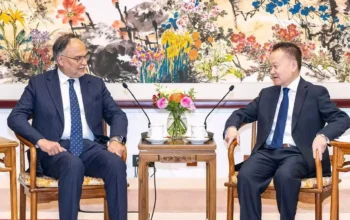
ISLAMABAD: The top decision-making body of the Makkah Defence Alliance has ended its Islamabad session after about two and a half hours on Friday, a Pakistani Foreign Office official said, confirming that a joint statement will follow.
“Talks have ended,” local media, quoting foreign official as saying on Friday. Asked whether a joint statement would be issued, the official said: “Yes, but time is not yet known.” No statement had been released by Friday evening, and the official did not give details of who took part or what was discussed.
The third session of the Strategic Political and Defence Committee (SPDC), made up of the foreign and defence ministers and military chiefs of Pakistan, Saudi Arabia and Turkey, had been scheduled for 27 and 28 November. It was meant to settle how the three countries would put their mutual defence pledge into practice, and the war between Saudi Arabia and Yemen’s Houthi rebels was expected to feature.
The announced two-day meeting of the SPDC, the alliance’s highest decision-making body, held on the same day Turkey’s president, Recep Tayyip Erdogan, formally approved the agreement, according to the country’s Official Gazette, completing ratification by all three signatories.
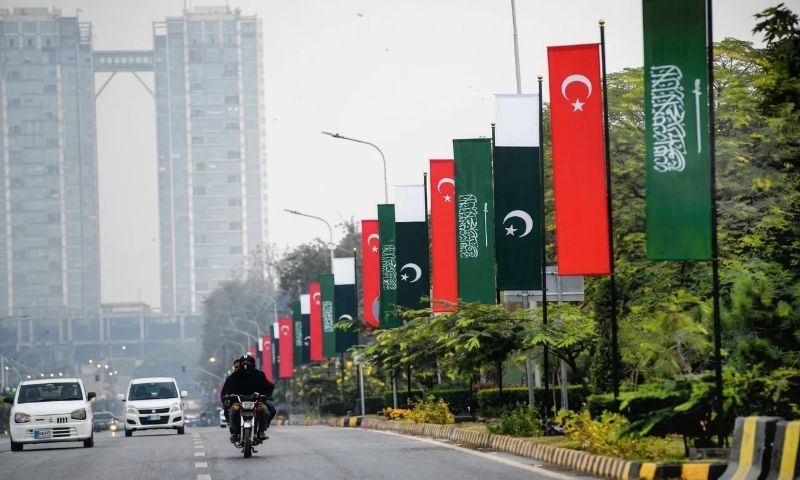
The capital has been all but closed down for the gathering. Authorities declared a public holiday in Islamabad and a local holiday in neighbouring Rawalpindi. Police sealed off the Red Zone, which houses parliament, the Supreme Court, federal ministries and foreign missions, and offices there were told to work remotely.
The committee brings together the three countries’ foreign and defence ministers and military chiefs. Pakistan was represented by the deputy prime minister and foreign minister, Ishaq Dar, the defence minister, Khawaja Asif, and Field Marshal Asim Munir, the army chief. The Saudi and Turkish foreign ministers were due to attend the meeting. The alliance’s secretary general, retired Lt Gen Nauman Mahmood, was also present.
Saudi Arabia has been under repeated attack from Yemen’s Ansar Allah movement, the Houthis, whose missiles and drones have struck cities, oil facilities and shipping. The fighting has shattered a 2022 UN-brokered truce. The World Health Organization said this month that the latest escalation has left 2,260 people dead and 10,519 wounded, and Saudi authorities say at least 26 people have been killed in suspected Houthi strikes inside the kingdom since 23 September.
Asif told reporters on the eve of the meeting that the “continuous turmoil south of Saudi Arabia will obviously be one agenda point in the meeting”. “It is very important,” he said.
He left no doubt about Pakistan’s reading of its obligations. “Any threat to Saudi Arabia is a threat to Pakistan and Turkey according to the pact, which is absolutely clear.” Asif has previously said Pakistan will use “whatever means are available” to defend the kingdom against the Houthis.
Beyond Yemen, the talks are meant to deal with the unglamorous machinery of an alliance. A Pakistani official said the meeting would concentrate on finalising standard operating procedures, setting up an implementation mechanism and defining how the three countries’ political, defence and military institutions will work together.
The agreement was signed in Makkah on 7 August. It provides that an armed attack on any one member will be treated as an attack on all, obliging the other two to give assistance by whatever means are available, including military support. The pact binds the parties for 10 years, after which a member must give three months’ notice to leave. A permanent secretariat has been set up in Riyadh, and a working committee of officials from the member states is functioning.
Yet Asif conceded that the alliance’s institutional and operational framework remains at a “nascent stage”. “Initially, we need to have frequent meetings to steer what is being formulated, in a way that in the next couple of months we have everything in place so that we can move forward.”
The gap between ambition and detail is wide as the alliance has not publicly defined its doctrine, the make-up of its forces, its command arrangements or the procedures that would govern a collective military response. An emergency committee meeting in Riyadh on 5 October called for practical implementation of the collective defence commitments, including arrangements for the rapid deployment of agreed forces and capabilities, subject to national laws. Seven weeks on, the rules for doing so are still being written.
Turkey, the member with Nato’s second-largest army, has been the most careful about what it is prepared to do. Ankara has stressed that the agreement is defensive and has been cautious about any role in combat operations in Yemen. Turkish officials say they are considering military assistance for Saudi Arabia but insist no Turkish troops would be sent to fight in Yemen or attack the Houthis, and any deployment would need separate parliamentary approval. The chairman of parliament’s foreign affairs committee, Fuat Oktay, said when lawmakers voted that Turkey would “not be drawn into an uncontrolled process against its will”.
Pakistan’s own commitments are already taking shape on the ground. A security source said recent Pakistani deployments, including JF-17 aircraft, drones and air defence systems such as the HQ-9, were made under bilateral cooperation that predates the alliance, and that these arrangements would now become part of the trilateral framework.
The Houthis are not the only shadow over the talks. The pact was signed against the backdrop of the war between the US and Israel on one side and Iran on the other, and Asif declined to say how the alliance would respond to a direct Iranian attack on Saudi Arabia. He did identify Israel as a possible threat to countries in the region. “The possibility of some conflict, or aggression from the Israeli side exists, so we need to close our ranks, the countries of this region,” he added.
For Pakistan, which has sought to keep its channel to Tehran open while deepening defence ties with Riyadh and Ankara, the balance is delicate. Dar has described the pact as “purely defensive” and not aimed at any country. A meeting in Tehran between representatives of the three countries and Iranian officials, held on Pakistan’s initiative, was meant to show that communication with Iran has not been cut off.
Islamabad has also been the central mediator between Washington and Tehran. Pakistan brokered a June accord that briefly halted fighting between the two and set out a roadmap for reopening the Strait of Hormuz and negotiating over Iran’s nuclear programme. The truce collapsed, with each side accusing the other of violations, and months of shuttle diplomacy led principally by Qatar and Pakistan have followed.
Asif said Pakistan had played “a very, very constructive role” between the two, but that the outcome of the mediation was “still fragile” and peace was “not yet embedded in a way people were expecting”.
Dar has said at least six Muslim countries have expressed interest in joining the pact, though new members cannot be considered until the secretariat is fully operational, which he said would take at least a year. A Turkish official has said Syria’s possible accession is under discussion, but that no third country would take part until the existing members have institutionalised the agreement.
Copyright © 2021 Independent Pakistan | All rights reserved