By Staff Reporter
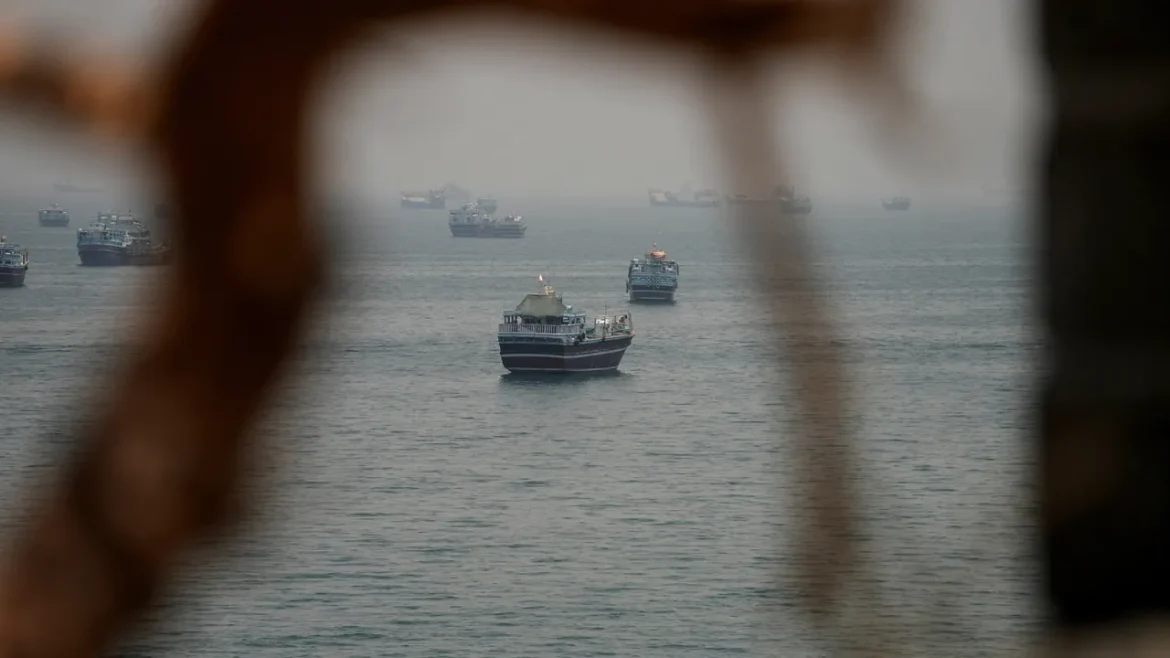
ISLAMABAD: Oil prices tumbled on hopes of a breakthrough in the stand-off over the Strait of Hormuz on Tuesday, even as the vital waterway remained shut to shipping and a Greek-operated bulk carrier was hit by an unidentified projectile, forcing its crew to abandon ship with one seafarer missing.
Senior figures in the Trump administration voiced growing confidence that a deal to reopen the strait was close, with the US treasury secretary, Scott Bessent, telling CNBC he believed an agreement could be struck “today or tomorrow” to restore a more “normalised position” in the five-month conflict between Washington and Tehran.
His optimism was echoed, more cautiously, by the secretary of state, Marco Rubio, who told reporters at the State Department that negotiations over reopening the strait to shipping had advanced but had not yet been concluded. “There’s been progress made in those talks, but not finality yet,” he said. “We’re hoping that will happen very shortly.”
The upbeat noises from Washington sent Brent crude tumbling more than 4 percent to a three-week low, with both benchmark contracts briefly falling over 5 percent intraday to their weakest levels since 13 July. Brent settled down $3.30, or 3.9 percent, at $80.47 a barrel by mid-morning in New York, while US West Texas Intermediate dropped $3.67, or 4.6 percent, to $76.67.
Yet the diplomatic thaw sat awkwardly alongside events on the water. Britain’s maritime security agency, UKMTO, reported that a cargo vessel had come under attack close to the strait late on Monday night. The ship was later identified by the maritime risk firm Vanguard as the Minoan Pioneer, a Liberian-flagged bulk carrier managed by the Greek firm Modion Maritime Management, which was struck by an unknown projectile roughly 20 nautical miles northeast of Khasab, on Oman’s Musandam peninsula, as it sailed north through the strait.
The projectile hit the vessel’s engine room, causing a total blackout and sparking a fire in the crew’s accommodation block. The ship’s third engineer was reported missing as colleagues fought the blaze and called for help; the initial distress signal was relayed by a nearby Panama-flagged tanker, the Suriname Prosperity. Modion Maritime Management did not immediately respond to requests for comment. According to Vanguard, it was the fourth maritime security incident reported near Musandam in five days, following an attack on an LNG carrier on Friday and two further incidents involving explosions heard or witnessed close to passing vessels over the weekend.
Mediators talk up progress
The renewed sense of momentum has been driven largely by Qatar, Pakistan and Oman, who have spent recent days shuttling draft proposals between Washington and Tehran in an attempt to revive the ceasefire agreed in a memorandum of understanding signed in mid-June — an accord that collapsed within weeks after vessels attempted to cross the strait along the Omani coast without Iranian approval, prompting Iranian attacks on shipping.
Qatar’s foreign ministry spokesperson, Majed al-Ansari, told a news conference in Doha on Tuesday that contacts between the two sides had reached “very progressive stages”, though he stressed that no direct talks between Washington and Tehran were currently scheduled. “We are coordinating very closely with the Omanis to facilitate the talks between both sides, exchanging ideas, drafts between both sides,” he said. “Our focus right now is on avoiding escalation, reopening the strait and reopening the door for diplomacy between the parties.”
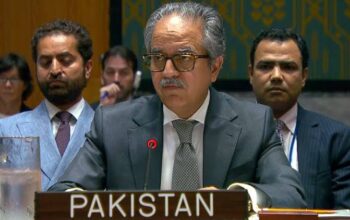
A senior Pakistani security official, speaking to Reuters, offered a similarly guarded assessment. “A lot is happening in the background,” the official said. “We are talking to both sides. Our sole goal at this moment is to make both parties at least agree to start talking.”
What each side wants
Behind the diplomatic language lies a sharp and, by several accounts, still unresolved dispute over who controls access to one of the world’s most important shipping lanes, through which around a fifth of global oil and liquefied natural gas shipments normally pass.
A senior Iranian source told Reuters that Tehran was seeking full control over inbound shipping through the strait, along with visibility over outbound traffic and the right to intervene if it judged it necessary. Under the arrangement understood to be under discussion with Oman, outbound vessels would follow a route running between Iran and Oman, with exit clearance granted by Muscat only after Tehran had been notified. “Tehran is unlikely to change its position,” the source said.
That represents a harder line than an Omani proposal put forward in late July, which envisaged a more equal division of the strait between the two countries and the collection of voluntary fees from passing ships. Iran’s deputy foreign minister, Kazem Gharibabadi, rejected that plan, arguing it failed to address Tehran’s security concerns pending longer-term regional stability.
Accounts of the substance of any deal remain contested. Iranian officials told the New York Times that inbound shipping would use a route close to Iran’s coast, while outbound vessels would use one closer to Oman, with a “service fee” levied to cover environmental, security and staffing costs. A US official disputed that characterisation, telling the newspaper that any temporary arrangement would not involve Iranian approval or tolls of any kind.
Granting Tehran that degree of control over the strait would mark a significant shift in the regional balance of power, and would complicate Washington’s argument that Operation Epic Fury — the joint US-Israeli campaign launched against Iran in February — had succeeded in weakening its longstanding adversary.
A pattern of claim and denial
Tuesday’s optimism followed a familiar, and increasingly fraught, back-and-forth between the two capitals. Donald Trump said on Monday that negotiations with Tehran were under way and that Iran faced a “last chance” to reach a settlement, days after he said he had called off what he described as “massive attacks” by US and Israeli forces at the urging of Saudi Arabia, the United Arab Emirates and Qatar, who asked for time to let mediators work.
Iran’s foreign ministry spokesman, Esmail Baqai, rejected the suggestion that any direct talks were taking place, saying there was no delegation planned to be sent or received. Tehran’s only active negotiations, he said, were with Oman, over what he called a “constructive” effort to secure “a path to ensure the security of shipping passage through the Strait of Hormuz”. Baqai added that any new arrangement would be “necessary but not sufficient” to reopen the strait — a signal that Iran intends to keep blocking shipping for as long as the US maintains its blockade of Iranian ports.
Trump responded on Truth Social by branding Iran’s leadership “unbelievably duplicitous”, insisting Tehran had itself requested a meeting and that further talks were scheduled in the “immediate future”.
Wider toll on shipping and the region
The disruption extends well beyond the strait itself. Yemen’s Iran-aligned Houthi movement has separately imposed a naval blockade on Saudi Arabia in the Red Sea, adding further strain to the region’s oil export routes, while shipping traffic through both the strait and the Bab el-Mandeb chokepoint has remained largely unchanged at depressed levels since the start of the week.
The head of Saudi oil giant Aramco said the world has lost more than 2.6 billion barrels of oil output since the war began in late February. Questions are also mounting over the sustainability of Washington’s military campaign: three people familiar with the data told Reuters that the US Army has used up much of its stockpile of highly accurate long-range missiles during the conflict, raising concerns about American military readiness for any future confrontation.
Analysts said Tehran appeared to be betting it could outlast Washington by turning the region’s trade routes and energy infrastructure into sustained pressure points. “Their big advantage is that they can hurt the regional states and the global economy,” said Michael Knights of the Washington Institute.
Markets stay wary
Simon-Peter Massabni, head of business development at the brokerage XS.com, said the prospect of a diplomatic breakthrough had already stripped some geopolitical risk premium out of crude prices since the US resumed bombing Iran last month. “If negotiations between the United States and Iran make meaningful progress, the market could continue pricing in a lower probability of supply disruptions, further reducing the geopolitical risk premium embedded in crude prices,” he said.
Analysts at ANZ struck a more cautious note, pointing out that transits through the strait had improved only marginally from severely depressed levels. “Gulf exports remain under pressure, with Strait of Hormuz transits only marginally improving from extremely depressed levels. The export disruption story is intact, with Iranian attacks on vessels constraining flows,” the bank said.
Goldman Sachs said it expected Brent to trade within an $80 to $90 a barrel range until there is either firm confirmation of a new US-Iran agreement or a marked escalation in attacks.
Copyright © 2021 Independent Pakistan | All rights reserved