By Staff Reporter
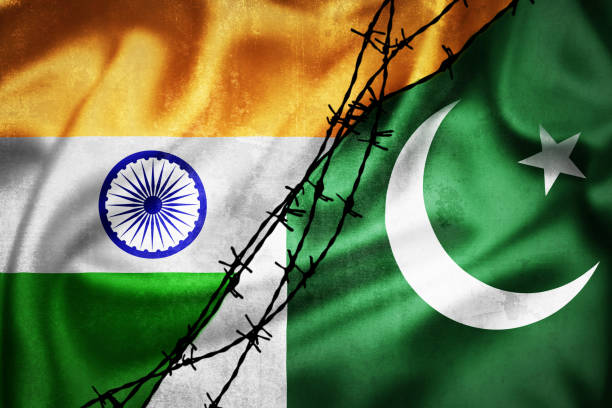
ISLAMABAD: A bipartisan congressional commission has concluded that Pakistan scored a clear “military success” over India in the four-day, brief but intense, air and missile war last May, a rare official American acceptance that credits Chinese-supplied weapons and Chinese intelligence with giving Islamabad a decisive battlefield edge.
“Pakistan’s military success over India in its four-day clash showcased Chinese weaponry,” the US-China Economic and Security Review Commission states in its 2025 annual report, released on Tuesday. The panel, created by Congress to track the security implications of the US-China economic relationship, describes the May 7-10 fighting as the first combat proving ground for several advanced Chinese systems and an opportunistic marketing triumph for Beijing’s arms industry.
The report says China “effectively used the conflict as a testing ground for its own military capabilities” and “opportunistically leveraged the conflict to test and advertise the sophistication of its weapons,” systems that have immediate relevance to China’s border standoff with India and to its drive to capture larger shares of the global arms market.
The clash, the deepest exchange of strikes across the Line of Control in 50 years, began when India launched airstrikes into Pakistan’s Punjab province and Azad Kashmir after a militant attack in Indian occupied Jammu and Kashmir killed 26 civilians. New Delhi linked the attack to Pakistan-based groups; Islamabad denied any involvement.
India accused China of supplying Pakistan with “live inputs” on Indian military positions throughout the crisis. Pakistan rejected the charge; China neither confirmed nor denied it.
The commission notes that the fighting gave battlefield debuts to the HQ-9 air-defence system, PL-15 air-to-air missiles and J-10 fighter aircraft in Pakistani service. China accounted for roughly 82 percent of Pakistan’s arms imports from 2019 to 2023, the report says, citing data from the Stockholm International Peace Research Institute.
In June, shortly after the ceasefire, China offered Pakistan 40 J-35 fifth-generation stealth fighters, KJ-500 airborne early-warning aircraft and additional ballistic-missile defence systems. The same month Pakistan raised its 2025-2026 defence budget by 20 percent to $9 billion.
Chinese embassies quickly began promoting the results. The report says diplomatic posts highlighted the performance of Chinese systems against India’s fleet, with particular emphasis on reports of Pakistani fighters and missiles downed several aircraft, not all of them the French Rafale jets that became a focal point of the sales pitch.
French intelligence officials told the commission that China also waged a campaign, using social-media accounts to derail Rafale sales and push Beijing’s own offerings. Indonesia subsequently halted a Rafale purchase that had already been in process.
The report also points to intensifying China-Pakistan military ties in the run-up to the clash: three-week Warrior-VIII counterterrorism exercises in November and December 2024 and China’s naval participation in Pakistan’s multinational AMAN-2025 drills in February. Indian analysts, the commission writes, saw those activities as both a deterioration in New Delhi’s own relationship with Beijing and “direct security threats to its territorial positions.”
While the panel cautions that calling the episode a Chinese “proxy war” would overstate Beijing’s role as instigator, its language, especially the phrase “military success”, marks a rare instance of an official US body publicly declaring one side the winner in an India-Pakistan confrontation. The finding is already reverberating. Pakistani social media have splashed the phrase across as vindication, while Indians called it misguided and likely to encourage further risk-taking by Islamabad and Beijing.
Copyright © 2021 Independent Pakistan | All rights reserved