By Staff Reporter
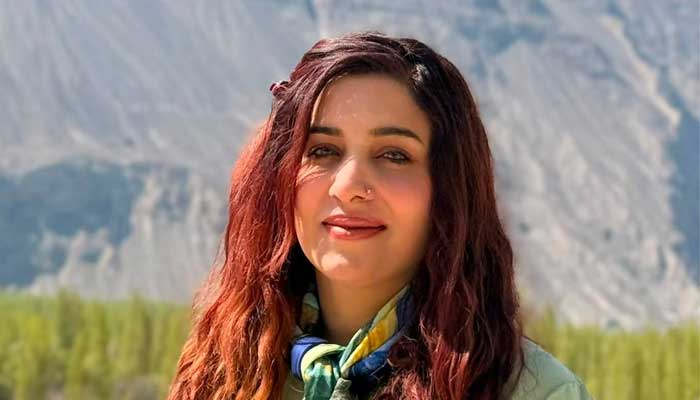
GILGIT: A team of volunteer climbers recovered the body of Pakistani mountaineer Asma Mushtaq on Monday, nearly 10 days after she died descending Spantik Peak in Gilgit-Baltistan, the Alpine Club of Pakistan said.
Mushtaq, 34, reached the 7,027-meter summit on Aug. 20 as part of a five-member women’s expedition and was reported to be in good health. She developed a high-altitude medical emergency during the descent, at about 6,400 meters, and died on the mountain.
Ayaz Shigri, the alpine club’s secretary general, said a five-member team of high-altitude climbers from Arundu, a village in Shigar, launched the recovery on Friday after an earlier attempt by a six-member team was called off due to heavy snowfall. The volunteers — Hussain Ali, Mazahir Hussain, Mehboob Ali, Muhammad Abidin, and Abbas Ali, who led the climb — financed the mission themselves, Shigri said.
The team began climbing at 3 a.m. Monday and located Mushtaq’s body about eight hours later, near Camp 3, at an elevation of roughly 6,250 meters. Shigri said the team intended to bring the body down to Camp 2 by the end of the day, after which it would be moved to base camp for transport. Pakistan Army helicopters are expected to fly it from there to Skardu.
Mushtaq’s four teammates — Zoni Aslam, Zaba Shigri, Shama, and Sohana — all reached Spantik’s summit with her, according to statements the alpine club issued in the days following her death.
High-altitude sickness, the general term for the pulmonary and cerebral effects of oxygen deprivation, is typically caused by climbing faster than the body can acclimatize. Mountaineers and researchers have said that shifting weather patterns linked to climate change have made conditions increasingly unstable across the Karakoram Range, adding risk to some of the world’s most demanding peaks.
Recovering a body from above 6,000 meters carries significant risk of its own, and it is not always attempted. Climbers who die at extreme altitudes are sometimes buried where they fall rather than carried down. In 2021, Sajid Sadpara made that decision for his father, the mountaineer Ali Sadpara, burying him at roughly 8,000 meters on K2 rather than attempting to bring his body off the mountain.
Copyright © 2021 Independent Pakistan | All rights reserved