By Staff Reporter
ISLAMABAD: A Pakistani court on Tuesday ordered a government probe into allegations that young people are being ensnared in online blasphemy cases, a crime punishable by death and capable of igniting deadly unrest in the Muslim-majority country.
The order followed pleas from hundreds of families who claim their relatives were targeted by a group exploiting Pakistan’s stringent blasphemy laws for profit.
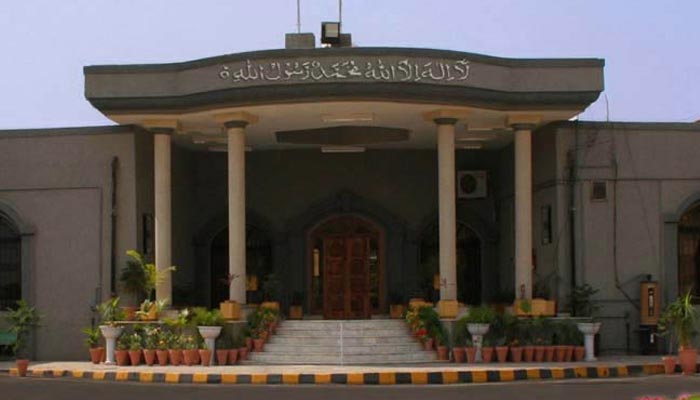
Justice Sardar Ejaz Ishaq Khan of the Islamabad High Court instructed the federal government to establish a commission within 30 days to investigate the spike in blasphemy cases since 2022, many tied to alleged offenses in WhatsApp groups.
“The government will constitute a commission within a 30-day timeframe,” Justice Khan said during the hearing, emphasizing that the commission could seek additional time if needed.
The commission has four months to report its findings, with the option to request an extension. The court also granted the commission authority to request information from Pakistan’s powerful Inter-Services Intelligence (ISI) agency, underscoring the gravity of the issue.
In Pakistan, blasphemy allegations, punishable by death under laws protecting religions, can trigger mob violence and social ruin. Even unproven accusations can ignite public outrage, leading to lynchings, mob attacks, and social isolation for the accused and their families.
Rights groups have long warned that the law is prone to misuse, often targeting vulnerable individuals in personal or financial disputes.
“This is a huge ray of hope, and it’s the first time that the families have felt heard,” said Imaan Mazari, a lawyer representing the families. “Youngsters have been falsely roped into cases of such a sensitive nature that the stigma will last forever even if they are acquitted.”
The court’s decision follows a troubling rise in blasphemy cases over the past three years, with many linked to online activity.
A report by the government-run National Commission for Human Rights, published in October 2024, found that 767 people, mostly young men, were in jail awaiting trial on blasphemy charges.
Rights groups and police say private law firms have fueled this surge, employing volunteers to trawl the internet for potential offenders, particularly in WhatsApp groups. A leaked 2024 Punjab police report, titled “The Blasphemy Business,” alleged that a “suspicious gang” was entrapping youth in blasphemy cases, possibly to extort money.
The report, cited in court by the petitioners, claimed the gang filed complaints with the Federal Investigation Agency (FIA) in Rawalpindi and Islamabad, targeting young people from poor and lower-middle-class Muslim families.
The petitioners, represented by advocates Abid Saqi and Usman Warraich, told the court that this group, operating as the “Legal Commission on Blasphemy Pakistan” (LCBP), was behind nearly 90 percent of recent FIA-registered blasphemy cases.
Sheraz Ahmad Farooqi, a leader of the LCBP, defended the group’s efforts in an interview with Agence France-Presse (AFP) last October, saying, “God has chosen them for this noble cause.” The LCBP has emerged as the most active among lawyers’ groups prosecuting young men for blasphemy, according to the petitioners.
The court proceedings revealed a disturbing pattern: of over 400 alleged victims, 70 percent are in their twenties or younger, including professionals such as engineers, Hafiz-e-Quran (those who have memorized the Quran), and degree holders in various fields. Several have been convicted and sentenced to death in recent years, though no executions for blasphemy have been carried out in Pakistan.
“We will fully support the probe commission and are confident that our voices will finally be listened to, our concerns will be heard, and the truth will come out,” said a relative of one of the accused, speaking to AFP on condition of anonymity due to fear of reprisal.
The hearing also raised concerns about Komal Ismail, a figure mentioned in the petitions whose whereabouts remain unknown. An additional director of the National Cyber Crimes Investigation Agency told the court that Ismail’s identity card had been blocked and that four SIM cards registered to her had been inactive since November. The official confirmed that Ismail had not left Pakistan and that her name was on the Exit Control List, with search efforts ongoing.
Justice Khan called her safety a “serious concern” and pressed the agency to take protective measures.
The court grappled with challenges in accessing digital evidence, as lawyers for cellular companies said WhatsApp call records were unavailable and phone records were retained for only one year.
Justice Khan suggested that the ISI could step in to provide critical data, noting that “lives are at stake.”
The petitioners had previously urged the federal government on August 4, 2024, to form an inquiry commission based on the Punjab Special Branch report, but no action was taken until Tuesday’s ruling.
After reviewing the evidence, Justice Khan concluded that sufficient material existed to warrant the commission, accepting the families’ pleas. For the families of the accused, the court’s order offers a rare chance for accountability in a system where blasphemy allegations often lead to swift condemnation.
Copyright © 2021 Independent Pakistan | All rights reserved