By Staff Reporter
ISLAMABAD: The Economic Coordination Committee (ECC) of the cabinet approved a Rs72 billion subsidy on Friday to help 50,000 low-income families buy homes, part of a plan to boost affordable housing.
The subsidy offers reduced interest rates for first-time buyers with valid national ID cards who own no property. Loans of up to 3.5 million rupees are available at fixed rates of 5% on the first 2 million rupees and 8% on the remainder, for the first 10 years.
Eligible properties include homes up to 5 Marla (125 square yards) or flats up to 1,360 square feet, requiring just a 10% down payment. The scheme’s total cost is estimated at Rs71.98 billion over 20 years, including Rs10 billion to cover bank risks. Market rates will apply thereafter.
There are no processing fees or prepayment penalties. To bolster participation from financial institutions, the government has introduced a 10% risk-sharing facility on a first-loss basis for commercial banks, Islamic banks, microfinance banks (MFBs), and the House Building Finance Company (HBFC).
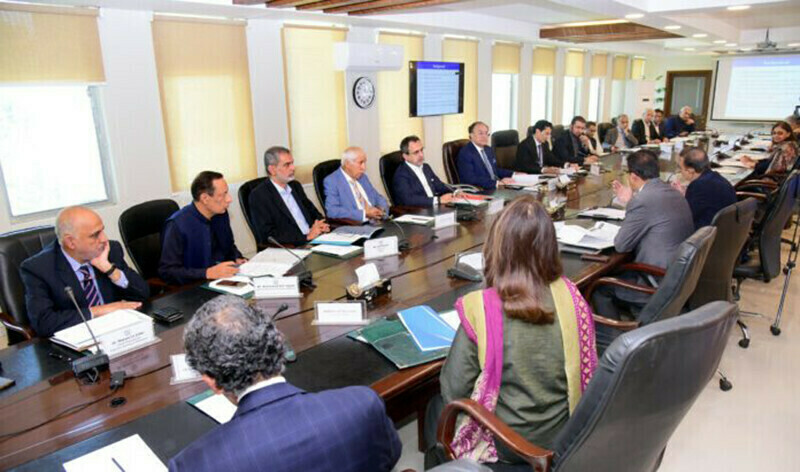
The decision, taken during an ECC meeting chaired by Federal Minister for Finance and Revenue Senator Muhammad Aurangzeb, forms part of a broader scheme to promote home ownership among first-time buyers.
Beyond the housing subsidy, the ECC approved the country’s Green Taxonomy, a pivotal move toward bolstering environmental sustainability.
The taxonomy, put forward by the Ministry of Climate Change and Environmental Coordination, aims to streamline access to financing for green projects by establishing a shared definition of environmentally sustainable economic activities.
The Finance Division announced the approval in a statement following ECC meeting, underscoring its significance. “The chair appreciated the initiative, noting that it was long overdue and would play a vital role in facilitating access to financing for green projects in the country,” the statement said. The decision positions Pakistan to better align its economic activities with global environmental goals, potentially unlocking new funding avenues for sustainable development.
The taxonomy’s importance was previewed earlier this year when State Bank Governor Jameel Ahmad addressed the Senate Standing Committee on Climate Change and Environmental Coordination in March. He emphasized that the framework would enable financial and non-financial companies to adopt a uniform understanding of what qualifies as environmentally sustainable, fostering consistency in green investment decisions.
The ECC also tackled a sweeping array of issues, reflecting the government’s multifaceted approach to industrial growth, skill development, housing finance, and telecommunications.
The meeting, attended by key figures including Federal Minister for Power Sardar Awais Ahmed Khan Leghari, Minister for Petroleum Ali Pervaiz Malik, and Minister for Commerce Jam Kamal Khan, alongside senior officials, underscored its high stakes.
Steel Sector Boost: The committee endorsed a Ministry of Commerce report on industrial competitiveness and export-led growth in the steel sector, aligning with the National Tariff Policy 2025–30. The initiative targets lower production costs and enhanced export performance, a critical lever for economic expansion.
Gas Tariff Dispute: The ECC greenlit a Ministry of Commerce proposal to appeal a Lahore High Court ruling granting gas and Regasified Liquefied Natural Gas tariff concessions to Ghani Glass Limited. However, the committee deemed the appeal untenable, citing the prior withdrawal of concessionary energy tariffs for export-oriented sectors—a policy shift tied to broader fiscal adjustments.
Skills Investment: To advance skills development, the ECC approved a Rs1 billion government guarantee for the Pakistan Skill Impact Bond, as proposed by the Ministry of Federal Education and Professional Training. The outcomes-based financing model aims to spur workforce development, a cornerstone of long-term economic resilience.
Edible Oil Concerns: The Ministry of Industries and Production briefed the ECC on vegetable ghee and oil market trends, affirming adequate national stocks. Yet, the committee flagged the limited pass-through of falling global prices to local consumers, urging rigorous monitoring to curb price distortions or cartelization. It called for tighter coordination with the Competition Commission of Pakistan, the National Price Monitoring Committee, and provincial authorities.
Telecom Adjustments: The ECC backed a Ministry of Information Technology and Telecommunication proposal to revise charges for Radio-Based Services, mandating periodic updates every three to five years to reflect economic and technological shifts. It also endorsed a revised advisory committee lineup for the release of IMT spectrum, essential for next-generation mobile broadband rollout.
Maritime Milestone: The committee formalized ship breaking and recycling as a recognized industry, following a Ministry of Maritime Affairs recommendation, a step toward regulating and boosting the sector’s economic contribution.
Copyright © 2021 Independent Pakistan | All rights reserved