By Staff Reporter
KARACHI: Pakistani authorities said on Monday three terrorists, including the mastermind behind a November 2024 attack on Chinese engineers, were killed in a counterterrorism operation in Karachi’s Manghopir area.
The raid, a joint effort by the Counter-Terrorism Department (CTD) and intelligence agencies, struck a blow against the banned Tehreek-i-Taliban Pakistan (TTP), signaling Pakistan’s renewed push to curb a wave of violence that has increasingly targeted Chinese nationals.
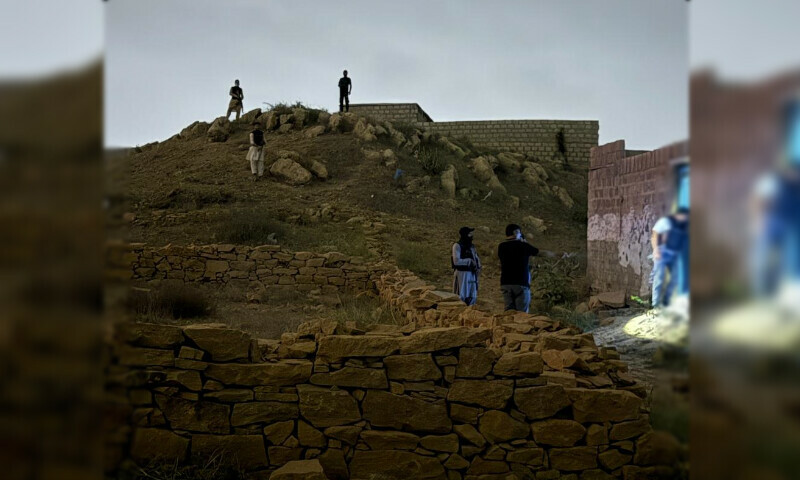
The operation targeted a house in Manghopir, where the militants were hiding. “A terrorist who masterminded an attack on Chinese engineers in November last year has been killed during an operation in Karachi’s Manghopir area,” Additional Inspector-General of Police Azad Khan said.
Khan identified the slain mastermind as Zafran and said two accomplices were also killed in the raid. Senior CTD official Raja Umer Khattab confirmed the details, telling reporters, “The teams raided a house in the Manghopir area and killed the terrorists during an operation. They belonged to the banned Tehreek-i-Taliban Pakistan (TTP).”
“Among those killed, Zafran was the mastermind behind last year’s attack on Liberty Textile Mill in the SITE area of Karachi which targeted Chinese nationals,” Khattab said. “He had recruited the attacker, Sharifullah, as a security guard, provided him with weapons, and later facilitated his escape to Afghanistan.”
Khattab said the government had announced a bounty of Rs20 million [$71,942] on Zafran’s head. The CTD official said hand grenades, a suicide vest and a diary were recovered from the slain militants’ possession.
He added that the diary contained details of several potential targets the militants wanted to attack, among them the Police Training Center in Karachi’s Baldia Town.
The operation stems from an incident on November 5, 2024, when two Chinese engineers were shot and wounded at a textile mill in Karachi’s SITE area. The attack, initially described as a possible targeted assault, sent shockwaves through Pakistan’s security establishment.
Deputy Inspector General of Police (DIG-South) Syed Asad Raza told journalists at the time that the shooting appeared to result from “a verbal altercation between the engineers and the guard,” but he stressed that a deeper investigation was underway to uncover the true motive.
The shooter, a private security guard, fled the scene, triggering a manhunt. Authorities registered a first information report (FIR) two days later and detained a supervisor and three guards from the security company for questioning. “The suspect’s residence has been traced, and we’re collecting information about him from his neighbors,” Raza said then, as police worked to piece together the guard’s movements and intent.
Monday’s raid suggests the attack was part of a broader terrorist plot, contradicting the initial altercation narrative. In response to the November incident, Pakistan’s Foreign Office issued a statement reaffirming its commitment to protecting Chinese nationals, projects, and institutions. “The attack is being probed,” the statement read, underscoring Islamabad’s resolve amid growing pressure from China.
Pakistan has been grappling with a sharp rise in terrorist attacks since the TTP ended its ceasefire with the government in November 2022. The violence has hit hardest in Khyber Pakhtunkhwa and Balochistan, where police, law enforcement personnel, and security forces have borne the brunt of the assaults.
But Chinese nationals, often linked to high-profile infrastructure projects, have emerged as prominent targets in recent years. A 2024 report by the National Counter Terrorism Authority (Nacta) laid bare the toll: Since 2021, 20 Chinese citizens have been killed and 34 injured in terrorist attacks across Pakistan.
In October 2024, a suicide bombing near Karachi airport, claimed by the outlawed Balochistan Liberation Army (BLA), killed two Chinese citizens and injured ten others. Months earlier, in March 2024, an attack in Khyber Pakhtunkhwa’s Besham region left five Chinese workers dead, with authorities pointing to affiliates of either the TTP or Islamic State-Khorasan (IS-K). And in 2022, a suicide bombing outside the University of Karachi’s Confucius Institute killed three Chinese nationals and one Pakistani, injuring four others.
The mounting attacks have heightened Beijing’s concerns, particularly over the China-Pakistan Economic Corridor (CPEC), a cornerstone of China’s Belt and Road Initiative. Speaking at an event in late October 2024, Chinese Ambassador Jiang Zaidong voiced frustration, calling the violence “unacceptable” and pressing Islamabad to strengthen security for Chinese nationals and crack down on anti-China elements.
Copyright © 2021 Independent Pakistan | All rights reserved