By Staff Reporter
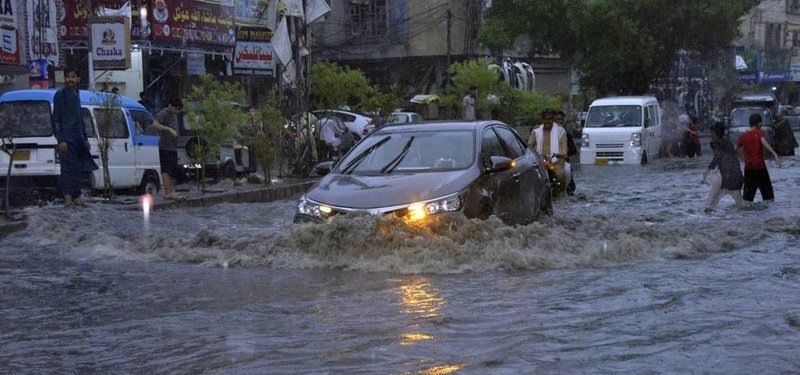
ISLAMABAD: Pakistan’s Meteorological Department warned on Monday that a “more intense” monsoon spell will sweep across much of the country starting today, threatening to worsen a crisis that has already claimed 279 lives since late June.
With heavy rains forecast and flood alerts issued, authorities are racing to prepare for potential devastation as the nation grapples with one of its deadliest monsoon seasons in recent years.
Pakistan’s monsoon rains, which began battering the country on June 26, have left a trail of destruction, killing 279 people and injuring 676, according to the National Disaster Management Authority’s (NDMA) latest report. Punjab province has suffered the most, with 151 deaths, followed by Khyber Pakhtunkhwa with 64, Sindh with 25, Balochistan with 20, Gilgit-Baltistan with nine, Islamabad with eight, and Azad Kashmir with two.
The Meteorological Department’s deputy director, Anjum Nazir Zaigham, told local TV channels on Monday that the new monsoon spell will be fiercer than its predecessors. “Another monsoon spell will affect the country’s northern areas from today,” he said. “And this spell will be more intense than the previous one.”
He added that rainfall is expected to drench nearly all of Punjab, Gilgit-Baltistan, Khyber Pakhtunkhwa, Azad Kashmir, and northern Balochistan, with the worst expected Tuesday and Wednesday. “Tomorrow and the day after will be very important,” Zaigham warned.
Pakistan is no stranger to weather-related calamities. Ranked among the world’s most climate-vulnerable nations, it has faced increasingly erratic and extreme conditions in recent years. In May, severe storms killed at least 32 people. In 2022, catastrophic floods submerged a third of the country, claiming over 1,700 lives, displacing more than 30 million people, and causing an estimated $35 billion in damages.
The Meteorological Department reported last week that monsoon currents penetrating Pakistan’s upper and central regions, combined with a westerly wave arriving Tuesday, will intensify rainfall. The agency cautioned that heavy downpours could trigger flash floods in local streams and nullahs nationwide. The NDMA has issued flood alerts for Gilgit-Baltistan and Azad Kashmir from July 28 to 31, pinpointing areas like Gilgit, Skardu, Hunza, Shigar, Muzaffarabad, Neelum Valley, and Bagh as particularly at risk. “These rains may lead to flooding, while heavy showers in hilly regions may also trigger landslides,” the NDMA warned in a statement.
In Chitral Valley, rainfall and melting glaciers could swell the River Chitral, while urban flooding threatens Muzaffarabad and Bagh. The disaster agency has ordered all relevant departments to brace for impact. “NDMA has directed all relevant departments and agencies to take proactive measures, ensure the readiness of personnel, machinery, and rescue teams, and remain vigilant to deal with any emergency situation,” it said. Provincial Disaster Management Authorities (PDMAs) and local administrations have been told to act swiftly to prevent further loss of life.
Across Gilgit-Baltistan, the human cost of the rains is mounting. Displaced residents face dire shortages of clean drinking water, electricity, road access, and communication services. In the Babusar and Thore valleys of Diamer, survivors described the floods as among the deadliest in memory, with homes and belongings swept away. In Gilgit, thousands in Danyor and Sultanabad have been without drinking water for three days after a flash flood from Danyor Nallah wrecked the main supply pipeline and irrigation channels.
Former Gilgit-Baltistan minister Muhammad Iqbal, leading a group of area elders, told reporters the government has failed to deliver on promises to restore the water supply. “Although residents managed to temporarily restore the pipeline, subsequent flooding destroyed it again,” he said. “No restoration work has been initiated.” Frustrated, they issued a one-day ultimatum for action, threatening protests if unmet.
In Ghanche district’s Kondus and Haldi, residents reported similar woes: no relief supplies, electricity, drinking water, or road access. A landslide in Kondus obliterated over 50 homes, leaving families desperate for food, shelter, and medical care. “The unavailability of the internet makes it even harder to communicate or call for help,” one local said.
In Shigar district, flash floods struck Tisar and Garchahma, knocking out power for three to four days and forcing evacuations. “Many families have left their homes in search of safer ground,” resident Sajid Ali said. “Drinking water is also unavailable.” In Jutal and other hard-hit areas, people voiced anger over the government’s sluggish response and lack of basic aid.
The rains have also claimed lives among unsuspecting travelers. A private TV anchor, her husband, and their four children are among tourists reported missing in Babusar Valley, Gilgit-Baltistan government spokesperson Faizullah Faraq confirmed Sunday. “The family of an anchorperson for a Pashto-language TV channel had contacted authorities, reporting that she, her husband, and their four children had gone missing during the recent flash floods,” he said. A wallet belonging to the anchor was recovered, along with the body of an unidentified woman from the Indus River in Chilas’s Minar area, believed to be among the missing tourists.
Faraq said eyewitnesses saw 10 to 15 tourists swept away by floodwaters on the Babusar Highway. Seven bodies have been found so far. “The search for the remaining missing persons is ongoing with the help of sniffer dogs and drones,” he said. “Personnel from Diamer Police, Rescue 1122, the Pakistan Army, and GB Scouts are participating in the operation.” He vowed the effort would continue until all are accounted for. Additional rescue missions are underway in Ghanche, Ghizer, and Gilgit, with human remains found in Diamer’s Thak Bhasha area requiring DNA testing for identification.
The floods have crippled infrastructure, notably the Babusar Highway, a vital artery now blocked in 15 spots. Federal Secretary for Communications and Works Sher Alam Masood visited the site in Chilas to oversee repairs. “Restoration efforts using heavy machinery are ongoing,” he told the media. “Partial clearance has been achieved at 13 of them.” He expressed hope the highway would partially reopen by Monday.
Copyright © 2021 Independent Pakistan | All rights reserved