By Staff Reporter
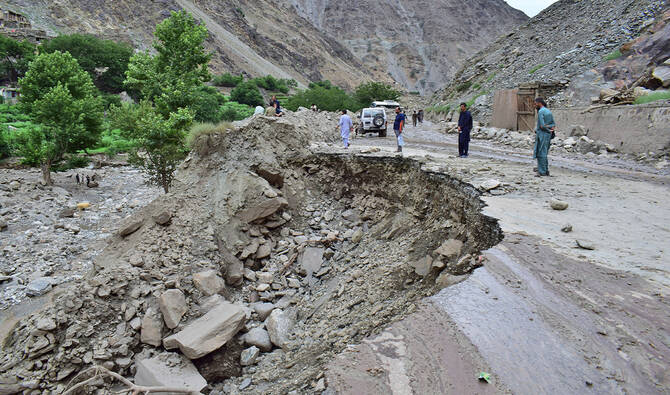
ISLAMABAD: A cloudburst-induced flood tore through the Ishkoman valley in Pakistan’s Ghizer district on Wednesday, leaving a trail of destruction that damaged dozens of homes, shops, and critical infrastructure, including a vital power station, the Gilgit-Baltistan Disaster Management Authority (GBDMA) reported.
The GBDMA said flash floods struck eight locations across the villages of Faizabad and Dadaabad, overwhelming the remote communities.
The deluge destroyed 22 homes and 18 shops, partially damaged 42 others, and inundated 65 more, displacing families. The flood devastated thousands of kanals of agricultural land, orchards, and forests, hitting the local economy hard. It also damaged two timber factories, two garages, a Jamaat Khana, and the DJ High School building.
A two-kilometer stretch of the main road and a three-kilometer water channel serving a powerhouse were affected, cutting essential services. Floodwaters swept away livestock, cattle sheds, 18 irrigation channels, eight motorcycles, and six cars.
The power station’s damaged water channel triggered widespread outages, while disrupted telephone and mobile networks hampered communication.
“Communication is cut off, so it’s hard to assess the damages,” said Ghizer resident Yaqoob Tai, highlighting the isolation. Local officials are assessing losses and have moved families to safer areas, but communication issues delay a full impact report.
This flood marks another disaster for Gilgit-Baltistan this year, where experts note rising cloudburst-triggered floods, glacial lake outbursts, and rapid glacier melting. At least 10 people have died and 12 tourists remain missing in recent regional incidents, with Babusar valley and Thore in Diamer hit hardest.
Pakistan’s broader weather woes show no signs of abating. The Pakistan Meteorological Department (PMD) warned on Wednesday of a fresh monsoon spell starting August 5, poised to bring heavy rains and flash floods to multiple regions.
The forecast comes as the National Disaster Management Authority (NDMA) reports that rain-related incidents since June 26 have claimed 288 lives, including 136 children, and injured 691 people nationwide.
The PMD highlighted risks of flash floods in northern streams, naming Dir, Swat, Shangla, Mansehra, Kohistan, Abbottabad, Kohat, Karak, Hangu, Tank, Dera Ghazi Khan, Murree, Galliyat, and Azad Kashmir as areas of concern.
River flows in the Chenab, Jhelum, and Sutlej are expected to rise to medium levels under the monsoon’s influence. “A fresh monsoon activity with isolated heavy falls is expected to start from Aug 5,” the PMD said in its daily report.
In Punjab, authorities issued a flood alert Wednesday, warning of rising river levels and potential urban flooding in Rawalpindi, Gujranwala, and Lahore over the next 48 hours. The Provincial Disaster Management Authority (PDMA) called on residents in low-lying and riverbank areas to heed safety guidelines and assist in evacuations.
Pakistan, long ranked among the world’s most climate-vulnerable nations, has faced increasingly unpredictable weather in recent years. Severe storms in May killed at least 32 people, while the catastrophic floods of 2022 submerged a third of the country, claiming over 1,700 lives, displacing more than 30 million, and inflicting an estimated $35 billion in damages.
Copyright © 2021 Independent Pakistan | All rights reserved