By Staff Reporter
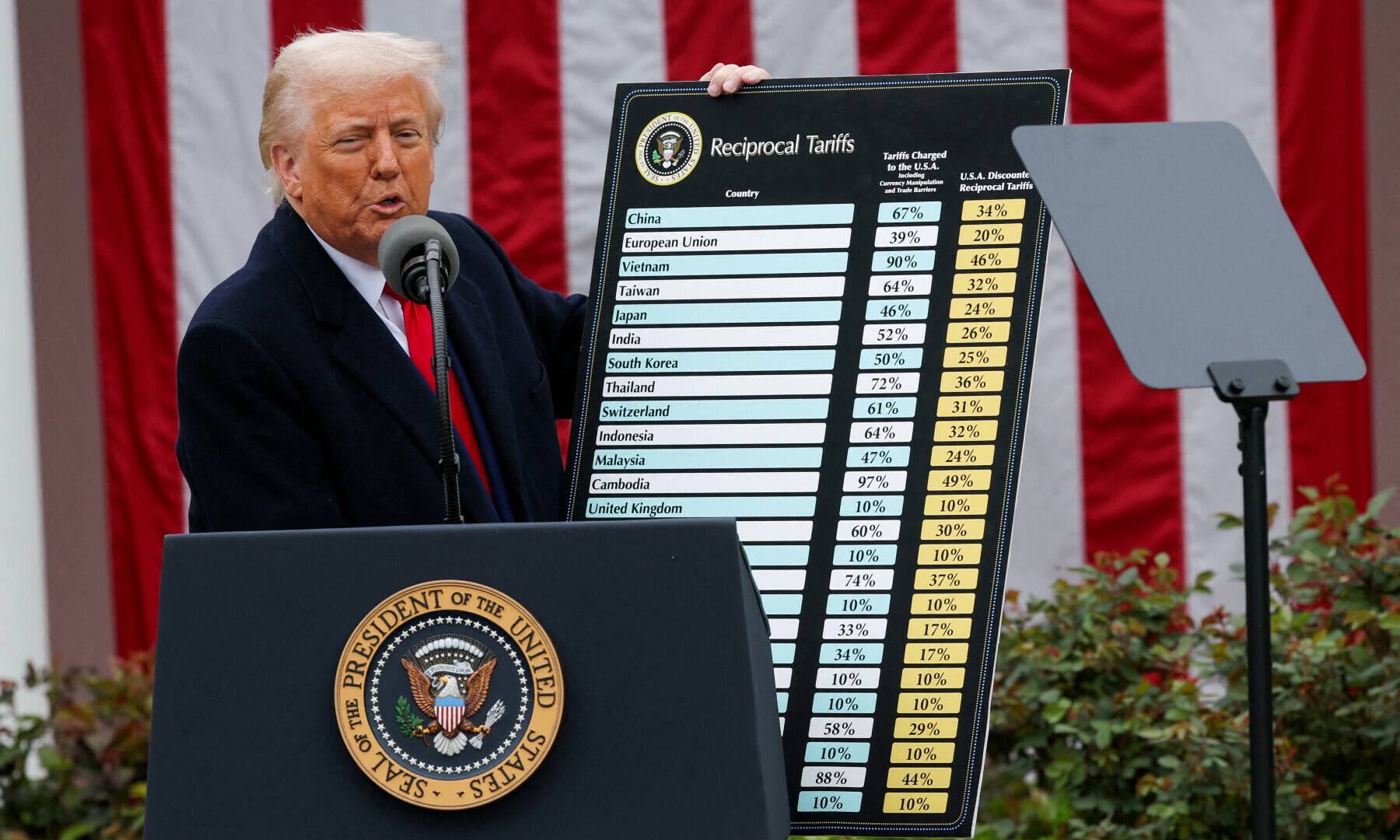
KARACHI: President Donald Trump said on Wednesday his administration has struck a trade deal with Pakistan to develop the South Asian nation’s oil reserves, while simultaneously imposing a 25% tariff on Indian imports, escalating tensions with New Delhi over trade imbalances and its energy ties with Russia.
The agreement with Pakistan, revealed in a social media post, centres on a joint effort to tap the country’s oil reserves. “We have just concluded a Deal with the Country of Pakistan, whereby Pakistan and the United States will work together on developing their massive Oil Reserves,” Trump wrote on social media. “We are in the process of choosing the Oil Company that will lead this Partnership. Who knows, maybe they’ll be selling Oil to India some day!”
Trump’s social media post did not provide further details on the deal between the US and Pakistan. The finance ministry had no immediate comment.
Pakistani Foreign Minister Ishaq Dar signalled last week that a deal was imminent following talks with US Secretary of State Marco Rubio. “Our teams have been here in Washington discussing, having virtual meetings and a committee has been tasked by the prime minister to fine tune now,” Dar said.
The US State Department and Pakistan’s foreign ministry underscored the focus on trade expansion, particularly in critical minerals and mining, after the Rubio-Dar meeting.
Finance Minister Muhammad Aurangzeb is currently in the US. Aurangzeb led Pakistan negotiations in sealing the trade pact after months of talks, a move set to deepen economic ties with Washington.
The talks, which kicked off in May, are poised to deliver a comprehensive trade agreement designed to deliver mutual economic benefits for both nations.
The negotiations began with a telephonic conference call in May between Aurangzeb and US Trade Representative Jamieson Greer, focusing on reciprocal tariffs. The two sides agreed to dive into technical discussions shortly thereafter. The dialogue gained momentum after the US proposed a 29% duty on Pakistani exports, a decision it later suspended temporarily. By July, talks in Washington had advanced to their final stage, with Aurangzeb calling the process “very constructive” and underscoring a joint resolve to tackle remaining hurdles and finalise a broad economic framework.
Pakistani officials said the trade deal is set to broaden cooperation into non-traditional sectors like information technology, agriculture, and minerals—areas flagged for their substantial growth potential.
They emphasised that strong trade and economic ties form the bedrock of Pakistan-US relations, with the US remaining Pakistan’s top trading partner. Pakistan is pushing to elevate bilateral trade beyond conventional goods, eyeing US investment in key sectors such as energy and mining.
The US stands as Pakistan’s largest export market, a lifeline now under pressure from the fresh duties. Pakistan shipped $5.44 billion in goods to the US in 2024, per central bank data, with exports climbing 10% to $4 billion from July to February of the current fiscal year compared to the prior period. That’s left Islamabad with a $3 billion trade surplus with the US. Textiles dominate the mix, making up nearly 90% of those exports. Pakistan is also the second-largest buyer of US cotton in South Asia after China.
Tariffs Target India
Hours earlier, Trump announced the 25% tariff on Indian imports, effective August 1, alongside unspecified additional penalties. The move, aimed at addressing the US trade deficit with India and its purchases of Russian oil, will hit Indian exports valued at roughly $87 billion in 2024. Affected goods include garments, pharmaceuticals, gems and jewelry, and petrochemicals—sectors that employ millions.
India’s trade practices have long drawn Trump’s ire. “While India is our friend, we have, over the years, done relatively little business with them because their Tariffs are far too high, among the highest in the World, and they have the most strenuous and obnoxious non-monetary Trade Barriers of any Country,” he wrote on Truth Social.
He also criticized India’s reliance on Russian military equipment and energy, noting, “They are Russia’s largest buyer of ENERGY, along with China, at a time when everyone wants Russia to STOP THE KILLING IN UKRAINE — ALL THINGS NOT GOOD!”
The tariffs threaten to strain ties with a key US strategic partner often seen as a counterweight to China. The White House has previously flagged India’s steep tariffs, averaging 39% on agricultural goods, with rates as high as 45% on vegetable oils and 50% on apples and corn, as a sticking point in trade talks.
S.C. Ralhan, president of the Federation of Indian Export Organisation, warned of the fallout. “This is a major setback for Indian exporters, especially in sectors like textiles, footwear, and furniture, as the 25% tariff will render them uncompetitive against rivals from Vietnam and China,” he said.
Despite the hard line, Trump hinted at flexibility. “They have one of the highest tariffs in the world now, they’re willing to cut it very substantially,” he told reporters at the White House. “We’re talking to India now, we’ll see what happens… You’ll know by the end of this week.”
White House economic adviser Kevin Hassett said Trump’s frustration with slow trade talks prompted the tariff move, adding that details on the additional penalty would emerge “shortly.”
India’s government responded cautiously, saying it was assessing the announcements and remained committed to a fair trade deal with the US.
Copyright © 2021 Independent Pakistan | All rights reserved