By Staff Reporter
ISLAMABAD: Pakistan must urgently bolster its disaster preparedness to counter escalating risks from heavy monsoon rains, glacial lake outburst floods (Glofs), and landslides, the United Nations warned Tuesday, as the country reels from a deadly mudslide and braces for more extreme weather.
The United Nations Office for the Coordination of Humanitarian Affairs (UNOCHA) highlighted Pakistan’s vulnerability due to its location along tectonic fault lines and exposure to extreme climate variability, which heightens the risk of earthquakes, floods, droughts, and other hazards.
These challenges are compounded by political instability, regional conflicts, and security issues, according to a recent UNOCHA report. The report called for immediate action to prioritise disaster risk reduction, strengthen early warning systems, and invest in community resilience, while also stressing the need for improved governance and resource management to address future emergencies and safeguard long-term development.
“Floods are among the most recurring and damaging disasters, affecting millions of people each year. The devastating 2022 floods alone impacted over 30 million people, causing economic losses equivalent to nearly six per cent of the national GDP,” it stated.
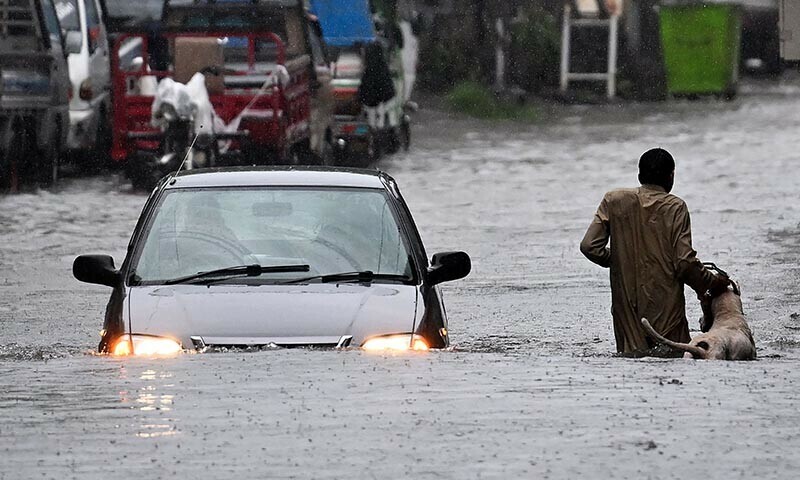
The UN’s warning came as the Pakistan Meteorological Department (PMD) forecast heavy monsoon rains across the upper catchments of major rivers over the next 48 hours, raising concerns about flooding in vulnerable regions.
The PMD reported that the Sutlej River at Ganda Singh Wala is expected to reach low flood levels, while the Chenab River at Marala, Khanki, and Qadirabad, along with the nullahs of the Ravi, could see medium to high flows within the next 24 hours.
Scattered thunderstorms and moderate to heavy rainfall are also anticipated in the upper catchments of the Sutlej, Ravi, Chenab, and Jhelum rivers, as well as in Islamabad, Rawalpindi, Gujrat, Gujranwala, Lahore, Zhob, and Dera Ghazi Khan divisions.
Punjab’s Provincial Disaster Management Authority (PDMA) issued a separate alert for the seventh spell of the monsoon, expected from August 13 to 15, predicting heavy rains across most districts, particularly in Rawalpindi, Gujranwala, Lahore, and Dera Ghazi Khan.
“There is a risk of urban flooding in Lahore, Rawalpindi, Gujranwala, and Sialkot, as well as flash flooding in riverside nullahs due to heavy rains,” PDMA Director General Irfan Ali Kathia said in a statement. He also cautioned about potential landslides in Murree and Galiyat and possible damage to vulnerable buildings.
The PDMA directed commissioners and deputy commissioners to remain vigilant and ensure that civil defence, rescue services, and other agencies complete advance preparations. It urged the public to follow safety guidelines, avoid unnecessary travel, and, in the event of urban or flash flooding, stay in safe areas and avoid crossing flowing water.
The urgency of these measures was underscored earlier Tuesday when Prime Minister Shehbaz Sharif called for advance alerts for residents in vulnerable areas, following a deadly mudslide in Gilgit-Baltistan (GB). The region, a popular tourist destination known for its towering peaks, glaciers, and fast-flowing streams, is particularly susceptible to Glofs, flash floods, and landslides due to its limited infrastructure, despite its strategic importance as Pakistan’s only land route to China.
In a meeting with the prime minister, Lieutenant General Inam Haider Malik, head of the National Disaster Management Authority (NDMA), briefed on efforts “toward making the early warning system in Gilgit-Baltistan fully operational and enhancing cooperation with the Ministry of Climate Change in this regard,” according to a statement from the Prime Minister’s Office.
Sharif stressed the need for stronger coordination with provincial authorities to support and rehabilitate victims of recent rains and flooding. “People in vulnerable areas must be given advance alerts in view of weather conditions and possible emergencies,” he said.
The NDMA reported that a mudslide in Gilgit’s Danyore Nullah area over the weekend claimed seven lives and injured six others, underscoring the region’s fragility. The ongoing monsoon season, which began on June 26, has already proven deadly, with 312 fatalities and 740 injuries reported nationwide. Pakistan is also grappling with the broader impacts of climate change, including rising sea levels, extreme weather events, and disrupted agricultural cycles. In arid regions, droughts have intensified water shortages, severely affecting agriculture and livestock, further straining the country’s resources.
Copyright © 2021 Independent Pakistan | All rights reserved