By Staff Reporter
ISLAMABAD: Catastrophic floods in Pakistan’s eastern Punjab province have wiped out 30 percent of the country’s wheat stocks, a senior business leader said on Thursday, raising fears of food shortages and soaring prices in the world’s eighth-largest wheat producer.
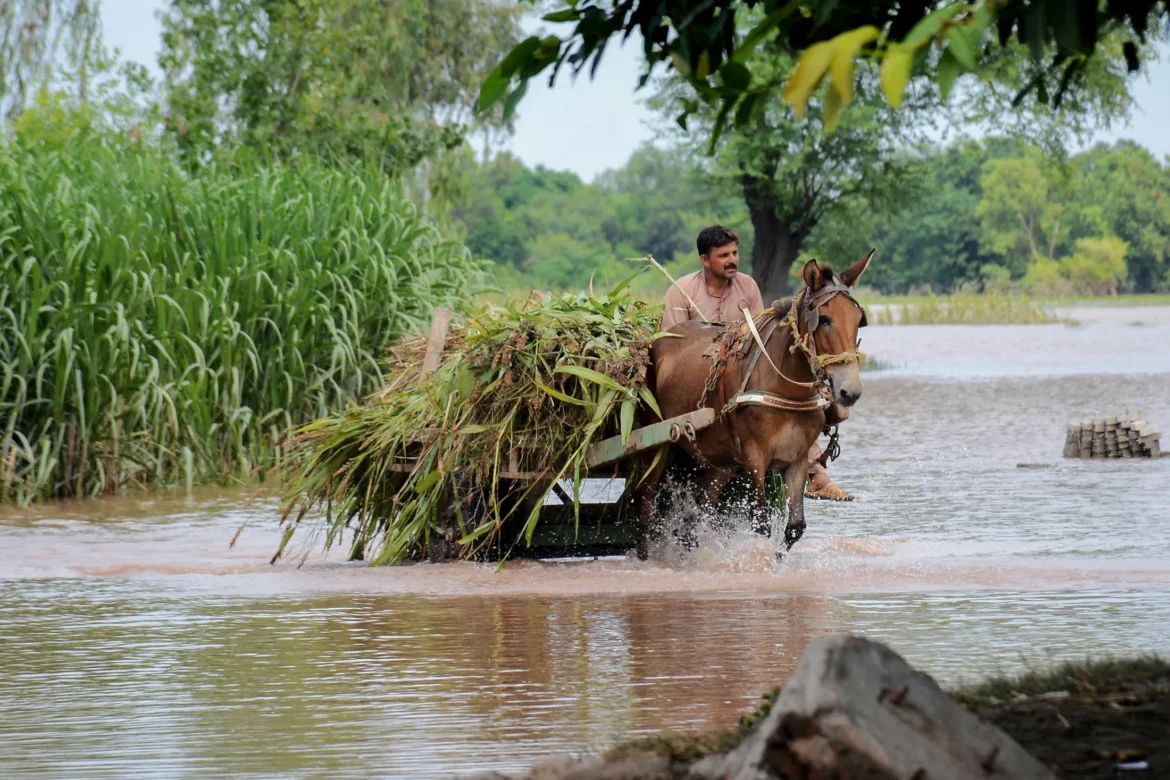
The deluges, which began in late August, have killed 46 people, affected 3.9 million, and displaced 1.8 million across Punjab, the nation’s agricultural heartland. The floods have ravaged crops including rice, maize, cotton, sugarcane, and vegetables, while damaging critical wheat storage facilities, according to Ahmad Jawad, chief organiser of the Pakistan Business Forum (PBF).
“Our assessment (is that) 30% of wheat stock is gone,” Jawad said, expressing concern over the lack of adequate storage infrastructure. “Floods have severely affected wheat stocks in central and south Punjab.”
Pakistan, which produced 31.4 million tons of wheat last year—4% of global production, according to the U.S. Department of Agriculture (USDA)—faces a deepening crisis. The USDA estimated this year’s wheat output at 28.9 million tons, down 8% from 2024, with production now projected at 27.5 to 28 million tons amid rising domestic consumption of 33.6 million tons annually.
Muzzammil R. Chappal, chairman of the Cereal Association of Pakistan (CAP), warned of a shortfall of up to 3 million tons, driving wheat prices to a three-year high. The cost of a 100-kilogram bag of wheat in major cities like Karachi, Quetta, and Peshawar has surged 40% to 9,000 rupees ($32) in the past 15 days.
“This perhaps can increase to 15,000 rupees ($53) if the government still did not devise an import policy,” Chappal said. In a letter to the food ministry on Aug. 27, he urged approval for importing 500,000 tons of wheat monthly to stabilise prices, citing a “sharp increase” reflecting shortage concerns.
Chappal attributed part of the shortfall to farmers feeding 2.5 million tons of wheat to poultry and livestock when prices were lower at 5,500 rupees ($20) per 100 kilograms, substituting for flood-damaged maize.
The PBF, part of the International Business Forum representing 42 business associations across 25 countries, called for an immediate agricultural emergency. In a separate letter to Prime Minister Shehbaz Sharif, it reported losses of 60% of rice, 35% of cotton, and 30% of sugarcane in central and southern Punjab, with floodwaters now threatening Sindh along the Indus River.
“The scale of devastation is staggering,” the PBF letter stated, warning that key agricultural targets for the fiscal year are at risk. It estimated losses in the billions of rupees, threatening rural livelihoods and economic stability.
The forum proposed interest-free loans of up to 2 million rupees for small and medium-sized farmers, alongside infrastructure projects to improve water management. It also urged the removal of illegal riverbank encroachments, stronger irrigation systems, and community-level water storage to bolster flood resilience.
“The time for reactive planning is over,” said PBF President Khawaja Mehboob ur Rehman. “This crisis must be treated as a wake-up call to reform agricultural strategies. We must stop viewing floods purely as disasters and start managing them as resources.”
Ahsan Mehanti, CEO of Arif Habib Commodities, backed Jawad’s assessment, estimating a $3 billion production loss and the need to import up to 6 million tons of wheat to stabilize prices.
However, Kamal Ahmed, a commodities analyst at AKD Securities, said wheat stocks held by the Pakistan Agriculture Storage & Services Corporation (PASSCO) were largely secure, with 4.2 million tons stored in flood-resistant facilities.
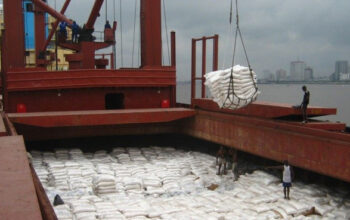
Pakistan has imported wheat for the past five years, except in 2024, when a bumper harvest exceeded the five-year average by 3.5 million tons. This year’s shortfall, compounded by flood damage, could reverse that trend. The PBF urged the Economic Coordination Committee to authorize wheat and rice imports through public and private channels and activate district price control committees to curb hoarding.
Copyright © 2021 Independent Pakistan | All rights reserved