By Staff Reporter
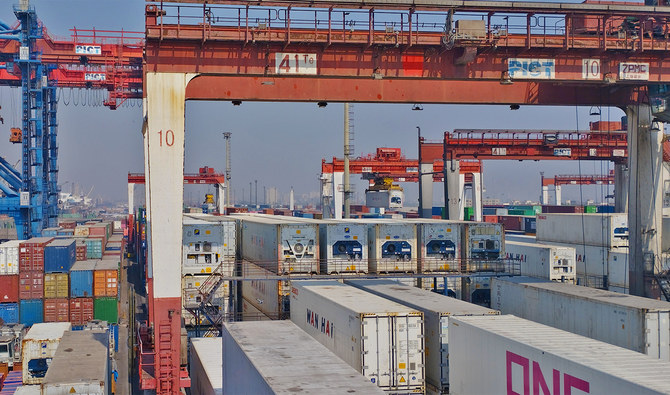
ISLAMABAD: Pakistan’s trade deficit surged nearly 46 percent in September to $3.34 billion, official data released Thursday showed, driven by a sharp rise in imports and a steep drop in exports.
The widening gap is intensifying pressure on the country’s fragile economy, raising fears of further strain on foreign reserves and currency stability.
According to the Pakistan Bureau of Statistics, the deficit climbed from $2.29 billion a year earlier as imports jumped 14 percent to $5.85 billion while exports fell 11.7 percent to $2.5 billion. The shortfall widened 16.3 percent from August, signalling deepening challenges for an economy dependent on a $7 billion International Monetary Fund bailout to stay solvent.
For the July-September quarter of fiscal year 2026, the trade gap expanded 32.9 percent year-on-year to $9.37 billion. Imports rose 13.5 percent to $16.97 billion, while exports dipped 3.8 percent to $7.6 billion.
Economists warn that the growing deficit could erode Pakistan’s foreign reserves—currently around $19.8 billion—fuel rupee volatility, and complicate repayment of $25 billion in annual external debt, especially as the country relies on financial lifelines from allies like China and Saudi Arabia.
The services trade deficit also worsened, climbing 21.9 percent in August to $437 million from $358 million a year earlier. While services exports grew 8.4 percent to $672 million, imports rose faster at 13.4 percent to $1.11 billion.
However, the full fiscal year 2025 offered a brighter spot: The services trade gap narrowed 15.8 percent to $2.62 billion, with exports up 9.2 percent to $8.4 billion and imports growing just 2 percent to $11 billion.
In the first two months of fiscal 2026, services exports increased 11.73 percent to $1.4 billion, but imports rose 15.37 percent to $2.1 billion, pushing the July-August services deficit to $707 million, a 16.94 percent jump from $604.8 million a year earlier.
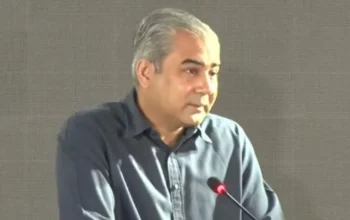
Pakistan’s export woes stem largely from its reliance on textiles, which make up about 60 percent of export earnings but are faltering under global and domestic pressures. “During the last year or so, cotton prices declined from USD 1.50 to 64 cents per pound and, resultantly, squeezed the profit margins of textile manufacturers,” said Asif Inam, former chairman of the All Pakistan Textile Mills Association.
He noted that electricity costs—currently 12 to 13 cents per kilowatt-hour—are stifling competitiveness, adding that cutting rates to 7 cents could boost textile exports to $25 billion in two to three years.
Analysts point to structural flaws in Pakistan’s export model, which leans heavily on agriculture and textiles. “This narrow base leaves the country exposed to price swings, limited demand, and little room for innovation,” said Dr. Khaqan Najeeb, a former Ministry of Finance adviser. He urged a shift toward higher-value sectors like technical textiles, processed foods, branded agro-products, light engineering, and IT services, alongside improvements in energy reliability, logistics, market access, and workforce skills.
“Only by upgrading both the structure and the complexity of our exports can Pakistan build resilience, raise incomes, and compete sustainably in global markets,” Najeeb said.
Copyright © 2021 Independent Pakistan | All rights reserved