By Staff Reporter
ISLAMABAD: Pakistan’s power regulator cleared the way on Friday for the government to compel battery storage capacity from developers competing in the country’s first competitive renewable energy auction in more than three decades, a bid to shore up a grid increasingly strained by the swings in demand that accompany rooftop solar adoption.
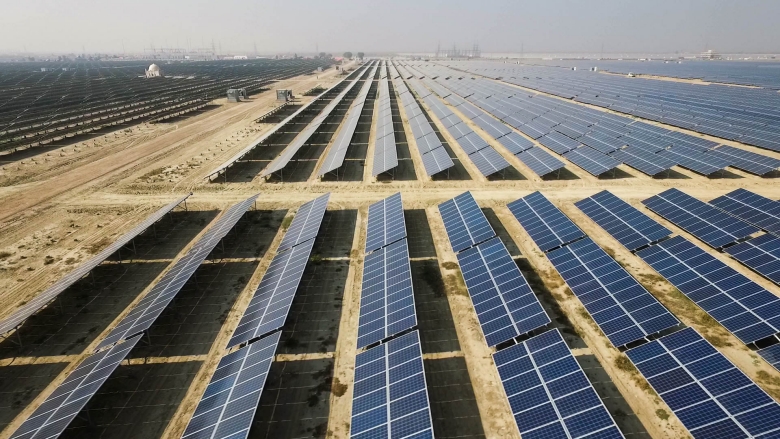
The National Electric Power Regulatory Authority approved amendments to the wheeling auction framework that will require companies bidding for a planned 800 megawatts of wind and solar capacity to pair their generation with Battery Energy Storage Systems equal to at least 10% of that capacity. The requirement will apply to the initial 400MW tranche of the auction, which the Independent System Operator — a subsidiary of the country’s power division — is now cleared to launch with a formal request for proposals as soon as this month.
The auction marks Islamabad’s most concrete step yet toward a competitive electricity market that officials have discussed for years without delivering, and it comes as the government confronts what planners describe as a worsening duck-curve problem: a pattern in which large numbers of solar-equipped consumers draw little from the grid during sunlight hours, then return in force each evening, forcing conventional generation to ramp sharply to meet the surge.
Nepra’s order stems from a July decision by the government to require storage as a condition of participation, according to the regulator. Under the terms approved Friday, developers bidding with solar or wind technology will not qualify for the auction unless the battery capacity installed at their generation site reaches the 10% threshold measured against the firm capacity of the underlying plant.
“An auction participant that intends to participate in the auction by utilising solar and/or wind generation technologies shall only be eligible to participate in the auction if the firm capacity of its BESS located at the site of the generation facility is equivalent to at least 10pc of the firm capacity of its solar and/or wind generation facility,” the regulator said in its order.
Bidders in the first round will have two months from publication of the request for proposals to submit bids, a deadline Nepra described as fixed. Subsequent auctions will carry a one-month submission window. The longer initial period is intended to give the system operator room to manage what officials anticipate could be a wave of requests for extensions from developers still adjusting to the new framework, according to the regulator.
The order also establishes a three-member grievance committee to field complaints about the auction process, to be chaired by the managing director of the Private Power and Infrastructure Board and rounded out by two independent directors from the system operator’s board. That structure falls short of what private developers had sought: bidders and other stakeholders had pushed for a grievance mechanism fully independent of the auction committee itself, arguing that leaving the committee responsible for both running the auction and adjudicating disputes over it created a conflict of interest that could undermine confidence in the process.
The system operator settled on the 10% threshold after modeling the financial returns from battery installations at varying capacities, work that found returns continued to improve as storage capacity increased beyond the mandated minimum, according to Nepra’s order. That leaves room for developers to install more storage than required if the economics support it — the mandate sets a floor, not a ceiling.
Pakistan’s approach places it alongside a cohort of developing markets that have opted for mandatory storage requirements rather than leaving the decision to bidders. Nepra’s order cited India, the Philippines, China and the Dominican Republic as markets that have taken the same path, while noting that more mature electricity markets have tended to rely on disclosure — publishing grid data and letting developers decide independently how much storage makes sense — rather than mandates.
The system operator said in its filing that most auction participants and stakeholders broadly accepted the case for requiring storage, viewing it as necessary to give the grid the flexibility to absorb the swings that renewable capacity introduces.
Copyright © 2021 Independent Pakistan | All rights reserved