By Staff Reporter
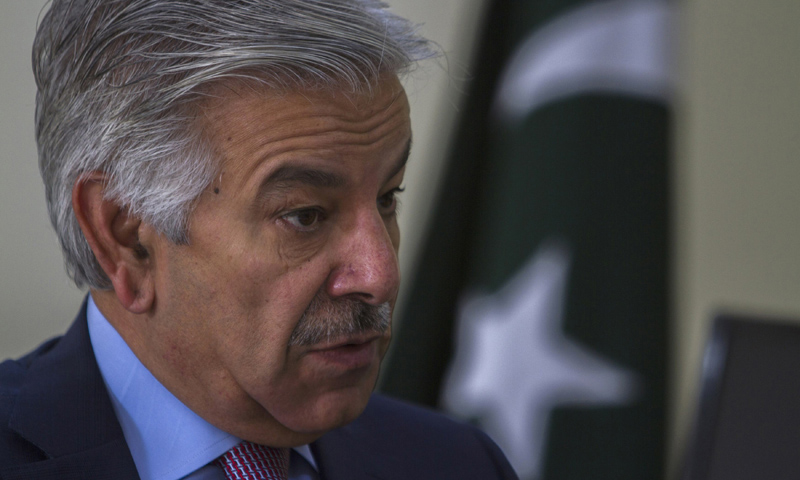
ISLAMABAD: Defence minister Khawaja Asif accused a key partner in the country’s governing coalition of political hypocrisy over one of the most combustible questions in Pakistani politics: whether to redraw the map of a nation held together, at times uneasily, by four provinces.
In a pointed social media post published late Friday night, Asif said the Pakistan Peoples Party, whose support underpins Prime Minister Shehbaz Sharif’s governing majority, had adopted a contradictory posture on the question of provincial boundaries — one he suggested was calculated rather than principled.
“When there is talk of a Saraiki province in Punjab, the PPP supports it or shows a soft corner on this issue,” Asif wrote on X. “And when there is talk of multiple provinces or administrative units instead of four, talk of ‘Sindhudesh’ begins.”
Sindhudesh refers to a fringe separatist concept envisioning an independent Sindh, and its invocation carries particular weight in Pakistani politics, where any suggestion of provincial secession is treated as a matter of national security. Asif’s implication was unmistakable: that the PPP, based in Sindh province and led by the family of former President Asif Ali Zardari, tolerates the redrawing of boundaries when it might benefit Saraiki-speaking areas of Punjab, but recoils at any suggestion that its own political base, Sindh, might be reorganised.
Asif said he believed something more calculated lay behind what he called the PPP’s “dual policy,” though he declined to elaborate. “I will delve into this deeper when the time comes,” he wrote.
The defence minister’s post came a day after the Sindh provincial assembly, controlled by the PPP, unanimously passed a resolution opposing any further division of Pakistan’s existing four provinces. PPP lawmaker Nisar Khuhro introduced the measure, and members carried banners declaring “Sindh is the motherland” during the session. Sindh Chief Minister Murad Ali Shah told the assembly beforehand that the province would not be divided.
The same day, the Muttahida Qaumi Movement-Pakistan, a rival party with its base among Sindh’s Urdu-speaking population, was blocked from introducing its own resolution — one condemning the Sindhudesh movement specifically. The PPP had criticised MQM-P for what it called an attempt to mislead the public by bringing the measure forward at all.
A constitutional principle, unevenly applied
Beyond the accusation of political maneuvering, Asif used his post to press a broader argument he has made before: that Pakistan’s system of governance has become too centralised and that authority needs to flow downward, to the provinces and beyond them to the country’s 36 administrative divisions.
“We are first and foremost Pakistanis,” he wrote. “Devolution was decided as a constitutional principle through the 18th Amendment, which was not respected. Time and circumstance demand that it be implemented with integrity.”
The 18th Amendment, passed in 2010, transferred significant powers from the federal government to Pakistan’s provinces and is widely regarded as one of the most consequential pieces of constitutional reform in the country’s history. Critics across the political spectrum, including Asif, have long argued that provincial governments have since concentrated that authority in provincial capitals rather than pushing it further down to districts and local governments, as many had hoped.
“Provinces or administrative units, whatever label you want to apply,” Asif wrote. “You have 36 divisions, use them, or devise some other administrative-geographical scheme. The devolution of power is inevitable.”
Pressure mounts on the prime minister
Asif’s remarks landed amid growing pressure on Sharif to clarify where he stands on a debate that has simmered for months without any government proposal ever being formally introduced. The PPP has openly questioned the prime minister’s silence on the issue and has demanded to know his position.
Nayyar Hussain Bokhari, secretary general of the PPP’s parliamentary wing, said on Friday that if the government were serious about pursuing new provinces, it should first bring the matter before the federal cabinet, and Sharif should then consult all political stakeholders before proceeding further.
Bokhari, who also addressed the issue in a television interview, noted that Pakistan’s founding constitutional negotiations in 1973 took months of consultation among political parties, and that the deliberations leading to the 18th Amendment itself stretched beyond a year. Any new effort to redraw provincial boundaries, he said, would need the consent of the affected provinces and would require a constitutional amendment passed by a two-thirds majority in both the National Assembly and the Senate.
That threshold gives the PPP significant leverage. Sharif’s ruling coalition holds a two-thirds majority in the National Assembly only with PPP votes; without them, any constitutional amendment would be dead on arrival.
Rana Sanaullah, a senior leader of Sharif’s Pakistan Muslim League-Nawaz and the prime minister’s adviser on political affairs, sought Friday to lower the temperature, telling a private television channel that no bill or resolution on new provinces had been introduced in parliament and that none was currently being prepared. Any such measure, he said, would first require consultation and consensus among political parties.
A debate with no fixed shape
The dispute traces back to comments made in July by Interior Minister Mohsin Naqvi, who declared that Pakistan’s governance system had “collapsed” and could no longer meet the country’s needs. Naqvi called for sweeping reform and argued that power should be devolved to lower administrative levels, with provinces divided along administrative lines to spur development and improve governance. He later stood by his characterization, saying he had been describing a deterioration that had unfolded over 80 years.
Murad Ali Shah rejected Naqvi’s assessment within days, dismissing his rhetoric as overblown while insisting the province would not be divided by force. “The people of Sindh say that the provinces will be built on our dead bodies,” Shah said, adding pointedly: “We will not let anyone’s dead bodies fall. Don’t dramatise it so much.” He noted that the constitution already provides a mechanism for creating new provinces, requiring a two-thirds resolution in a provincial assembly.
The MQM-P, for its part, has pushed in the opposite direction, announcing plans to launch a broader national dialogue with other parties on new provinces and administrative units. Party leader Mustafa Kamal argued that Pakistan’s expanding population, weak governance and concentrated political power had made further devolution necessary, and rejected the notion that the party’s proposal targeted Sindh’s ethnic Sindhi population. “Creating administrative units is not against Sindhis; it is for Sindhis,” he said. Fellow MQM-P leader Farooq Sattar went further, warning that failing to end the current arrangement risked provoking unrest. “If the status quo is not ended, rebellions will emerge in different parts of the country,” he said.
The debate has since broadened well past its original terms. Federal Planning and Development Minister Ahsan Iqbal has called for a national conversation on Pakistan’s administrative structure and floated a far more expansive vision than Naqvi’s — the creation of 12 to 15 new provinces, along with a committee on administrative reform to be organized through the law ministry. Iqbal has argued that even with the powers transferred under the 18th Amendment, Pakistan’s four provinces have grown steadily more centralized, with authority pooling in provincial capitals rather than reaching district governments. He has proposed roughly 160 empowered district governments spread across the four provinces, arguing it is simply not possible to govern Sindh effectively from Karachi, Punjab from Lahore, Khyber Pakhtunkhwa from Peshawar or Balochistan from Quetta. Without genuine devolution to the district level, he has warned, pressure for new provinces will only intensify.
Media reports have floated proposals ranging from eight to as many as 30 new provinces, though no government plan has ever been formally unveiled, and officials have offered conflicting signals about whether any concrete proposal exists at all.
Asif’s latest broadside does not resolve that ambiguity. But by publicly accusing a coalition partner of hypocrisy — and by insisting that some form of devolution is not just desirable but “inevitable” — he has ensured that the question will remain a live source of friction within Sharif’s governing coalition, whatever shape it eventually takes.
Copyright © 2021 Independent Pakistan | All rights reserved