By Staff Reporter
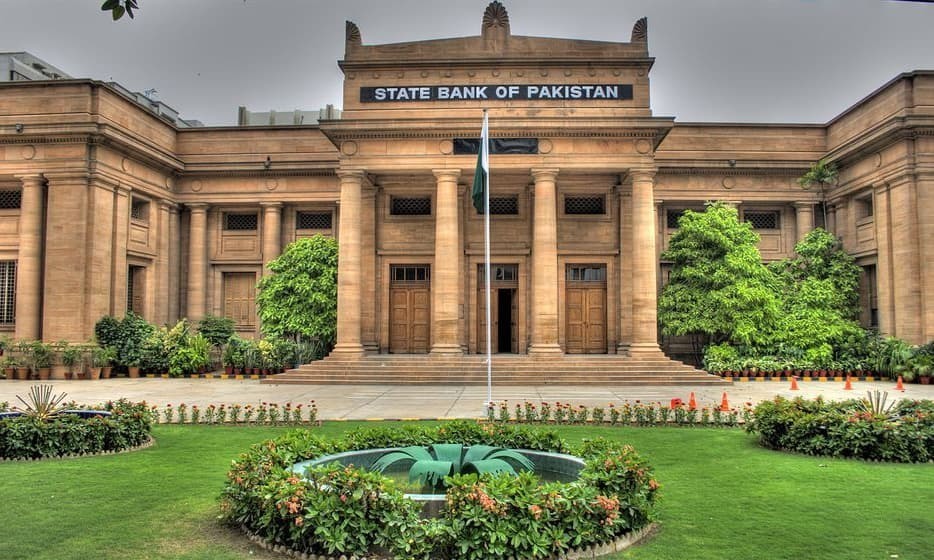
KARACHI: The central bank projected economic growth will likely hover near the lower end of its forecast for the fiscal year ending June 2026, while warning that inflation could exceed its target range in the coming months amid lingering macroeconomic risks.
The State Bank of Pakistan sees real gross domestic product expanding around 3.25% in fiscal 2026, sticking close to the bottom of its prior estimate, according to its Annual Report on the State of Pakistan’s Economy 2024-25, released Thursday. Headline inflation, meanwhile, may top 7% in the second half of the fiscal year, breaching the upper limit of the medium-term target range of 5%-7%.
While industrial activity has shown signs of partial recovery, the SBP highlighted persistent pressures on inflation, fiscal accounts and external balances that could weigh on the outlook. The report comes as Pakistan navigates a fragile recovery following years of economic turbulence, including high inflation and balance-of-payments strains that prompted a $7 billion bailout from the International Monetary Fund last year.
For the fiscal year that ended in June 2025, the SBP revised its GDP growth estimate upward to 3.02% from 2.68%, driven by a sharp rebound in the fourth quarter. Industrial output surged 19.9% in the final three months, after meager gains of 0.3% in the first quarter, 0.2% in the second and 1.2% in the third.
The late surge was fueled by value addition in electricity, gas and water supply, as well as construction. Manufacturing, especially small-scale operations, also played a role, though mining and quarrying contracted for a fourth straight year.
The central bank stressed the urgency of structural reforms to bolster economic resilience and steer toward sustainable high growth. Priorities include boosting savings and investment, optimising resource allocation and pushing forward institutional and regulatory changes to sharpen competitiveness.
On the external front, the SBP flagged that rising economic activity and potential agricultural shortages could drive up imports in fiscal 2026. Still, lower US tariffs on Pakistani exports and steady workers’ remittances may help contain the current account deficit, which is seen ranging between 0% and 1% of GDP.
Fiscal improvements are anticipated from ongoing tax reforms and efforts to formalise the economy, aiding revenue collection. A transfer of SBP profits in August 2025 should provide further support, helping narrow the fiscal deficit to between 3.8% and 4.8% of GDP.
Inflation remains a key concern despite a stable global commodity environment and muted domestic demand. “Headline NCPI inflation may cross the upper bound of the medium-term target range in the second half of FY26, before returning to the range in FY27,” the SBP stated. Upside risks include flood damage to agriculture and infrastructure, while downside threats to growth stem from geopolitical tensions and trade uncertainties.
The report also spotlighted structural flaws in financial intermediation, where heavy government borrowing has squeezed out private sector credit. Banks have favoured investing in high-yield, low-risk government securities, contributing to Pakistan’s low credit-to-GDP ratio relative to peers. This dynamic hampers financial deepening, deterring savings and private investment. Private construction stayed sluggish amid escalating input costs and elevated property taxes, even as higher development spending propped up public sector activity.
Copyright © 2021 Independent Pakistan | All rights reserved