By Staff Reporter
ISLAMABAD: Pakistan opted not to seek international assistance following devastating floods this year, relying instead on its own fiscal resources amid an improved economic backdrop, Finance Minister Muhammad Aurangzeb said.
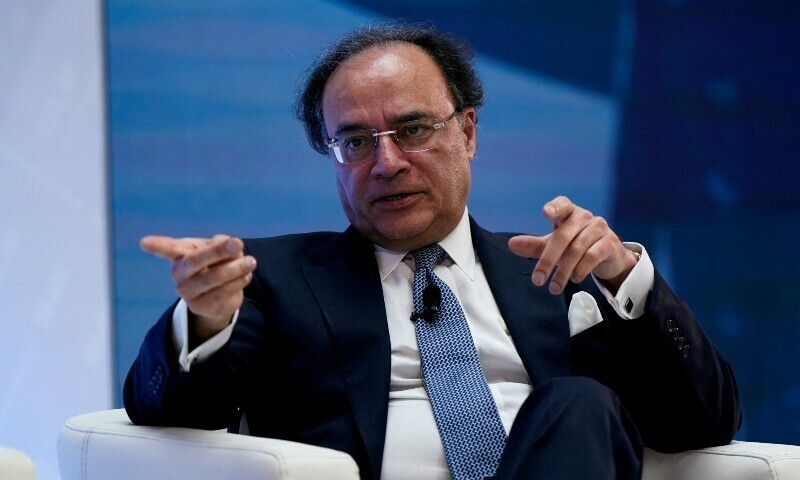
“Because we are in a relatively comfortable macroeconomic situation, which was different in 2022 — we didn’t rush out to appeal to the international community for even the rescue and relief effort,” Aurangzeb told a gathering of scholars and economists at the Atlantic Council in Washington on Thursday. “It was a very deliberate choice by the government and our administration that we are going to use our own resources, the fiscal space which is available, and see how and what we can repurpose.”
The decision comes as Pakistan grapples with what Aurangzeb described as “far worse” flooding compared with 2022, when only one river and parts of Sindh and Balochistan were hit. This year, three rivers swelled to high flood levels, with Punjab absorbing about 80% of the damage.
Aurangzeb agreed that floods represent a recurring challenge, compounded by the country’s high population growth rate and changing climate, which “posed existential threats.” A post-damage needs assessment will take months, he said. “For now, we’re using fiscal space and available World Bank and RSF funding without long-term planning,” he added, referring to the IMF’s Resilience and Sustainability Facility.
Prime Minister Shehbaz Sharif has unveiled a 300-day plan in anticipation of earlier monsoons next year, according to the minister, who warned that agricultural losses would trim gross domestic product growth from a projected level above 4% to still more than 3%
.Aurangzeb touted the government’s progress in consolidating macroeconomic stability over the past year, backed by endorsements from the IMF and credit-rating companies. “We have received two external validations… and after about two and a half to three years, we have seen the three rating agencies aligned,” he said, citing upgrades from Fitch Ratings, S&P Global Ratings and Moody’s Investors Service.
On taxation, he highlighted efforts to broaden and deepen the base. “Last year, the FBR tax-to-revenue ratio rose from 8.8pc to 10.2pc; we aim for 11pc by year-end and 13pc during the programme,” Aurangzeb said, referring to the Federal Board of Revenue.
He stressed the importance of technology in curbing revenue leakages, including data analytics, artificial intelligence, digital invoicing and monitoring, especially in sectors such as sugar, cement, tobacco and beverages. Looking ahead, the minister emphasised a pivot toward private-sector-led and export-oriented expansion, breaking from past public-sector-driven cycles. “This time, the focus is deliberate: export-oriented, private-sector-driven growth,” he said.
Aurangzeb spotlighted the Reko Diq mining project’s potential: “When projects like Reko Diq come through… the first year of commercial operations will bring about $2.8 billion in exports — roughly 10pc of our current export base.” Debt remains a key concern, with servicing costs representing the government’s largest expense. “Liability management trades and domestic debt buybacks help reduce the debt service burden,” he said. With stability taking hold and reforms advancing, Aurangzeb said the goal is a resilient growth path driven by the private sector, while addressing urgent humanitarian priorities.
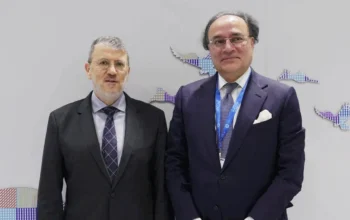
Earlier Thursday, the minister met with an S&P Global team, welcoming its recent ratings action and noting the alignment among the three major agencies. He updated them on fiscal, monetary and external-sector developments, as well as progress under the reform program.
In a separate discussion with Saudi Finance Minister Mohammed bin Abdullah Al-Jadaan on the sidelines of the World Bank and IMF annual meetings, Aurangzeb outlined the privatisation of Pakistan International Airlines and key airports, reaffirming the government’s commitment to drawing strategic investments via transparency and efficiency. The cash-strapped nation aims to offload the debt-laden PIA to generate funds and overhaul loss-making state enterprises, as outlined in the IMF program.
The ministers reviewed expanding trade and investment ties, with Aurangzeb pledging adherence to economic reforms for sustained macroeconomic stability. “He apprised his Saudi counterpart of the ongoing privatisation process of Pakistan International Airlines (PIA) and key airports, underscoring the Government’s resolve to attract strategic investments through transparency and efficiency,” the Pakistani finance ministry said in a statement. “The two Ministers agreed that institutions such as the International Finance Corporation (IFC) and the Multilateral Investment Guarantee Agency (MIGA) could play a vital role in mobilising and de-risking private sector investments in Pakistan.”
Aurangzeb also sought Saudi backing for infrastructure projects, stressing Pakistan’s dedication to deepening economic ties with the kingdom. Saudi Arabia hosts more than 2 million Pakistani expatriates, the top source of remittances for the South Asian economy.
In September, the two nations inked a landmark defence agreement and are pursuing fresh economic avenues. This week, Aurangzeb met with Sultan Abdulrahman Al-Marshad, chief executive officer of the Saudi Fund for Development, to reinforce the strategic partnership. Talks focused on infrastructure needs, including the M-6 highway and ML-1 railway upgrade, alongside skills training and digital infrastructure—aligning with Pakistan’s efforts to boost logistics, productivity and public services.
The SFD highlighted its support for health, hydropower and transport projects, having funded more than 18 initiatives worth about $1.2 billion, plus over $533 million in grants since 1976.
Copyright © 2021 Independent Pakistan | All rights reserved