By Staff Reporter
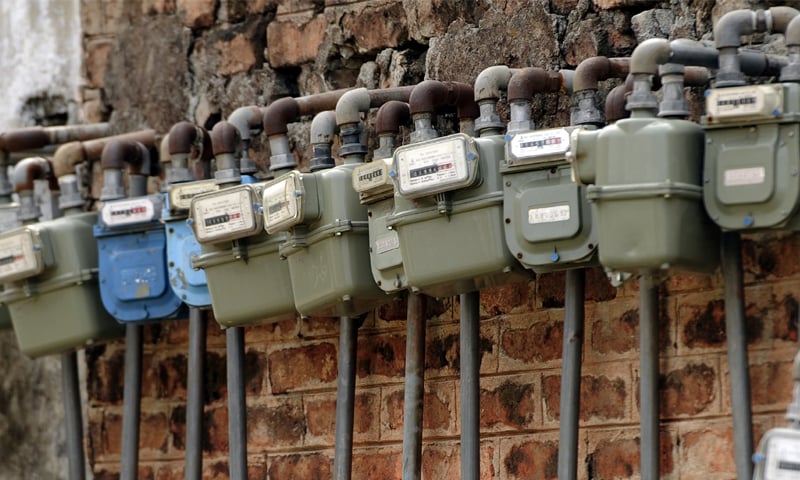
ISLAMABAD: Prime Minister Shehbaz Sharif kicked off the rollout of regasified liquefied natural gas connections for households nationwide, meeting a longstanding public push for more affordable fuel amid dwindling domestic reserves.
The move, unveiled at a ceremony in Islamabad on Sunday, reverses a 2021 ban on new gas hookups that had compelled consumers to rely on pricier alternatives like liquefied petroleum gas for cooking and heating. Petroleum Minister Ali Pervaiz Malik flagged the policy shift last month, citing “strong insistence” from the public.
“Today, that day has finally arrived, Alhamdulillah, that we are now issuing gas, which is very high-quality fuel, for household consumers across Pakistan,” Sharif said at the event. “There are hundreds of thousands of applications already, so I believe this is a day of great joy.”
While RLNG—imported and regasified LNG—is costlier than locally produced gas, Malik noted it remains 30% to 35% cheaper than LPG. The initiative comes on the heels of fresh hydrocarbon finds that could bolster supplies, including Pakistan Petroleum Ltd.’s “significant” oil and gas discovery in eastern Attock district last month.
In February, Mari Energies unearthed reserves in northwestern Khyber Pakhtunkhwa province, with early tests showing flows of 12.96 million standard cubic feet per day of gas and about 20 barrels per day of condensate.
Yet even as Pakistan grapples with surging energy needs from a population projected to hit 325 million in 15 years, officials are weighing a slowdown in gas imports due to slackening demand through 2040 and an LNG surplus persisting past 2031, according to sources familiar with the matter who spoke to Dawn newspaper.
An “all-of-government” strategy is on the table to dial back pipeline projects from Turkmenistan and Iran, tweak LNG delivery timelines, and advance reforms for long-term viability, the sources said. This pivot stems from a Wood Mackenzie study forecasting a 3% average drop in national gas demand from 2025 to 2040 under a base-case scenario, despite a 31% climb in total supply—including take-or-pay LNG contracts—to 5 billion cubic feet per day by 2031 from 3.8 bcfd currently.
Demand is seen slipping 3.8% by 2031 and 2.5% over the following nine years, factoring in a more than 12% plunge in power-sector usage offset by 2.8% and 4% gains in industrial and residential segments, per the report reviewed by Dawn. “A clear pathway to address the structural market issues and towards greater market liberalisation is required as circular debt continues to escalate due to price distortions, inefficient resource allocation and market imbalances,” the consultancy advised, urging fixes to root causes like investment barriers in exploration, blended gas pricing, power-sector offtake hurdles, forced shutdowns of local fields, rampant losses, scant storage, and accelerating solar adoption.
The analysis highlights that Pakistan won’t need as much LNG as once thought in the short to medium term, prompting a fresh import strategy to navigate current deals and explore alternatives. Mismatched contracts and tepid demand are already crimping upstream activity, with import costs running over twice those of domestic output and risking lasting setbacks.
Meanwhile, a fresh LNG supply wave—led by the US and Qatar, which will dominate more than half of global volumes this decade—could depress prices from 2026, though Pakistan stands to gain little amid its own glut. Long-term pricing is expected to hinge on marginal US cargoes, while global LNG consumption rises 3% annually to 675 million tons by 2040 from over 400 million tons, driven by Asia-Pacific growth.
Fossil fuels now make up 88% of Pakistan’s end-use energy, with gas at 42% and oil at 29%. By 2040, that dominance eases to 84%, as gas dips to 30% and oil edges up to 34% on transport demand. Primary energy needs are slated to expand from 88 million tons of oil equivalent today to over 99 million tons by 2030.
The power sector poses the biggest snag, amid falling demand from utilities and captive plants alongside hopes for more homegrown gas. “Full alignment and commitment of the plan for gas offtake from the power sector is crucial as it will shape how Pakistan’s overall gas demand will evolve,” the report stated, cautioning that upstream challenges must be tackled to deliver projected supplies, especially as LNG oversupply has idled local wells.
Pakistan has stabilised its macroeconomy somewhat, but deeper changes are needed to fuel growth as the population swells 2% yearly, staying among the world’s five largest. GDP is pegged to compound at 3.7% annually through 2040, with industrial output at 4%. A youthful populace could yield a demographic boost, but resource strains, infrastructure gaps, and job shortages loom large—still, it will drive up residential energy for heating, cooking, power, and mobility.
Copyright © 2021 Independent Pakistan | All rights reserved