By Staff Reporter
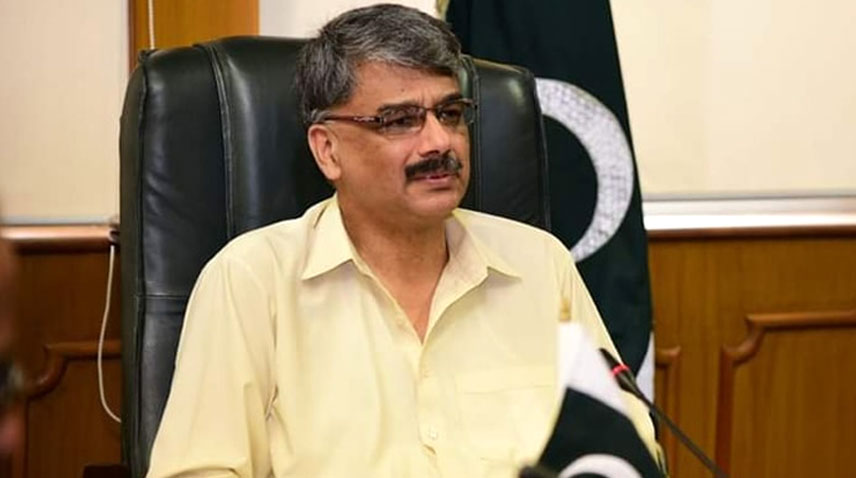
ISLAMABAD: The prime minister of Azad Jammu and Kashmir, Anwar ul Haq, confronted mounting pressure on Monday to resign, as the two dominant parties in the coalition government moved aggressively to topple his administration through a no-confidence vote in the regional assembly.
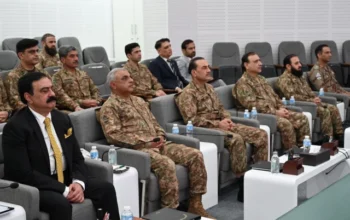
Leaders from the Pakistan Peoples Party and the Pakistan Muslim League-Nawaz huddled at the presidency in Islamabad with President Asif Ali Zardari to map out a transition that would install a Peoples Party-led government in the disputed territory, according to participants in the meeting.
The maneuvering underscored deepening fissures within the regional political landscape, where Haq’s leadership has come under fire for failing to deliver stability. A delegation from the Muslim League-N, including senior figures Ahsan Iqbal, Rana Sanaullah and Amir Muqam, pressed the case during the session, framing it as a necessary corrective to an underperforming administration.
Speaking to reporters, Iqbal made clear his party’s stance that it would back a no-confidence motion against Haq but had no intention of joining the next government. “We will support the no-trust motion against the A.J.K. prime minister but will not become part of the government,” Iqbal said. He envisioned the Peoples Party taking the helm after the vote’s success, with his own party relegated to the opposition benches.
Sanaullah, an aide to Prime Minister Shehbaz Sharif and a key player in the regional parliamentary party, said the ruling PML-N’s parliamentary party has expressed distrust over the incumbent AJK government and accused the current leadership of shirking its responsibilities and pledged that “free and fair elections would be held in the region after completion of the AJK assembly’s term next year.”
The sharp rebuke found an ally in the Peoples Party’s Qamar Zaman Kaira. “The incumbent government has become a problem itself instead of a problem-solver,” Kaira said. Stability, he insisted, was “the need of the hour.” Kaira hailed the Muslim League-N’s position as a boon that solidified his party’s hand. “Political stability in AJK was the need of the hour,” he added, noting that both sides had agreed to honour each other’s choices in pursuit of that goal.
The numbers told a stark story of Haq’s isolation. The Azad Jammu and Kashmir Legislative Assembly counts 52 seats, requiring 27 for a simple majority. The Peoples Party now commands exactly that threshold, bolstered by 10 lawmakers who defected to its ranks on Sunday, bringing its total to 27. With the Muslim League-N’s explicit backing, the coalition claims at least 36 votes, more than enough to prevail.
Party officials also asserted support from Sardar Atiq of the Muslim Conference and Sardar Hasan Ibrahim of the Jammu Kashmir Peoples Party, further widening the gap. Haq had been counselled to pursue an “honourable exit” now that majority support had evaporated. Haq faced three paths forward: dissolve the assembly to block the Peoples Party’s ascent to power; resign voluntarily; or test his fate in a no-trust vote. The ultimate call rested with Haq, but those sources predicted he would step down when the assembly convenes on Tuesday.
Copyright © 2021 Independent Pakistan | All rights reserved