By Staff Reporter
ISLAMABAD: Foreign ministers from Muslim nations, including Pakistan on Monday condemned what they described as Israeli violations of a fragile cease-fire in Gaza, calling for the immediate withdrawal of Israeli forces from occupied Palestinian territories and the urgent delivery of humanitarian aid to ease the deepening crisis there.
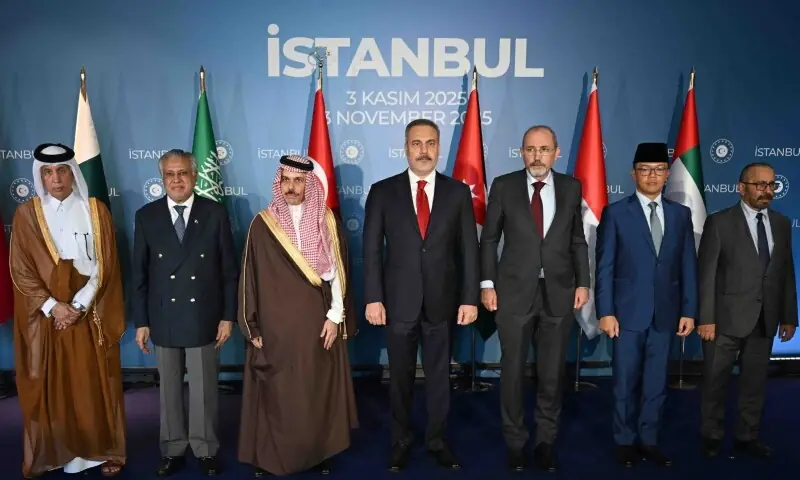
The joint statement emerged from a meeting in Istanbul of top diplomats from Egypt, Indonesia, Jordan, Pakistan, Qatar, Saudi Arabia, Turkey and the United Arab Emirates, convened to discuss President Donald J. Trump’s peace plan for Gaza. The gathering followed a Sept. 23 meeting between leaders of these nations and Trump, amid escalating tensions that have tested the truce brokered by the American president on Oct. 10.
Palestinian authorities have reported that Israeli forces have killed 236 people in strikes on Gaza since the cease-fire took effect, ending two years of continuous bloodshed. Israel, for its part, has said that three of its soldiers have been killed and that its operations have targeted scores of fighters from Hamas, the militant group that controls Gaza.
During the talks, Pakistan’s foreign minister, Ishaq Dar, and his counterparts from the other Arab and Islamic nations deliberated on strategies for achieving a lasting cease-fire and sustainable peace in Gaza, according to a statement from Pakistan’s foreign ministry. “The leaders jointly called for urgent humanitarian aid for the Palestinians, condemned Israeli ceasefire violations, demanded Israel’s withdrawal from the Occupied Palestinian Territory and emphasized the rebuilding of Gaza,” the ministry said. “Pakistan reaffirmed its principled stance for the establishment of an independent, viable and contiguous State of Palestine based on pre-1967 borders, with Al-Quds Al-Sharif as its capital, in line with the UN and OIC resolutions.”
Turkey’s foreign minister, Hakan Fidan, who hosted the meeting, urged Israel to halt its regular violations of the U.S.-backed cease-fire and to fulfill its obligations to allow humanitarian aid into the territory. Fidan told reporters after the session that his country envisioned a post-war framework for Gaza in which “Palestinians ensure Palestine’s governance and security.”
The cease-fire, which has been strained by fresh Israeli strikes on civilians in Gaza, was intended to provide a pathway to stability. But Fidan emphasised that the task force responsible for monitoring the truce under Trump’s plan required a mandate defined by the United Nations Security Council to ensure its legitimacy.
He said it was crucial that the emerging International Stabilisation Force, which would oversee the cease-fire as Israeli troops withdraw, have a “mandate defined by a UN Security Council resolution and a framework for legitimacy.”
The United States is collaborating with Arab and international partners to determine the composition of the force. Turkey has expressed interest in participating, despite strong opposition from Israel, which has long been wary of Ankara’s diplomatic efforts because of its close ties to Hamas. “The countries we’ve spoken with say they will decide whether to send troops based on … the ISF’s mandate and authority,” Fidan said.
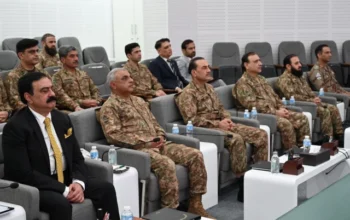
In Pakistan, top-level consultations are reportedly underway regarding the possibility of contributing troops to the proposed Gaza force, with insiders indicating that a formal announcement could come soon. Like Germany and Jordan, however, Islamabad prefers any deployment to occur under a United Nations umbrella.
“First, a general consensus needs to be reached on a draft, then it needs to be approved by the members of the Security Council,” Fidan said. “And it needs to be free from vetoes by any of the permanent (UNSC) members,” he added, referring to the blocking power often exercised by the United States, a key ally of Israel.
Pakistan’s Foreign Office echoed the joint calls in its own statement, noting that Dar and the other “Arab-Islamic foreign ministers” had focused on advancing a lasting cease-fire and peace. “The leaders jointly called for urgent humanitarian aid for the Palestinians, condemned Israeli ceasefire violations, demanded Israel’s withdrawal from the Occupied Palestinian Territory and emphasised the rebuilding of Gaza,” the statement said. “Pakistan reaffirmed its principled stance for the establishment of an independent, viable and contiguous State of Palestine based on pre-1967 borders, with Al-Quds Al-Sharif as its capital, in line with the UN and OIC resolutions.”
Copyright © 2021 Independent Pakistan | All rights reserved