By Staff Reporter
ISLAMABAD: The defence minister said on Tuesday Pakistan was abandoning any hope of productive relations with the Afghan Taliban, accusing the group of betraying decades of Pakistani hospitality and warning that their isolation could lead to collapse, as cross-border accusations of airstrikes intensified tensions between the two neighbors.
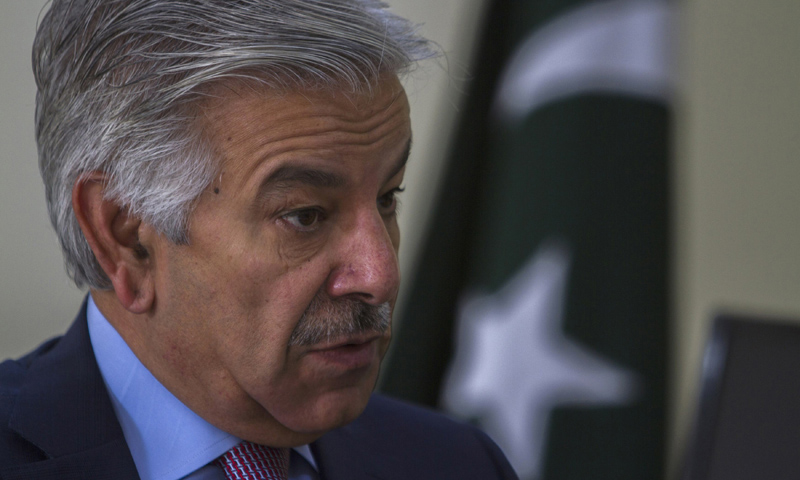
In a blunt interview on a private television channel, Defence Minister Khawaja Asif said Pakistan had long exercised restraint in the face of provocations but now viewed the Taliban as unreliable and untrustworthy. “But today, we are completely writing them off, and we have no good hope from them,” Asif said, adding: “One should hope for good and not write off another until limits are crossed. But now, we are completely writing them off, and we do not expect anything good from them.”
The remarks came amid fresh claims by the Taliban that Pakistani forces had conducted overnight strikes in Afghanistan’s eastern provinces, killing civilians, allegations that Pakistan swiftly denied. Zabiullah Mujahid, the spokesman for the Taliban regime in Kabul, said in a post on the social media platform X that Pakistan had “bombed” Khost Province and carried out airstrikes in Kunar and Paktika Provinces. In a separate statement, Mujahid added: “The Islamic Emirate strongly condemns this violation and reiterates that defending its airspace, territory, and people is its legitimate right, and it will respond appropriately at the right time.”
Mustaghfir Gurbuz, a spokesman for the governor of Khost, claimed the strikes were carried out by drones and aircraft and had claimed the lives of 10 people.
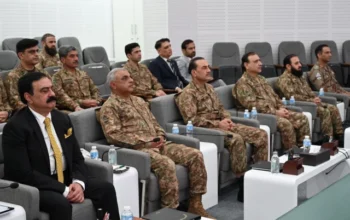
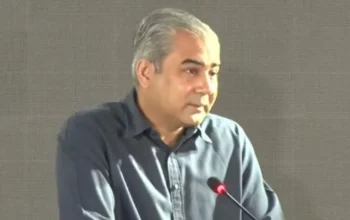
Pakistan’s military rejected the accusations outright. Lt. Gen. Ahmed Sharif Chaudhry, the director general of the Inter-Services Public Relations, called Mujahid’s remarks “baseless,” emphasising that Pakistan had not attacked Afghanistan. “We are a state and respond only as a state,” General Chaudhry said, noting that the country conducts all its operations openly and never targets civilians, adhering to clear principles.
When pressed in his interview about whether Pakistan was denying the strikes or any civilian casualties, Asif dismissed both as “non-existent at this time.” He stressed that while Pakistan does “react and retaliate,” it avoids harming innocents. “We have a disciplined force that has traditions and a code of conduct; we are not a ragtag group like the Taliban, who neither have a code of conduct nor religion nor traditions,” he said.
The exchange underscored the deepening rift between Islamabad and Kabul, where relations have frayed over Pakistan’s accusations that the Taliban harbours militants from the banned Tehreek-i-Taliban Pakistan. allowing them to launch cross-border attacks. Pakistan has repeatedly demanded that the Taliban take action to curb such terrorism emanating from Afghan soil, but Kabul has denied the allegations, insisting it does not permit its territory to be used against neighbours.
Asif’s frustration boiled over when asked about the Taliban’s vow to retaliate according to Islamic law. “Which Islamic law does the Afghan Taliban follow that requires them to live in their neighbour’s home for decades and then spill blood,” he retorted. “Is this some self-invented Shariah of their own? This is not the Shariah of the Holy Prophet (Peace Be Upon Him).”
He downplayed the threat as empty rhetoric, saying it was “meaningless to take them seriously or trust them.” “There will be no greater idiocy than trusting them,” Asif added. “It will be folly to trust them [Afghan Taliban]. We have tried to remain civil with them […], but they’ve not repaid how one should to the soil that’s provided home to two of their generations.”
Reflecting on past efforts, Asif noted that Pakistan had sought cordial ties after the Taliban retook Kabul in 2021, with him personally welcoming the group and making frequent visits to Afghanistan. But those gestures yielded nothing, he said. “I don’t think we have gained any dividends, successes, or changes in their behaviour from these visits; there has been no change in their attitude.”
The defence minister suggested that the Taliban’s actions were self-destructive, predicting that without a shift, regional powers would step in to enforce peace. “It won’t take long; otherwise, they will be isolated, and their total isolation will ultimately result in a collapse,” he said. He reiterated that the group was “ultimately destroying their own country.”
On the economic front, Mr. Asif expressed indifference to the Taliban’s potential trade routes, saying they were “more than welcome to pursue and open up trade with India through whichever route they wanted.” “All these goods are ultimately sold in our market,” he added.
The latest flare-up follows a series of failed diplomatic attempts to ease hostilities. Border clashes in October prompted talks between the two sides, but progress stalled. A second round of discussions began in Istanbul on Oct. 25, only for Pakistan’s information minister, Attaullah Tarar, to announce that they “failed to bring about any workable solution.”
Mediators from Turkey and Qatar intervened, leading to an Oct. 31 joint statement from Ankara that “further modalities of the implementation will be discussed and decided” in a principal-level meeting in November. But by Nov. 7, after a third round, Asif declared the talks on cross-border terrorism “over” and in an “indefinite phase” due to unbridgeable differences. In retaliation, the Taliban suspended trade ties with Islamabad, while Pakistan had already closed its border for commerce after the October clashes. Last week, Pakistan’s Foreign Office conditioned the resumption of trade on the Taliban ending support for terrorist groups, also tying the future of key regional energy projects to Kabul’s compliance. Turkey has announced plans for its top officials to visit Pakistan to address the impasse, a move Islamabad welcomed on Nov. 14 as part of “sincere efforts” by Ankara and Doha. But the delegation’s arrival remains pending amid reported complications.
Asif pointed to allies like Turkey, Iran and Qatar as advocates for restraint, saying they were urging calm to foster regional peace and economic benefits, including jobs for Afghans. “Pakistan had long exercised restraint and hoped for constructive engagement, but those expectations had now diminished,” he said.
Copyright © 2021 Independent Pakistan | All rights reserved