By Staff Reporter
ISLAMABAD: Pakistan accused the Taliban regime in Afghanistan on Friday of failing to cooperate with a Turkish-led mediation effort aimed at easing escalating tensions between the two neighbors, as a planned visit by a high-level delegation from Ankara failed to materialise.
The Foreign Office said the absence of the Turkish team, which had been expected to help broker talks following weeks of heightened friction, stemmed from scheduling issues and a lack of engagement from Kabul. The comments came amid a fragile ceasefire that has already begun to unravel, underscoring the fragility of diplomatic initiatives in a region long plagued by cross-border militant activity.
Turkiye, working alongside Qatar, has hosted multiple rounds of discussions between Islamabad and Kabul in recent weeks, seeking to defuse the standoff. Turkish President Recep Tayyip Erdogan had signaled intentions to dispatch a delegation to Islamabad as part of the push, but the visit has yet to occur.
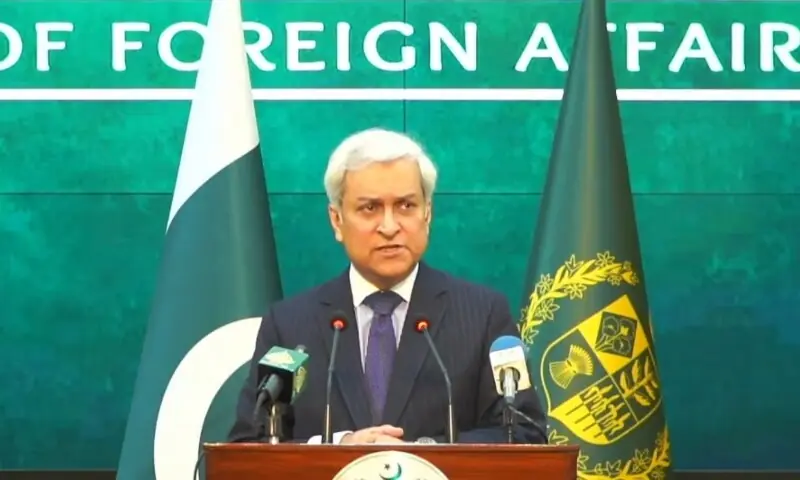
During a weekly press briefing, the Foreign Office spokesperson addressed the delay directly. “Pakistan was open, and stands ready,” he said. “And I believe that the delegation has not arrived because of scheduling issues, and perhaps by a lack of cooperation from the Taliban. This, you have to ask the Taliban regime. So, our position on this remains firm.”
The spokesperson emphasised that Pakistan had welcomed President Erdogan’s announcement of the mediation effort and reiterated the government’s preparedness to host the delegation for negotiations. He added that he was unaware of any specific schedule for its arrival.
Pressed on suggestions from the previous week’s briefing that both Pakistan and the Taliban were not fully cooperating with the Turkiye-Qatar framework, the spokesperson pushed back. “Let me emphasise that it is not attributable to Pakistan’s cooperation that the Turkish delegation has not arrived yet,” he said. The truce brokered through the effort had been described as contingent on a halt in terrorist activities, but the spokesperson noted that it had faltered in the absence of such a pause.
Separately, Saudi Arabia has pursued its own peacemaking track, with diplomatic sources indicating that Pakistan and Afghanistan held a brief, unannounced round of talks in Riyadh on Sunday. Those discussions, however, concluded quickly without breakthroughs, as both sides held firm to their stances, according to multiple sources who spoke to the newspaper Dawn.
When asked for details on the Saudi initiative, the Foreign Office spokesperson said he had no information on the matter. Still, he affirmed Pakistan’s broader openness to mediation. “Our position on this mediation, as I have expressed it in the last few press briefings and today, is that we, in principle, welcome the mediations,” he said. “We believe that our position on terrorism from Afghanistan is on moral principles strongly rooted in national and international legality. So, any objective mediation would naturally favour Pakistan.” “As regards any country offering its mediation, we will react if we receive any request for official proposal for a mechanism of mediation process.”
The tensions have roots in longstanding accusations from Islamabad that militant groups, including the Tehrik-i-Taliban Pakistan, operate from Afghan soil to launch attacks across the border. Kabul has denied the claims, and the dispute has led to periodic closures of key crossings and suspensions of trade. In a sign of limited thawing on humanitarian grounds, the spokesperson announced that Pakistan had approved the movement of aid consignments to Afghanistan at the request of the United Nations, marking the first controlled reopening of transit since routine trade was halted in October.
The shipments will proceed in three phases, he explained: “In the first phase, the containers with food items will be allowed; in the second phase, containers carrying pharmaceutical products and medical equipment will be granted access; and in the final phase, containers transporting other essential goods related to education and health will be allowed.”
The Foreign Office does not intend to categorise the phases for any purpose beyond ensuring a seamless process and determining the flow of aid, the spokesperson said. He noted that meetings between the Foreign Office and the commerce ministry had taken place, with directives issued to expedite procedural formalities. Despite the aid approval, border crossings for general trade and movement remain closed. “This decision to allow UN aid was taken in line with our obligation to humanitarian access, and, secondly, Pakistan does not have anything against the people of Afghanistan,” the spokesperson said. “The people of Afghanistan are our brothers and sisters. We intend them no harm.”
“While the closure of borders, has a specific context and the rationale behind it still stands. On the issue of aid to the Afghan people, we remain positive and engaged. On the issue of border closure, we would see how far the Afghan Taliban regime in Kabul supports our position to stop the flow of terrorism and terrorist elements from their soil into Pakistan.”
Copyright © 2021 Independent Pakistan | All rights reserved