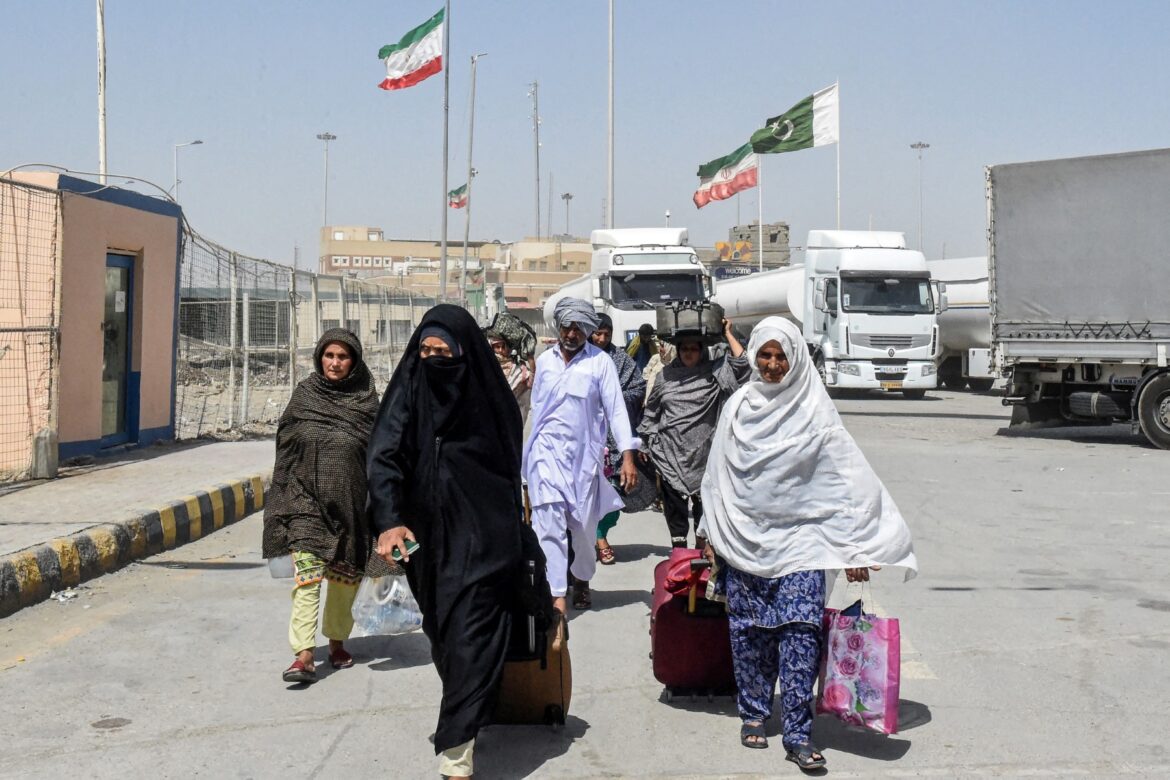
ISLAMABAD: As violent protests continued to grip Iran for a third week, leading to a fierce government crackdown and international condemnation, dozens of Pakistani students and pilgrims began streaming back home through a remote border crossing, officials said, showing the widening ripple effects of the unrest.
More than 100 Pakistanis, including university students and families on religious pilgrimages, have crossed into Pakistan via the Gabad-250 border point near Gwadar in recent days, with additional groups expected on Tuesday. The returns come amid a near-total internet blackout in Iran and reports of lethal force against demonstrators, which rights groups warn may be concealing a rising death toll.
“Over 100 students and pilgrims have returned to Pakistan from Iran in the last two days,” Balaach Yaqoob, a senior official with Pakistan’s Federal Investigation Agency, told Dawn newspaper. He added that another group of about 50 students from Zanjan University of Medical Sciences was anticipated to arrive Tuesday morning.
A separate contingent of around 40 pilgrims, including women and children, reached the border on Monday afternoon, according to the official in charge of the Gabad post. “We have also received an 18-member family of Pakistani pilgrims at the immigration office,” he said, noting that more were en route. Most of those who crossed proceeded to their hometowns, the officials said.
This wave of departures points to the dangers for outsiders in Iran as the protests, which started over money troubles, have become one of the largest threats to the Islamic Republic’s religious leadership since the 1979 revolution removed the shah. Crowds have appeared in cities nationwide, holding out against government attempts to stop them with jailings, gunfire and blocked communications.
Iranian leaders have blamed the trouble on outside forces and held large rallies across the country on Monday, which Supreme Leader Ayatollah Ali Khamenei called proof that the protest wave had failed. “These massive rallies, full of determination, have thwarted the plan of foreign enemies that were supposed to be carried out by domestic mercenaries,” Mr. Khamenei said on state television.
In Tehran, Parliament Speaker Mohammad Bagher Ghalibaf spoke to people at Enghelab Square, with signs reading “Death to Israel, Death to America.” He said Iran faced a “four-front war,” including economic, psychological and military pushes from the United States and Israel, plus what he described as a “war against terrorists” — meaning the protesters. Mr. Ghalibaf promised that Iran’s forces would give President Trump “an unforgettable lesson” if pushed.
Foreign Minister Abbas Araghchi told foreign ambassadors in Tehran that Iran did “not seeking war but is fully prepared for war,” while pushing for “fair” talks. A Foreign Ministry spokesman, Esmaeil Baghaei, said a line of contact existed between Araghchi and Trump’s special envoy, Steve Witkoff, even without official ties.
From exile in the United States, Reza Pahlavi, son of the deposed shah and a strong backer of the protests, rejected the government’s overtures. “The government was trying to trick the world into thinking that it is ready to negotiate once again,” he said on CBS News, adding that Trump “knows what’s at stake” and that the leaders had gone past a “red line.”
Iranian government media worked to show peace returning to Tehran, with pictures of steady traffic. The city’s governor, Mohammad-Sadegh Motamedian, said on television that “the number of protests is decreasing.” Leaders have said many security workers died in the fighting, setting three days of mourning for the country and turning burials into pro-government events.
The Norway-based Iran Human Rights, however, said the internet block has made it “extremely difficult to independently verify reports” of deaths. “The international community has a duty to protect civilian protesters against mass killing by the Islamic republic,” said the group’s director, Mahmood Amiry-Moghaddam.
The crisis has brought strong reactions from other countries. President Trump increased tension on Monday with a 25 percent tariff on any nation trading with Iran, saying in a social media message that the steps would start “immediately” for Tehran’s partners that also trade with the United States. “This Order is final and conclusive,” he wrote, without saying which places. Iran’s main trade links go to China, Turkey, the United Arab Emirates and Iraq, based on economic records.
The White House said Trump stayed ready to send troops but wanted talks first. Trump said Sunday that Iran’s top officials had contacted him “to negotiate,” though he has warned of attacks for a long time.
China pushed back against the tariff warning. “China’s position against the indiscriminate imposition of tariffs is consistent and clear. Tariff wars and trade wars have no winners, and coercion and pressure cannot solve problems,” a spokesperson for the Chinese Embassy in Washington said on X. “China firmly opposes any illicit unilateral sanctions and long-arm jurisdiction, and will take all necessary measures to safeguard its legitimate rights and interests.”
The US State Department told Americans to leave Iran, warning of “significant risk of questioning, arrest, and detention.” It told those with both US and Iranian citizenship to use Iranian passports to go, saying Tehran ignores dual status and might hold people for US links. “The US government cannot guarantee your safety if you choose to depart using the following options. You should leave only if you believe it is safe to do so,” the notice said.
The European Union has backed the protesters and said Monday it was thinking about more penalties on Iran for stopping the crowds. The European Parliament kept Iranian officials out of its buildings. French President Emmanuel Macron put out a message against “the state violence that indiscriminately targets Iranian women and men who courageously demand respect for their rights.”Russia, close to Iran, attacked what it saw as moves by “foreign powers” to get involved, government media reported, in Moscow’s first words on the protests.
In a related shift nearby, Pakistani students held up in Afghanistan by closed borders have started coming home through the Torkham point. The border shut on October 12, 2025, after heavy fighting between Pakistan and Afghanistan, with attacks across the line hurting ties between them. Officials with immigration said a few students, mostly from Khyber Pakhtunkhwa, have crossed, and others should follow. “The students from Khyber Pakhtunkhwa who were stuck on this side of the border, only they were permitted to cross and go to their homes,” said Abdullah Farooqi, an Afghan border police spokesman. He said the crossing stayed shut for everyone else.
Officials in immigration said at least 28 students from schools in Afghanistan have asked to return. Islamabad keeps asking Kabul to deal with armed groups based there that strike into Pakistan. Fighting stopped on October 19, but goods still do not move across, stranding people without cheap ways to travel.
Copyright © 2021 Independent Pakistan | All rights reserved