What started as a diplomatic dust-up between Bangladesh and India has snowballed into a full-blown rift, complete with halted visas, severed trade links and now, a brewing cricket standoff — a potent symbol in a region where the sport rivals religion in passion. “It began with messy political finger-pointing, before quickly escalating into diplomatic and trade fallout,” The New York Times said in its recent report.
Not long ago, the bond — born from the blood of the 1971 war, where India played midwife to Bangladesh’s separation from Pakistan — was most enduring. But lately, that fabric is tearing at the seams, frayed by political upheaval and mutual recriminations. And for both the neighbors, sharing a 2,500-mile border, this downward spiral couldn’t come at a worse time — with pivotal elections on the horizon in both countries, turning mutual grievances into potent political ammunition.
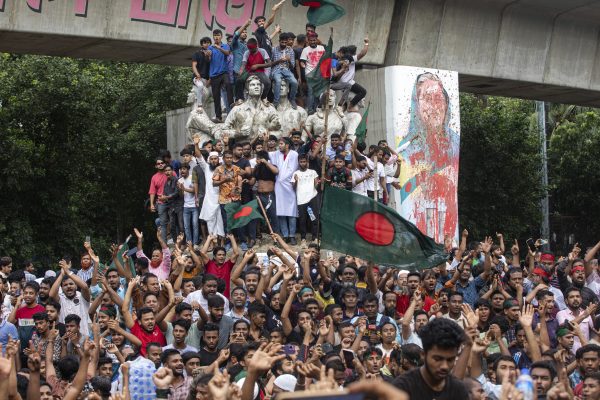
The trouble traces back to the chaotic summer of 2024 with the ouster of Sheikh Hasina, Bangladesh’s iron-fisted prime minister. After 15 years in power, marked by economic strides but marred by ruthless suppression of dissent — including mass arrests, disappearances, and a brutal crackdown on opposition — Hasina was toppled by a youth-led uprising. Hasina, whose Awami League party dominated the political landscape, fled to India, where she has remained under New Delhi’s protection. Her longtime ally has steadfastly refused Dhaka’s demands to extradite her for trial. That decision has rankled Dhaka’s interim government, led by Nobel laureate Muhammad Yunus and the protest leaders who ousted her, fueling accusations that India is shielding a leader responsible for widespread human rights abuses, including the deaths of some 1,400 people in the crackdown that preceded her fall. They have also accused New Delhi of meddling in Bangladeshi affairs.
India, for its part, has decried inflammatory rhetoric from Dhaka and sporadic violence against Bangladesh’s Hindu minority, prompting visa suspensions in Chattogram and reciprocal halts in New Delhi. In retaliation, tensions have escalated on multiple fronts. Last month, after mobs targeted India’s visa center in the Bangladeshi port city of Chattogram, New Delhi shuttered its operations there. Bangladesh fired back by suspending visa services for Indians following protests by Hindu nationalist groups outside its mission in the Indian capital. Trade has taken a hit too: India recently pulled the plug on a key transshipment agreement that allowed Bangladeshi goods to pass through its ports, a move that could disrupt commerce for Bangladesh’s 170 million people. The feud hit a cultural nerve this past week when sports entered the fray. Protests by Hindu nationalists in India pressured the Board of Control for Cricket in India to bar a Bangladeshi player from the lucrative Indian Premier League. Dhaka fired back by pulling its team from next month’s cricket World Cup in India, urging the International Cricket Council to relocate matches to neutral ground. It’s a petty escalation, perhaps, but one that shows
At the heart of this mess lies a confluence of domestic pressures that make de-escalation feel like a pipe dream. Bangladesh heads to parliamentary polls in February, with Hasina’s Awami League effectively sidelined — a move that has opened the field to rivals like the Bangladesh Nationalist Party (BNP) and the more conservative Jamaat-e-Islami. Candidates are riding a wave of anti-India fervor, blaming New Delhi for propping up Hasina’s regime and enabling her human rights abuses. This sentiment dovetails with a surging Islamic identity in Bangladesh, where law and order have crumbled in the post-Hasina vacuum, allowing right-wing elements to flourish unchecked. Yunus, thrust into the interim role by the protest movement, walks a tightrope: placating the street while preserving ties with a giant neighbor that controls vital trade routes and ports. Yunus has pressed India to extradite Hasina for trial and to rein in Awami League figures operating from Indian soil. But Prime Minister Narendra Modi’s government has dug in its heels, portraying Yunus as soft on extremists and failing to curb attacks on Bangladesh’s Hindu minority.
Indian pro-government media have amplified these claims, accusing Dhaka of allowing lawlessness that targets Hindus — though Bangladeshi officials counter that the violence is part of broader chaos affecting all groups, and point to similar incidents against minorities in India itself. They’ve also charged Indian outlets with spreading disinformation to undermine the interim regime.
This back-and-forth has become election fodder in India, particularly in border states like West Bengal and Assam, home to about 140 million people and set for their own polls soon. Prime Minister Narendra Modi’s Bharatiya Janata Party (BJP) faces crucial state polls in West Bengal and Assam, border regions with sizable Muslim populations and histories of communal tension. Reports of attacks on Hindus in Bangladesh have become red meat for BJP campaigners. One party leader in West Bengal even stormed the Bangladeshi consulate, demanding India “teach” its neighbor a lesson akin to Israel’s actions in Gaza. Such rhetoric isn’t just bluster; it’s electoral gold in states where anti-Muslim narratives resonate. For the BJP, stoking Hindu nationalist sentiments could pay dividends at the ballot box. Pro-government media in India have painted Yunus as soft on extremism, while Bangladeshi officials counter with accusations of Indian disinformation campaigns aimed at destabilizing their fragile transition. “They accused their bigger neighbor of political opportunism, pointing to similar attacks and lynchings of religious minorities in India during the same period,” the Times said. This isn’t merely bilateral bickering — it’s a symptom of broader regional flux that challenges India’s ambitions as a global heavyweight. “For New Delhi, the struggle with its eastern neighbor is part of a larger challenge of responding to intense political churn in its neighborhood as it seeks to establish itself as a major global power,” the Times said. New Delhi has poured resources into South Asia to counter China’s growing footprint, from infrastructure deals to transshipment agreements that funneled Bangladeshi goods through Indian ports. But recent popular revolts across the neighborhood — in Sri Lanka, Nepal, and now Bangladesh — have upended alliances, forcing Indian diplomats to scramble. “In recent years, South Asia has seen several popular uprisings and changes of government, forcing Indian policymakers back to the drawing board for strategies in a sphere where China is also jostling for influence,” the Times said.
Aligning too tightly with autocrats like Hasina has backfired spectacularly, breeding resentment among younger generations who view India not as liberator but as enabler of tyranny. “A frustrated younger generation in Bangladesh saw India as the key enabler of human-rights abuses under Ms. Hasina, who ran a widespread campaign of jailings and disappearances of dissenting voices.” The International Crisis Group in a recent report noted this miscalculation left India flat-footed when the uprising erupted. “Aligning so closely with an increasingly unpopular ruler amplified anti-India sentiment in Bangladesh and left India poorly positioned when a mass uprising forced Hasina from power,” the Group said.
A parallel development has further complicates New Delhi’s regional calculus: the swift warming between Dhaka and Islamabad, foes for more than half a century. Since Hasina’s fall from power, the caretaker administration has reached out to Pakistan in earnest, breaking from Hasina’s long-standing tilt toward India that had iced relations with Islamabad for years. It kicked off with top-level talks, like a call between Muhammad Yunus and Pakistan’s leader, Shehbaz Sharif, then chats on the margins of the UN General Assembly and the D-8 gathering in Cairo, where they pledged to boost trade, swap cultural programs, and tackle unfinished business from the 1971 war. This fresh link between Bangladesh and Pakistan holds real promise, though it’s tangled up in old wounds, and if it lasts past Bangladesh’s elections in February 2026, it could redraw the lines of power in South Asia. Pakistan, the move opens a door to rebuild its standing in the region, maybe even piecing together a new alliance that leaves India on the outside, something Islamabad has hinted at outright.
For India, the mending fences between Dhaka and Islamabad add up to a real blow, piling on to its slipping hold in a backyard stirred up by China’s advances and homegrown political storms. The change could crack open yet another weak spot in India’s defences, endangering its northeast with shaky borders and snarled trade route. Leaders in New Delhi, already facing a tide of resentment toward India in Bangladesh’s vote next month, now have to deal with the chance of a China-Pakistan-Bangladesh lineup that might hobble its push to put “neighborhood first” and stir up more trouble in the Bay of Bengal. All this points to wider upheaval in the area, pushing India to rethink its approach or face getting cut off even more in its own backyard.
In Dhaka, the post-Hasina vacuum has exposed a profound identity crisis. With law enforcement in disarray and right-wing elements unchecked, parties like the Bangladesh Nationalist Party (BNP) and the conservative Jamaat-e-Islami are jockeying for dominance. The BNP, long Hasina’s chief rival, is poised for gains in February, and India seems to be hedging its bets there. India’s foreign minister, S. Jaishankar, skipped a meeting with Yunus during a recent Dhaka visit but courted the BNP’s leadership, attending the funeral of its matriarch Khaleda Zia and engaging her son, Tarique Rahman, a potential future prime minister. It’s a hedge against the interim government’s impermanence, though the BNP’s own checkered history with India — rife with past rivalries — makes it no sure bet. “New Delhi has a troubled past with the BNP, which has fiercely rivaled Ms. Hasina for decades,” the Times said.
More worrisome for New Delhi is Jamaat-e-Islami’s ascent, fueled by its strong showing in university polls and an appeal to Bangladesh’s evolving Islamic ethos. “Jamaat has performed well in recent university elections, tapping into the society’s increasing embrace of an Islamic identity and eyeing national leadership that has until now been shared between the BNP and Ms. Hasina’s Awami League,” the Times said. “Immediately after Ms. Hasina’s fall, pro-government Indian news channels labeled both the B.N.P. and Jamaat as extremist forces, but in recent months, those channels have focused their criticism mostly on Jamaat.”Constantino Xavier, a senior fellow at the Center for Social and Economic Progress, warns that India must plan for a day when Jamaat holds power, perhaps sooner than expected, and craft a policy that prioritizes long-term security over short-term alliances. “There will be a day, I think, that the Jamaat will form the government in Bangladesh — five years from now, four years from now,” Xavier said. “You have to work backward from that if you want a long-term Bangladesh policy.” But with ballots looming and tempers flaring, the path to reconciliation looks steeper than ever.
(This analysis draws on reporting from a recent article published in The New York Times)
Copyright © 2021 Independent Pakistan | All rights reserved