By Staff Reporter
ISLAMABAD: The federal government and the four provinces agreed on Friday to roll out immediately a mobile application-based quota system for subsidized fuel sales to motorcycles and three-wheelers, aiming to channel relief to low-income households while plugging leaks that have drained public resources.
The decision followed a high-level consultative meeting chaired by Finance Minister Muhammad Aurangzeb and attended by senior provincial officials, the Petroleum Division, and the Ministry of Information Technology and Telecommunication. A statement issued by the Finance Ministry said participants committed to expediting a targeted subsidy framework that relies on technology for transparency and efficiency, while maintaining close coordination between Islamabad and the provinces.
Fuel supply across the country remains stable and adequate, the Petroleum Division told the meeting, according to the statement. Officials expressed satisfaction with current availability levels even as international prices have risen. The IT Ministry presented detailed proposals for digital solutions designed to deliver subsidies more precisely, with built-in safeguards against abuse. Finance Division officials briefed participants on the tight fiscal position, noting that room for relief is largely confined to revenue from the petroleum levy and that any new measures must be calibrated to protect macroeconomic stability.
Aurangzeb told the gathering that the current pressures should be viewed as an opportunity for structural reforms rather than a short-term constraint. He stressed the need for data-driven approaches to taxation and subsidy design to improve transparency, efficiency and targeting, the statement said. He also called for policies that promote responsible fuel consumption while delivering maximum relief to the public without compromising fiscal prudence.
Provincial leaders offered broad support for the federal approach while flagging their own priorities. Sindh Chief Minister Murad Ali Shah welcomed the steps taken to ensure uninterrupted supplies and underscored the role of behavioral measures in conserving fuel. Punjab Senior Minister Marriyum Aurangzeb urged the preparation of multiple policy scenarios to respond to volatile international prices, insisting that any declines must be passed through to consumers and that behavioral factors be integrated into crisis management for more sustainable outcomes.
Khyber Pakhtunkhwa Finance Minister Muzzammil Aslam praised Aurangzeb and Petroleum Minister Ali Pervaiz Malik for managing the supply situation more effectively than several regional peers. Balochistan’s Minister for Finance and Mines and Mineral Development, Mir Shoaib Nosherwani, also attended, along with the chief secretaries of all four provinces and IT Minister Shaza Fatima Khawaja.
Separately, officials said the federal government is pressing provinces — especially Punjab and Sindh — to share part of the additional cost of higher international crude prices. The aim is to shield domestic retail prices of petrol and diesel from an immediate increase amid the broader fallout from the US-Israeli conflict with Iran. The prime minister and senior cabinet members have raised the issue directly in personal and telephone contacts with provincial counterparts, according to a senior government official.
The mobile-app quota system, once operational, will function as a fully automated platform for both consumers and retailers. Retail outlets will receive a free, pre-installed application, while consumers will use a separate app linked to their vehicle registration number and Computerised National Identity Card (CNIC). Each petrol station must maintain at least two mobile devices to run the system; the Ministry of IT is coordinating with manufacturers to supply specialized units estimated to cost Rs36,000 apiece, with retail pricing around Rs72,000.
Stations have been instructed to deposit funds into a designated government account, details of which will be provided by the Oil and Gas Regulatory Authority (OGRA). Quotas will be vehicle-specific and capped at levels to be set by the relevant cabinet committee. Users will generate digital vouchers through the app; retailers will scan or manually enter the voucher code, triggering automatic validation against the user’s remaining balance. If a driver requests 20 liters but is entitled to only 15, the pump will dispense no more than the quota allows — a mechanism modeled on the successful Ramazan Package rollout, according to a senior government official.
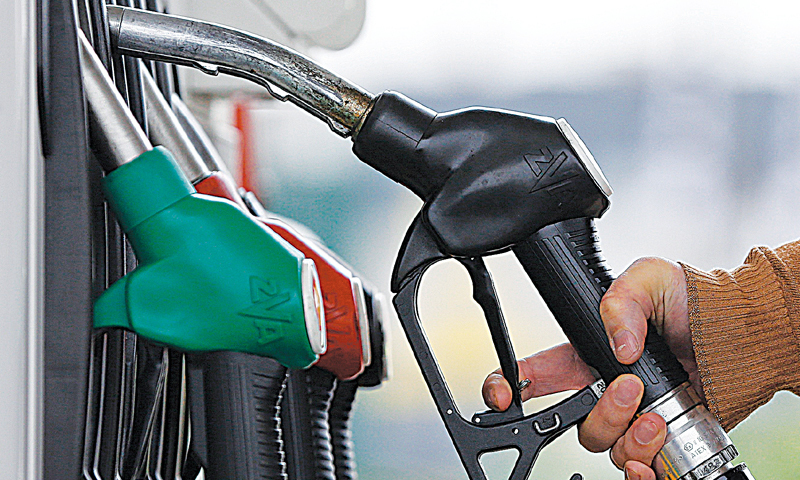
Subsidized fuel for two- and three-wheelers will be dispensed through dedicated nozzles or dispensers at each station. All oil marketing companies must appoint focal persons at every retail site, providing their names, mobile numbers and CNIC details to OGRA for round-the-clock monitoring and complaint resolution. The same information will be shared with the Petroleum Division and the companies themselves. The IT Ministry will supply demonstration sessions and video tutorials to ensure smooth adoption. An emergency override procedure will be available for exceptional cases.
Copyright © 2021 Independent Pakistan | All rights reserved