By Staff Reporter
KARACHI: A court on Monday acquitted all eight defendants — including two members of the Sindh provincial assembly — in the 2018 assassination of a former union council chairman from the Pakistan Peoples Party and his two sons, ruling that prosecutors had failed to present sufficient evidence to secure convictions.
Additional Sessions Judge Hassan Ali Kalwar of the Model Criminal Court in Dadu pronounced the verdict after a lengthy trial, granting the accused the benefit of the doubt. The killings, which took place in broad daylight in the small town of Mehar, had been widely viewed as the violent culmination of an intra-tribal feud within the influential Chandio community of Sindh province.
The victims were Raees Karamullah Chandio, a former union council chairman affiliated with the Pakistan Peoples Party, and his sons Mukhtiar Chandio and Qabil Chandio. They were gunned down on Jan. 17, 2018, when armed attackers stormed their residence in Ahmed Colony. The assault was widely believed at the time to have been carried out by rivals within the same party and tribe.
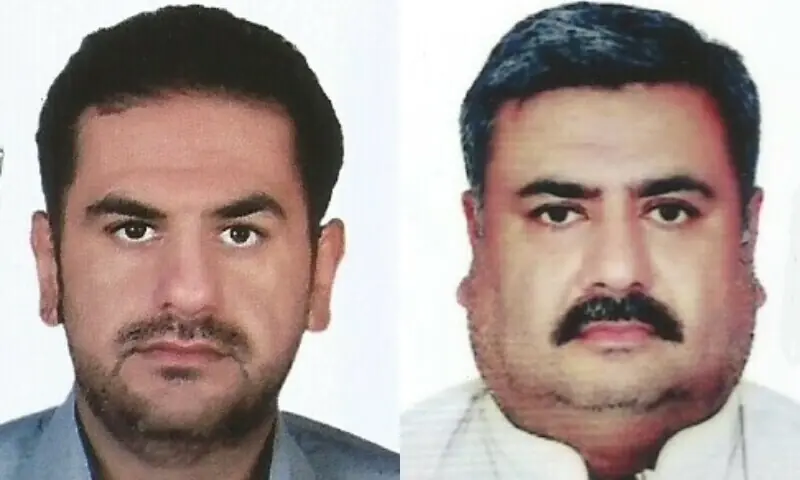
Among those acquitted were MPA Sardar Chandio, the chieftain of the Chandio tribe, and his brother Burhan Chandio, who were both serving members of the Sindh Assembly when the murders occurred. The other six defendants were Sikandar Ali Chandio, Ali Gohar Chandio, Abdul Sattar Chandio, Zulfiqar alias Qadoo Chandio, Ghulam Murtaza Chandio and Abdul Kareem Chandio.
The court ordered that any of the accused who remained in custody be released immediately if they were not wanted in any other cases, and directed that their acquittal be formally communicated to jail authorities. Bail bonds and sureties posted by those who had been out on bail were discharged.
The case had been closely watched in Sindh, where political violence and tribal rivalries frequently intersect with the justice system. One day before the verdict, local police imposed Section 144 of the Criminal Procedure Code across Dadu district, restricting public gatherings and movement, and deployed heavy security around the courthouse.
Mukhtiar Chandio’s daughter, Umm-i-Rabab Chandio, a lawyer who has actively pursued the case alongside other members of the legal team, was present for the proceedings. The complaint was originally filed by Pervaiz Ahmed Chandio, son of the slain union council chairman. Salahuddin Panhwar, counsel for the complainant, said immediately after the verdict that the family would appeal to the Sindh High Court. “We are going to challenge the verdict in the Sindh High Court,” he told reporters. He described the case as “fit for conviction” and said the prosecution had presented evidence strong enough to convict even Sardar Chandio under Section 109 of the Pakistan Penal Code, which deals with abetment.
Panhwar noted that one attacker was killed during the assault and his body left behind, that weapons had been recovered from the accused, and that three eyewitnesses had identified the defendants by name — testimony the trial court ultimately did not accept. The defence took the opposite view. Athar Abbas Solangi, representing the accused, said Burhan Chandio had been in Tando Muhammad Khan at the time of the attack and argued that the complainant’s side had prolonged the proceedings primarily to implicate the MPA. “The complainant was attempting to prolong the case only to prove the involvement of MPA Sardar,” Solangi said.
According to the first-information report, the victims had been receiving threats from Sardar Chandio after Mukhtiar Chandio, who held the title of tumander — a traditional sub-clan leadership position — joined other local tumanders in a revolt against the tribe’s paramount chieftain. Sardar Chandio had demanded that Mukhtiar disband the parallel council. On the day of the attack, the FIR alleged, the accused men arrived at the family’s autaak — a traditional rural meeting place — and opened fire, killing all three victims.
The case took several unusual procedural turns. During the initial police investigation, the investigating officer placed Sardar and Burhan Chandio in Column 2 of the charge sheet — effectively clearing them — and submitted the report to the Anti-Terrorism Court in Naushahro Feroz. That court accepted the findings. The complainant’s family challenged the decision before the Sindh High Court’s Sukkur bench, which ordered the two lawmakers’ names reinstated in the case. The Anti-Terrorism Court subsequently granted them pre-arrest bail.
Monday’s acquittal brings to a close, for now, one of the more prominent politically tinged murder trials in interior Sindh in recent years. The Chandio tribe, long a significant force in local politics and aligned with the Pakistan Peoples Party, has been roiled for years by disputes over leadership and influence. Legal observers in the province said the verdict showed the persistent challenges prosecutors face in converting eyewitness accounts and circumstantial evidence into convictions in high-profile cases involving powerful local figures. Panhwar, the complainant’s lawyer, said security arrangements had been made for the acquitted men as they prepared to leave the courtroom area. The family of the victims has indicated it will file an appeal promptly in the Sindh High Court.
Copyright © 2021 Independent Pakistan | All rights reserved