By Staff Reporter
ISLAMABAD: One day after the federal government imposed steep increases in fuel prices, the provincial administrations of Sindh and Punjab announced relief packages on Friday aimed at shielding motorcyclists, small farmers and public transporters from the impact of the hikes, while federal authorities made public transport free in the capital and halted planned toll increases nationwide.
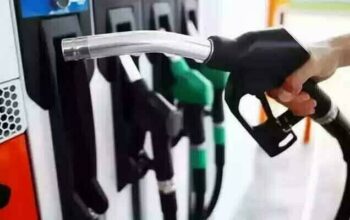
The government on Thursday raised petrol prices by 43 percent and high-speed diesel by 55 percent, citing volatile global oil markets amid the US-Israel war on Iran. The moves reversed a month-long freeze that Prime Minister Shehbaz Sharif had maintained despite mounting international pressure.
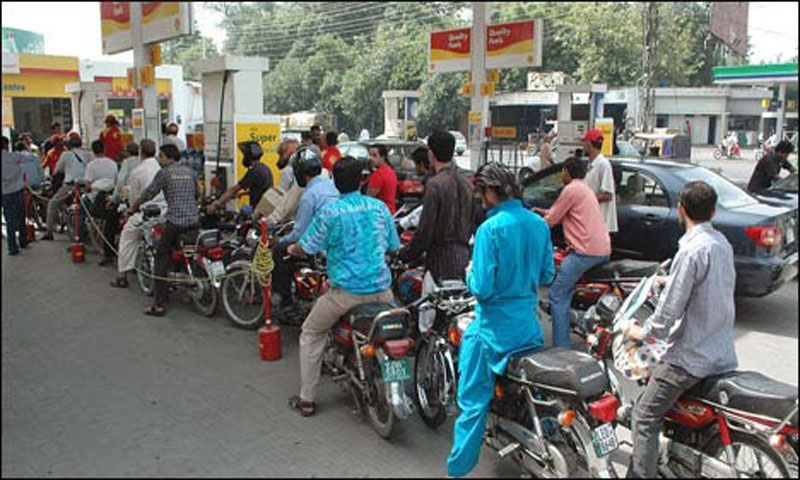
In Karachi, Sindh Chief Minister Murad Ali Shah told reporters that the provincial government would provide registered motorcycle owners with a monthly fuel subsidy of 2,000 rupees under a federally designed targeted scheme. The money is expected to reach beneficiaries between April 15 and 20, once owners register their vehicles in their own names through the provincial excise department. Shah urged bikers to verify their registration status online using their national identity card numbers and said the online application portal would open within three days.
The chief minister described the federal decision to raise fuel prices as a “difficult” one, noting that the prime minister had delayed any increase for three weeks. “The policy had both advantages and disadvantages,” he said, adding that a blanket subsidy had been benefiting rich and poor alike. He cited discussions with the International Monetary Fund, which had urged more targeted support, and said the provinces and the center had jointly designed a one-month package with four components.
For small-scale farmers, Sindh will provide 1,500 rupees per acre to those holding less than 25 acres, with disbursements beginning as early as Saturday. Shah said the payment was intended to offset higher diesel costs for the current planting season. The provincial government also directed that intra-city and inter-city public transport fares remain unchanged, though the order does not apply to ride-hailing services or taxis. Railway fares across the country will likewise stay flat, with the federal government absorbing the cost.
In Punjab, Chief Minister Maryam Nawaz announced that all intra-city public transport — including the Orange Line Train, Metro Bus Service, Speedo Bus and Green Electric Bus — would be free for passengers province-wide. In a statement, she framed the move as part of the prime minister’s national savings and austerity program and a direct response to the global economic pressures triggered by the conflict in the Middle East.
Punjab will also deliver diesel subsidies to wheat-growing farmers with landholdings of up to 25 acres: 10 liters per acre at a subsidized rate of 150 rupees per liter. Motorcycle owners will receive 20 liters of petrol per month at a discounted 100 rupees per liter, and the provincial government will waive all registration and transfer fees for motorbikes.
For the transport sector, Punjab unveiled a tiered monthly cash subsidy: 70,000 rupees for registered goods vehicles, 80,000 rupees for large transport vehicles and 100,000 rupees for public-service buses. Nawaz said she would personally monitor implementation to ensure the full benefit reached the public and urged transporters to act responsibly.
She praised Sharif for holding fuel prices steady for a month “despite the worst economic conditions” and said the provincial relief measures represented billions of rupees in support. “We will not leave the public alone in difficult times,” she said, while appealing to citizens to use public transport rather than private vehicles. “Owing to the war, the entire world is facing a severe global economic crisis,” she added. “Pakistan is being more affected due to its dependence on imported oil.”
In the federal capital, Interior Minister Mohsin Naqvi announced on X that public transport would be free for the next 30 days starting Saturday, at a cost to the Interior Ministry of 350 million rupees. The decision came on direct instructions from the prime minister. At the prime minister’s direction, Pakistan Railways will not raise fares in any class — economy or air-conditioned — nor increase freight charges, sparing the national exchequer an additional 6 billion rupees through June 30.
Separately, the government withdrew a planned 25 percent quarterly increase in toll taxes on national highways and motorways, freezing all adjustments for the remainder of the 2025-26 fiscal year. The reversal followed a high-level meeting of the National Highway Authority chaired by Communications Minister Abdul Aleem Khan. The authority had issued a notification on April 1 setting new rates — 70 rupees for cars on national highways, 150 rupees for vans, 250 rupees for buses, and higher amounts for trucks — that were to take effect April 5. That notification was formally rescinded.
Khan used the same meeting to advance long-term infrastructure plans, describing the planned Karachi Port-Hyderabad M-10 Motorway as the country’s “economic lifeline.” The eight-lane project, he said, would improve port connectivity and reduce urban congestion. He ordered immediate engagement of international consultants for feasibility studies and directed that modern rest areas and shopping facilities be built every 10 kilometers along the route. The minister also noted that the OPEC Fund for International Development had recently approved a $230 million loan for Section 3 of the Hyderabad-Sukkur Motorway and dismissed suggestions of financial instability at the authority as “misleading.”
Copyright © 2021 Independent Pakistan | All rights reserved