By Staff Reporter
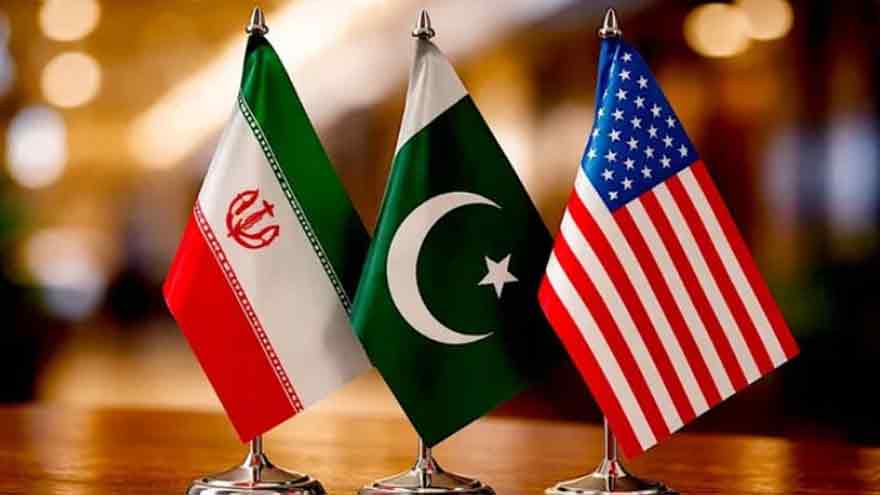
ISLAMABAD: Prime Minister Shehbaz Sharif on Wednesday said delegations from Washington and Tehran would arrive in the Pakistani capital as soon as Friday at his invitation, aiming to transform a fragile two-week ceasefire into a lasting settlement.
The announcement came less than a day after the truce took effect, capping an intensive burst of Pakistani diplomacy that drew in allies from Beijing to Riyadh and helped avert what many feared could become a catastrophic escalation.
The talks, which the White House described as beginning this weekend, would mark the first direct, high-level negotiations between the two longtime adversaries since the fighting erupted in late February. That clash began with Israeli and American strikes that killed Iran’s supreme leader and triggered retaliatory Iranian missile barrages against Gulf states and Israel, eventually pulling in Hezbollah and southern Lebanon.
Sharif, addressing ministers in Islamabad, framed the moment in unusually personal and optimistic terms. He called it “a shining moment” in Pakistan’s diplomatic history and expressed hope that the April 10 meetings would succeed where previous efforts had faltered. “A ceasefire is the first step,” he said. “But our destination is lasting peace.”
The prime minister singled out the rare alignment between Pakistan’s civilian leadership and its powerful military, praising Deputy Prime Minister Ishaq Dar and Chief of Defence Forces Field Marshal Asim Munir for what he described as unprecedented coordination. “I haven’t seen this coordination and selfless efforts between political and military hierarchies in my whole 40-year career,” Sharif told the cabinet. “This will be a lesson for the upcoming generations.”
Iranian President Masoud Pezeshkian personally confirmed Tehran’s participation in the Islamabad talks during a 45-minute telephone call with Sharif earlier Wednesday, according to a statement released by the Prime Minister’s Office. Pakistani officials described the conversation as “warm and cordial.” Sharif conveyed appreciation for Iran’s decision to accept the ceasefire and to send negotiators. He also passed along respects to Iran’s Supreme Leader Ayatollah Mojtaba Khamenei. Pezeshkian, in turn, thanked Pakistan for its mediation and for helping engineer the temporary halt in hostilities. Both sides agreed to keep channels open, the statement said.
Sharif later echoed the tone on X, calling the call “warm and substantive” and reaffirming Pakistan’s commitment to regional stability. “Pakistan remains committed to working closely with all its friends and partners to advance peace and stability in the region and beyond,” he wrote.
In Washington, the Trump administration moved quickly to accept the invitation. Press Secretary Karoline Leavitt told reporters that the president was dispatching a team led by Vice President JD Vance, along with special envoy Steve Witkoff and Jared Kushner. The delegation would hold talks with their Iranian counterparts in Islamabad, she said.
Yet Trump himself struck a cautious note in an interview with the New York Post. He indicated that security concerns might prevent Vance from traveling. “We’ll have Steve Witkoff, Jared Kushner, JD — maybe JD, I don’t know,” Trump said. “There’s a question of safety, security.”
The ceasefire itself was a last-minute agreement, reached barely an hour before Trump’s deadline to resume strikes on Iran if Tehran did not reopen the Strait of Hormuz, the narrow waterway through which a fifth of the world’s oil passes. In exchange for the two-week pause in American and allied attacks, Iran’s Foreign Minister Abbas Araghchi announced that Tehran would suspend its own operations and permit safe passage through the strait, coordinated with Iranian forces and accounting for technical constraints.
The truce explicitly covers Lebanon, where Hezbollah had traded fire with Israel. Sharif stressed that the pause applied “everywhere,” though Israeli officials later signaled they would continue operations against the group.
Pakistan’s role as go-between reflects its distinctive position in the region. Longtime ties with the Trump administration, a 900-kilometer shared border with Iran, and its function as a limited diplomatic representative for Tehran in Washington have given Islamabad unusual leverage. Sharif has spent recent weeks quietly shuttling messages between the two capitals, working in concert with mediators from China, Saudi Arabia, Türkiye, Egypt and Qatar.
In separate posts on X, the prime minister expressed “deepest and sincere gratitude” to those nations for their “invaluable and all-out support” in coaxing the ceasefire into being. He also thanked the Gulf Cooperation Council states collectively for their steady focus on stability. “The leadership of all our brotherly countries and United States of America demonstrated exceptional strategic foresight, sagacity and patience in giving peace a chance,” he wrote. Sharif warned, however, that early reports of ceasefire violations at scattered sites threatened to undermine the process. He urged all parties “to exercise restraint and respect the ceasefire for two weeks, as agreed upon, so that diplomacy can take a lead role.”
To prepare for the influx of visitors, Islamabad’s district administration declared local holidays for Thursday and Friday. Deputy Commissioner Irfan Nawaz Memon announced the closures on X, sharing an official notification while stressing that essential services — hospitals, police, electricity, gas and municipal authorities — would remain fully operational. No official reason was given, but the timing aligned with the expected arrival of the U.S. and Iranian teams.
Separately, Pakistan’s Foreign Office condemned the previous day’s storming and vandalism of Kuwait’s consulate in the southern Iraqi city of Basra. The incident followed reports that projectiles — which Iraqi officials attributed to Kuwait — had killed at least seven people, including an 8-year-old child. Demonstrators tried to breach the building before security forces used tear gas to disperse them.
The Foreign Office called the attack “inconsistent with established diplomatic norms and international law, particularly the Vienna Convention on Consular Relations.” It demanded a full investigation and prosecution of those responsible, expressed solidarity with Kuwait and urged protection for diplomatic missions. Saudi Arabia, the United Arab Emirates, Qatar and Bahrain issued parallel statements, each citing violations of the 1963 Vienna Convention and pressing Iraq to hold the perpetrators accountable. Kuwait summoned Iraq’s envoy and delivered a formal protest.
Copyright © 2021 Independent Pakistan | All rights reserved