By Staff Reporter
The announcement came just before dawn in Islamabad on Wednesday: a two-week ceasefire between the United States and Iran, brokered at the last possible minute by Pakistani officials who understood what Washington’s bluster had obscured. President Trump had warned that “a whole civilization will die tonight” if Iran refused to reopen the Strait of Hormuz by his deadline. Instead, the pause arrived not through American firepower but through quiet Pakistani channels — a small circle of diplomats and military leaders who shuttled messages between adversaries who no longer trusted each other to speak directly. Iran agreed to coordinate safe passage through the strait, the artery carrying one-fifth of the world’s oil. The United States suspended its strikes. And both sides, predictably, declared victory.
This is not peace. It is a revealing concession dressed up as pragmatism. By treating Tehran’s 10-point proposal as a “workable basis” for talks scheduled to begin Friday in Islamabad, the US administration has implicitly accepted the very leverage Iran seized through its partial blockade of the strait — an economic weapon more potent than its nuclear program or its proxies ever proved. The proposal demands Iranian dominance over that waterway, complete American withdrawal from the Middle East, an end to operations against Tehran’s allied militias, full compensation for war damages, the lifting of all sanctions and a binding United Nations Security Council resolution to seal the deal. In its Persian version, it even includes acceptance of uranium enrichment; the English text shared with diplomats conveniently softens the language. These are not modest opening bids. They would reorder the Gulf’s balance of power after nearly five decades of American efforts to contain Iranian influence.
The deeper problem is that Iran discovered, in the course of this war, a form of deterrence that American and Israeli strikes could not easily neutralize. Military analysts had long assumed that reopening the strait by force was feasible, if costly. Yet the reality proved otherwise: Iran’s selective harassment of shipping, combined with the skyrocketing insurance premiums and the simple fear of attack, achieved what no amount of missile exchanges could. Oil prices spiked, global supply chains buckled, and the pain radiated far beyond the region — from European fuel shortages to Asian economies suddenly confronting higher energy costs. Tehran did not need to sink every tanker; it only needed to make passage too risky for commercial operators. That leverage forced Washington’s hand. The ceasefire, in effect, ratifies Iran’s wartime gain: the strait will reopen under “coordination with Iran’s Armed Forces,” subject to undefined “technical limitations,” and possibly with new transit fees shared with Oman to fund reconstruction. An international waterway has been transformed, at least temporarily, into something closer to a toll road under Iranian management.
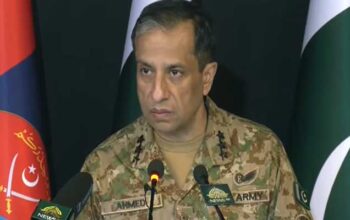
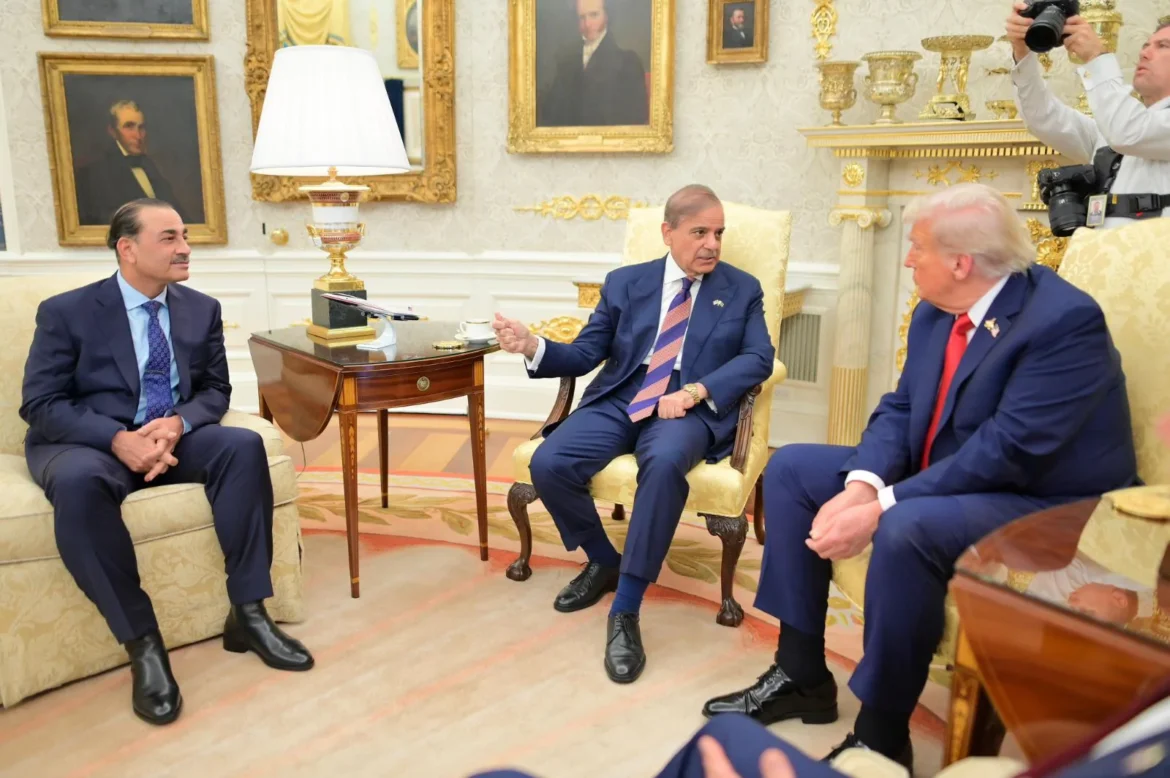
Pakistan’s role in extracting this pause deserves real credit, not least because it exposed the limits of unilateral American pressure. Sharing a long border and deep cultural ties with Iran, while maintaining a defence pact with Saudi Arabia, Islamabad was uniquely positioned to apply quiet pressure where it mattered. Field Marshal Asim Munir’s public criticism of Iran’s strike on Saudi Arabia — warning that it “spoils sincere efforts to resolve the conflict through peaceful means” — was among the strongest language Pakistan has directed at Tehran since the fighting began. At the same time, his personal rapport with Trump, whom the president has repeatedly called his “favorite” field marshal, gave the back channel credibility in Washington that louder threats had lost. Prime Minister Shehbaz Sharif’s late-night appeals bought the final hours. This was not neutral facilitation; it was balanced diplomacy from a country with skin in the game, leveraging relationships on all sides to avert catastrophe. In a region long dominated by maximalist rhetoric, Pakistan’s sober, small-circle approach proved more effective than the apocalyptic deadlines issued from the White House. Yet the truce is riddled with contradictions that could unravel it before the two-week clock runs out. Iranian missiles struck Israel even after the announcement, wounding civilians in the south. Attacks continued on Gulf targets. Israeli jets kept operating inside Iran, and Prime Minister Benjamin Netanyahu welcomed the pause on strikes against the Islamic Republic while pointedly excluding Lebanon, where Israeli forces remain engaged against Hezbollah. Pakistan’s claim of a region-wide cessation was quietly walked back. This is not a comprehensive halt to hostilities; it is a patchwork arrangement that leaves proxies active and core disputes untouched. Iran’s Supreme National Security Council has already signalled it will respond with “full force” to the slightest provocation and views the pause as a test of American sincerity rather than a genuine negotiating window. Trump, for his part, has described the proposal as “workable” one moment and “fraudulent” the next, without elaboration. The mutual declarations of triumph mask profound distrust.
Critics will argue that any breathing room is better than the alternative Trump had threatened — carpet-bombing Iranian energy infrastructure and civilian targets that would have inflicted indiscriminate suffering while doing little to guarantee free passage through the strait. The war had already exacted a terrible toll: damaged infrastructure, displaced populations, and energy facilities ablaze. At home, rising gasoline prices and midterm election pressures made indefinite escalation politically untenable. Coercive diplomacy has limits, and the administration’s repeated deadline extensions signalled as much. A pause creates space for cooler heads in Islamabad to explore compromises that battlefield pressure alone could not force.
That argument has surface appeal, but it understates the strategic price. By legitimising Iran’s maximalist framework as the starting point for talks, the United States has validated the wartime gains Tehran achieved through blockade and proxy escalation. Sanctions relief without verifiable nuclear dismantlement, or tolerance of Iranian “oversight” of the strait without ironclad guarantees of free navigation, would mark a retreat from long-standing red lines. It would weaken American credibility with Gulf partners who watched their territory come under fire. And it would set a dangerous precedent: in any future crisis, Iran could reach for the same economic chokehold, confident that global pain will eventually compel restraint. The root threats — Iran’s nuclear ambitions, ballistic missile arsenal and network of armed groups from Lebanon to Yemen — remain unresolved.
Markets have rallied on the news, with oil futures plunging more than 15 percent, but investors know this is relief, not resolution. The coming talks in Islamabad offer a narrow window for something better. Pakistan has proven it can convene the parties; the question is whether Washington and Tehran can move beyond declarations of victory toward the uncomfortable compromises real peace requires. There is faint cause for hope. Regional powers from Egypt to Turkey have welcomed the de-escalation while stressing the need for genuine compliance and respect for international navigation. The United Nations Secretary General has urged adherence to international law to protect civilians. Even China, Tehran’s largest trading partner, quietly encouraged a deal. If the negotiators can translate the 10-point proposal into a framework that secures free passage without entrenching Iranian dominance, verifies nuclear constraints and addresses Gulf security concerns, this pause could become the foundation for something lasting. The greater risk, however, is that the two weeks become another intermission in a longer conflict. Iran has demonstrated that its control over the strait is not easily reversed by force without prohibitive costs. The United States has shown that its military superiority does not automatically translate into strategic dominance when economic interdependence is weaponised. History is littered with Middle Eastern ceasefires that merely delayed the next round. This one will be different only if both sides recognise that further escalation would inflict more pain on themselves than on their adversaries — and if Pakistan’s quiet diplomacy can once again bridge the gap that bluster could not. The sand is already running through the hourglass. Turning a tactical truce into durable peace will demand the very quality that has been in shortest supply: willingness to accept less than total victory. The alternative is a return to the cycle of blockade, strikes and economic shock — a future the region, and the world, can ill afford.
Copyright © 2021 Independent Pakistan | All rights reserved