By Staff Reporter
ISLAMABAD: Finance Minister Muhammad Aurangzeb thanked China for its “long-standing and unwavering” support for Pakistan’s International Monetary Fund program and praised Beijing’s role in shepherding the country’s latest reviews, the finance ministry said on Friday.
Aurangzeb, who arrived in the US capital on Monday for the World Bank and IMF Spring Meetings running through April 18, met his Chinese counterpart Lan Fo’an on the sidelines of the gatherings. He briefed Lan on Pakistan’s economic performance under the IMF program, highlighting a staff-level agreement on the third review of the Extended Fund Facility and the second review of the Resilience and Sustainability Facility. Executive board approval is expected in early May, the ministry said in a statement posted on X.
The minister also updated Lan on preparations for Pakistan’s inaugural Panda bond issuance, part of a broader push to diversify funding sources and deepen ties with international capital markets. Aurangzeb expressed appreciation for China’s Executive Director at the IMF and for the constructive role played by Beijing’s representatives at both the IMF and World Bank. He conveyed Islamabad’s “full and unconditional support” for establishing the Shanghai Cooperation Organisation Development Bank, noting that Pakistan will assume the SCO presidency in September.
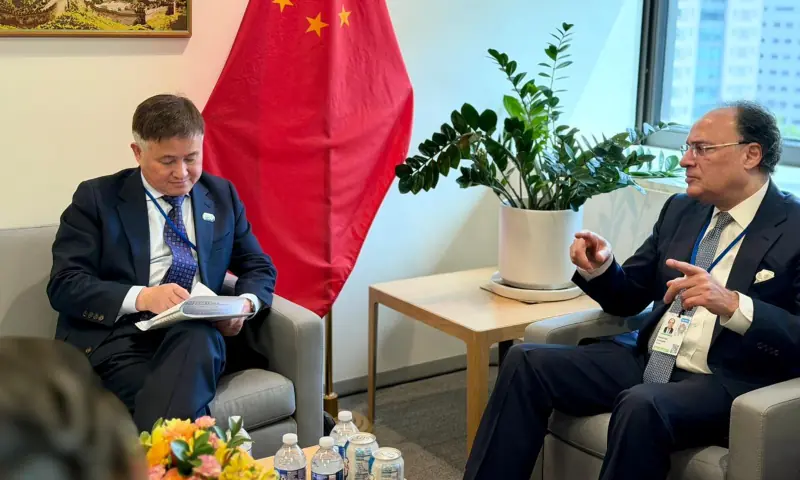
Separately, Aurangzeb met People’s Bank of China Governor Pan Gongsheng and reiterated thanks for Beijing’s continued assistance. He requested expedited approval from China’s National Association of Financial Market Institutional Investors for the Panda bond and outlined the immediate economic fallout from the regional conflict, including the government’s use of targeted subsidies and demand-management measures to cushion the impact. Pan invited Aurangzeb to visit Beijing in the near future, the ministry said.
The engagements come as Pakistan works to rebuild foreign-exchange reserves and meet targets under a $7 billion IMF program following a prolonged balance-of-payments crisis. Authorities aim to lift reserves to about $18 billion by the end of the current fiscal year in June.
Aurangzeb also held talks with Moody’s representatives during the Spring Meetings, updating the rating agency on the country’s external financing position. He noted that Pakistan had met its Eurobond repayment obligations on schedule and continues to honor all creditor commitments. Saudi financial support, he said, would further bolster the external accounts. The minister outlined a medium-term strategy to regain access to international capital markets, identifying a new Eurobond and a dollar-settled rupee-linked bond as instruments under preparation. He also briefed Moody’s on steps taken to manage the regional crisis, including efforts to secure supply chains, implement full price pass-through for energy, and deploy targeted digital subsidies for vulnerable households.
In a separate JP Morgan investment seminar titled “Pakistan: Economic and Monetary Policy Outlook,” Aurangzeb and State Bank Governor Jamel Ahmad fielded questions from global institutional investors. The minister repeated details on the Panda bond and the government’s energy-supply strategy, which includes demand management, market-timing adjustments and the same subsidy and price-pass-through measures.
On Thursday, IMF Managing Director Kristalina Georgieva commended Pakistan’s “continued progress on economic reforms” and the resulting macroeconomic stability in a meeting with Aurangzeb. The remarks, the ministry noted, reflect growing international recognition of Islamabad’s commitment to prudent policymaking. Aurangzeb is scheduled to take part in more than 50 high-level meetings during his week in Washington.
Copyright © 2021 Independent Pakistan | All rights reserved