By Staff Reporter
ISLAMABAD: Pakistan and Saudi Arabia signed an agreement on Friday to extend the maturity of a $3 billion deposit that the Saudi Fund for Development placed with the State Bank of Pakistan, the finance ministry said.
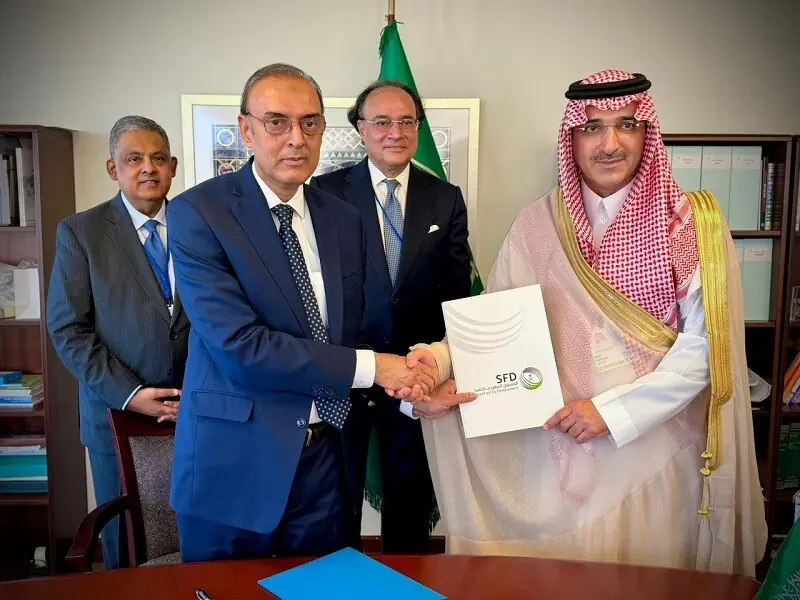
The pact was inked in Washington on the sidelines of the World Bank-International Monetary Fund spring meetings by State Bank Governor Jameel Ahmed and Saudi Fund for Development Chief Executive Officer Sultan bin Abdulrahman Al-Marshad. Finance Minister Muhammad Aurangzeb and Pakistan’s ambassador to the United States witnessed the signing.
The ministry said the extension is a reflection of the “strong and longstanding economic partnership” between the two countries and added it would help support Pakistan’s external-sector stability. The move follows Saudi Arabia’s announcement earlier this week of an additional $3 billion deposit to the central bank and an extension of its existing $5 billion facility for a further three years. Saudi Press Agency reported on Thursday that the kingdom had extended the $5 billion deposit and was providing the fresh $3 billion deposit at the directives of King Salman bin Abdulaziz Al Saud and Crown Prince Mohammed bin Salman.
The assistance is intended to bolster Pakistan’s economy and strengthen its resilience amid global economic challenges, the Saudi agency said, affirming the kingdom’s commitment to the country’s growth and the welfare of its citizens. Pakistan’s central bank separately confirmed it had received $2 billion from Saudi Arabia with a value date of April 15. Finance Minister Aurangzeb had earlier said Riyadh had committed the additional $3 billion in support while also agreeing to extend the maturity of an existing deposit.
Saudi Arabia has long served as a key financial backer for Pakistan during periods of economic stress. In 2018, Riyadh unveiled a $6 billion package that included a $3 billion central-bank deposit and $3 billion in deferred-payment oil supplies. The latest support arrives at a delicate moment for Pakistan’s external accounts. The country is due to repay a $3.5 billion loan to the United Arab Emirates this month after failing in March to secure a rollover — the first such setback in seven years. The repayment is adding pressure to foreign-exchange reserves that stood at $16.4 billion as of March 27, enough to cover roughly three months of imports.
Under its $7 billion International Monetary Fund program, Islamabad is targeting reserves of more than $18 billion by the end of June. The country recently repaid $1.43 billion in external debt, including $1.3 billion related to a Eurobond maturity and $126.125 million in coupon payments on other Eurobond issuances. The UAE repayment and broader external-financing needs come against a backdrop of rising global oil prices and economic spillovers from tensions in the Middle East, which are straining Pakistan’s import bill and current-account position.
Analysts have flagged external financing risks as a persistent vulnerability, particularly given volatile energy costs and tighter conditions in global capital markets. The Saudi deposit extension and fresh funding are expected to provide a buffer as authorities work to meet IMF program targets and navigate near-term repayment pressures. The finance ministry said the latest agreement underscores the depth of bilateral economic ties and will help reinforce stability in Pakistan’s external accounts.
Copyright © 2021 Independent Pakistan | All rights reserved