By Staff Reporter
ISLAMABAD: President Donald Trump and Pakistani officials signaled on Wednesday that “good news” on a second round of direct US-Iran negotiations could emerge within 36 to 72 hours, potentially as soon as Friday, raising cautious hopes for a diplomatic off-ramp even as Iran’s Revolutionary Guard seized two container ships in the Strait of Hormuz and the United States maintained its naval blockade of Iranian ports.
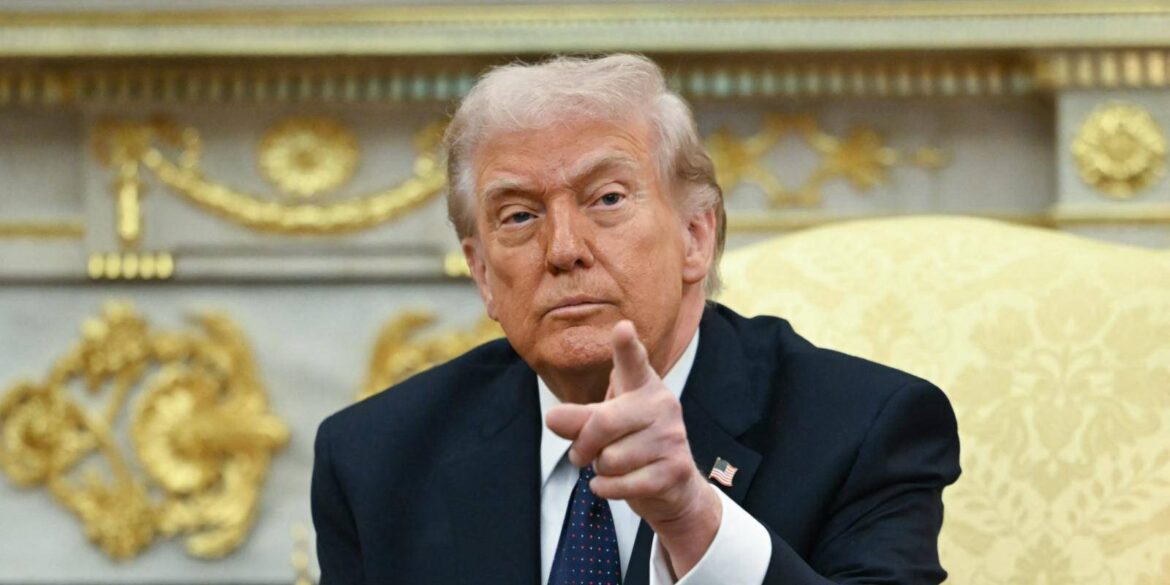
The incremental update came a day after Trump announced on Truth Social that he was extending the fragile cease-fire brokered by Pakistan, which took effect April 8. In that post, Trump said he had directed the US military to “continue the Blockade and, in all other respects, remain ready and able,” while prolonging the truce until Iran’s “seriously fractured” leadership submits a “unified proposal” and talks conclude.
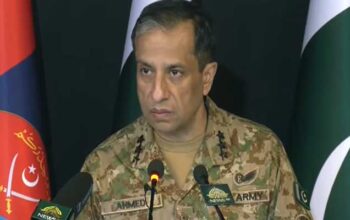
Asked on Wednesday about the possibility of fresh talks, Trump responded in a text message to The Washington Post: “It’s possible! President DJT.” Officials in Islamabad described intensified behind-the-scenes mediation with Tehran as the basis for the optimistic timeline. “The ceasefire is holding despite heightened rhetoric, indicating positive intent on both sides,” one Pakistani official said, speaking on the condition of anonymity to discuss sensitive diplomacy. “No military escalation from either side.” The official added that “Pakistan remains the key mediator.”
The developments showed both the promise and the precariousness of the Pakistan-brokered process. The first round of historic direct talks, held in Islamabad on April 11 and 12, ended without agreement but also without collapse. Since then, Pakistani civilian and military leaders have engaged in what one strategic affairs analyst with insight into Islamabad’s foreign and defence ministries called “feverish diplomacy” to bring both sides back to the table.
For now, however, the process remains paused until Iran presents a single, consensus negotiating position — a requirement the Trump administration has made explicit. “Any peace talks at this point will be effectively conditional upon Iran providing a unified response,” the analyst said. “The US stance is that no further negotiations will proceed until Tehran comes up with one, unified offer that represents the consensus of its leadership set-up.”
That demand highlights deeper fractures inside Iran’s power structure, where authority is divided among the elected government, the Guardian Council, the Supreme National Security Council and the Islamic Revolutionary Guard Corps. “The logic is that slowing down now to get a coherent Iranian position increases the chances that any eventual agreement will be durable,” the analyst added.
Iranian officials continued to insist that the US blockade must end before meaningful talks can resume. In a post on X on Wednesday, Parliamentary Speaker Mohammad-Bagher Ghalibaf wrote that “a complete ceasefire only makes sense if it is not violated by the maritime blockade and the hostage-taking of the world’s economy, and if the Zionist warmongering across all fronts is halted.” Reopening the Strait of Hormuz, he said, is “impossible with such a flagrant breach of the ceasefire.”
President Masoud Pezeshkian said that Iran “has welcomed dialogue and agreement and continues to do so” but “breach of commitments, blockade and threats are the main obstacles to genuine negotiations.” He accused Washington of “endless hypocritical rhetoric and contradiction between claims and actions.” On the ground, Iran’s Islamic Revolutionary Guard Corps announced Wednesday that it had seized two container ships — the Panama-flagged MSC Francesca and the Liberia-flagged Epaminondas — after firing on them as they tried to exit the Gulf through the Strait of Hormuz.
It was the first such action by Iran since the war began Feb. 28 with US and Israeli strikes on Iranian targets. The IRGC accused the vessels of operating without required permits and tampering with their navigation systems. Its navy warned that any disruption to “order and safety” in the strait would be treated as a “red line.”
The seizures came amid a broader US military buildup that analysts describe as the largest concentration of American forces in the region since the 2003 invasion of Iraq, with additional assets still en route. The amphibious assault ship USS Boxer and its roughly 4,500 troops reached the Indo-Pacific on Saturday and are heading toward the area to support the ongoing blockade of Iranian ports, according to US military reports.
Iranian officials have responded with threats of escalation, warning they could strike not only US assets but also American allies in the Gulf states — a move that could widen the conflict dramatically. “Both sides have already gone to great lengths to flex that they have a better alternative to climbing down from their negotiating positions,” said Behnam Taleblu, a senior fellow at the Foundation for Defence of Democracies. “That, plus the game of chicken over which negotiating team will depart for Islamabad first and wait makes this incredibly complex and tense situation more so.”
The cease-fire extension and the talk of possible new negotiations come against the backdrop of a conflict that has already killed thousands, disrupted global energy markets and thrown international shipping into turmoil. Roughly one-fifth of the world’s oil and liquefied natural gas normally passes through the Strait of Hormuz, which Iran has effectively restricted to its own vessels since the fighting began. Pakistani officials view the current pause not as a breakdown but as a necessary step toward a more lasting agreement.
Copyright © 2021 Independent Pakistan | All rights reserved