By Staff Reporter
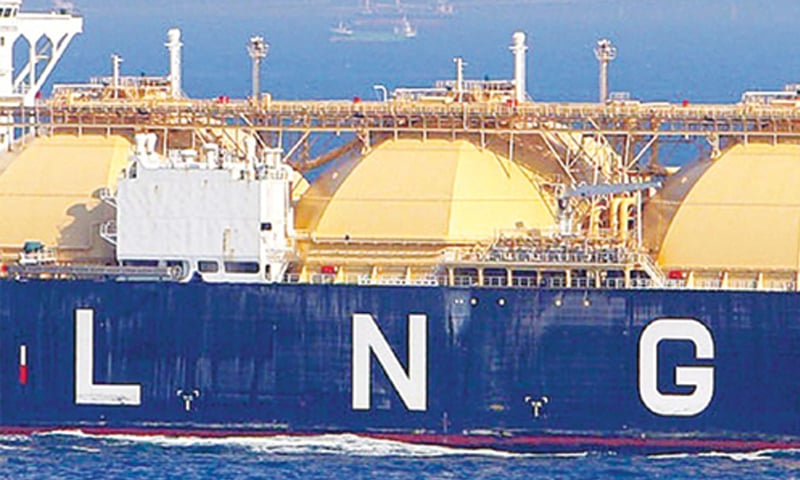
ISLAMABAD: Pakistan’s state-owned LNG importer secured three spot-market cargoes Friday after a gap of more than two years, as an acute power shortfall forced authorities to scramble for supplies ahead of the summer peak.
Pakistan LNG Ltd. received four bids and accepted the three lowest, ranging from $17.997 to $18.88 per million British thermal units, for delivery between April 27 and May 14, according to tender results. The cargoes will help ease a deficit that has already triggered six to seven hours of daily load-shedding in parts of the country.
For the first window of April 27-30, TotalEnergies SA submitted the winning bid of $18.88/mmBtu. Vitol Bahrain won the May 1-7 slot with $18.54/mmBtu, while OQ Trading secured the May 8-14 delivery at $17.997/mmBtu, the lowest of the three. The tender was issued just a day earlier on an emergency basis for three cargoes to be delivered ex-ship between April 27 and May 8. Each vessel will carry 140,000 cubic meters of LNG — the equivalent of roughly 100 million cubic feet a day once regasified — providing a combined boost of about 300 mmcfd to the national grid.
The urgency stems from a widening electricity shortfall that exceeded 4,500 megawatts during peak hours and rising temperatures that are already pushing demand higher. The Power Division had formally asked the Petroleum Division to arrange around 400 mmcfd of LNG specifically for power generation, citing the need to keep major plants running.
The move comes after Qatar declined to dispatch three LNG cargoes originally destined for Pakistan because of the closure of the Strait of Hormuz. Those vessels turned back from the waterway for security reasons following US-Israel strikes on Iran, according to officials familiar with the matter. Qatar subsequently declared force majeure on its global LNG contracts, including those with Pakistan, halting further deliveries.
Imports through the spot market had effectively stopped early last month. Pakistan LNG Ltd. itself imported no cargoes in March, the first full month it has gone without a delivery in recent memory. The company last brought in a single cargo a couple of months earlier at $7.65/mmBtu under an older contract. The regulator’s latest pricing data underscored the strain. Last month the Oil and Gas Regulatory Authority notified a 19-22% increase in the price of regasified LNG to $12.50-$14/mmBtu for sales by the two Sui gas utilities in March. The basket price reflected just two cargoes that month, compared with eight each in February and March 2026. Those two were sourced under long-term contracts between Pakistan State Oil and QatarEnergy at an average of about $7.68/mmBtu delivered ex-ship — only marginally higher than the prior month but well below the $8.90/mmBtu seen a year earlier.
Pakistan LNG Ltd., set up nearly a decade ago as the country’s dedicated spot-market buyer, has been largely sidelined for the past year. Its last tender, floated in December 2023 for January 2024 delivery, was later canceled. The company has come under criticism for drawing public funds while contributing little to actual imports, even as its executives and board have continued to receive substantial pay and perks.
In a formal letter to the Petroleum Division, the Power Division spelled out the risks of inaction. “With the onset of the summer season, electricity demand has started to rise significantly across the country,” it wrote. “In this regard, the availability of RLNG remains critical for ensuring optimal power generation and maintaining system stability.”
The letter warned that any shortfall in regasified LNG would force greater reliance on high-speed diesel and furnace oil, both of which have become prohibitively expensive. Officials said the cost of HSD-fired generation, which had already topped Rs45 per unit before the Hormuz disruption, has now climbed beyond Rs80 per unit. Even one or two spot LNG cargoes would be economically preferable to running plants on those fuels, they added.
Four large LNG-fired power plants operated by the federal and Punjab governments, plus the medium-sized Nandipur facility, are capable of switching to HSD. The price gap between LNG and diesel generation typically exceeds Rs25 per unit and is now significantly wider. Those plants, concentrated in Punjab with a combined capacity of about 6,000 MW, are also essential for grid stability and for evacuating surplus power from the south.
The Power Division attached a detailed weekly forecast of RLNG needs, broken down by solar and non-solar hours, and noted that K-Electric Ltd. had also submitted its requirements for the Karachi system. It asked the Petroleum Division to allocate both Qatar-contracted and spot cargoes to match demand across the National Grid Company and K-Electric networks.
Power demand currently peaks at 19,000-20,000 MW in the evening and falls below 10,000 MW during daylight hours, helped by widespread solar generation. Once the sun sets, however, consumers shift back to the grid. Summer peaks routinely exceed 28,000 MW, and the shortfall is expected to widen further as temperatures climb in the coming weeks.
Copyright © 2021 Independent Pakistan | All rights reserved